Results by title
2 books match the query 'Anti-Mormonism'
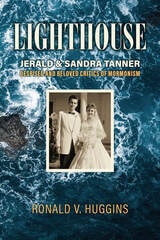
Lighthouse
Jerald and Sandra Tanner, Despised and Beloved Critics of MormonismRonald V. Huggins
Signature Books, 2022
While some may view Jerald and Sandra Tanner only as despised critics of the Church of Jesus Christ of Latter-day Saints, it is impossible to trace the course of Mormon history over the past sixty years without acknowledging their contribution. Many both inside and outside of Mormonism respect them for their unflinching quest for truth no matter the cost, as when Jerald declared Mark Hofmann’s notorious Salamander Letter a forgery months before some experts declared it authentic. Their Utah Lighthouse Ministry has operated for decades only blocks from church headquarters, where their many works on Mormonism are still printed and sold. Jerald died in 2006 but Sandra continues to oversee the ministry.
The Tanners consistently challenged the church’s position on many historical issues. Utah Lighthouse was long the only source for Mormon scholars to obtain crucial historical reprints, which they still happily or begrudgingly purchase; for others, the Tanners’ writings have been the source of disillusionment with the church. Despised or beloved, the influence of Jerald and Sandra Tanner cannot be underestimated or ignored.
The Tanners consistently challenged the church’s position on many historical issues. Utah Lighthouse was long the only source for Mormon scholars to obtain crucial historical reprints, which they still happily or begrudgingly purchase; for others, the Tanners’ writings have been the source of disillusionment with the church. Despised or beloved, the influence of Jerald and Sandra Tanner cannot be underestimated or ignored.
[more]
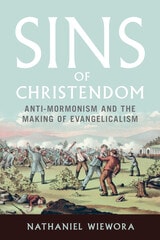
Sins of Christendom
Anti-Mormonism and the Making of EvangelicalismNathaniel Wiewora
University of Illinois Press, 2024
Evangelical criticism of the Church of Jesus Christ of Latter-day Saints dates back to the earliest days of the Church. Nathaniel Wiewora uses the diverse animus expressed by evangelicals to illuminate how they used an imaginary Church as a proxy to disagree, attack, compromise, and settle differences among themselves. As Wiewora shows, the evangelical practice to contrast itself with the emerging faith not only encompassed but also went beyond religious matters. If Joseph Smith was accused of muddling religious truth, he and his followers also faced accusations of immoral economic practices and a sinful regard for wealth that reflected worries within the evangelical world. Attacks on Latter-day Saints’ emotional religious displays, the Book of Mormon’s authenticity, and the dangerous ideas represented by Nauvoo paralleled similar conflicts. Wiewora traces how the failure to blunt the Church’s success led evangelicals to change their own methods and pursue the religious education infrastructure that came to define parts of the movement.
[more]