Results by title

3 books match the query 'Anti-apartheid activists'
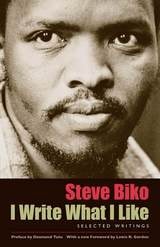
cover of I Write What I Like: Selected Writings

I Write What I Like

Selected Writings

Steve Biko

University of Chicago Press, 2002

"The most potent weapon in the hands of the oppressor is the mind of the oppressed." Like all of Steve Biko's writings, those words testify to the passion, courage, and keen insight that made him one of the most powerful figures in South Africa's struggle against apartheid. They also reflect his conviction that black people in South Africa could not be liberated until they united to break their chains of servitude, a key tenet of the Black Consciousness movement that he helped found.

I Write What I Like contains a selection of Biko's writings from 1969, when he became the president of the South African Students' Organization, to 1972, when he was prohibited from publishing. The collection also includes a preface by Archbishop Desmond Tutu; an introduction by Malusi and Thoko Mpumlwana, who were both involved with Biko in the Black Consciousness movement; a memoir of Biko by Father Aelred Stubbs, his longtime pastor and friend; and a new foreword by Professor Lewis Gordon.

Biko's writings will inspire and educate anyone concerned with issues of racism, postcolonialism, and black nationalism.
[more]
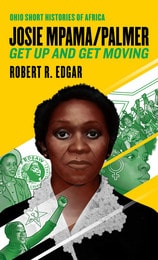
cover of Josie Mpama/Palmer: Get Up and Get Moving

Josie Mpama/Palmer

Get Up and Get Moving

Robert R. Edgar

Ohio University Press, 2020

While African National Congress narratives dominate much of the scholarship on South Africa’s freedom struggle, Josie Mpama/Palmer’s political life offers a different perspective. Highly critical of the patriarchal attitudes that hindered black women from actively participating in politics, Mpama/Palmer was an outspoken advocate for women’s social equality and encouraged black women to become more involved in national conversations. The first black woman to join the Communist Party of South Africa and an antiapartheid activist, Josie Mpama/Palmer remained involved in critical issues all her life, especially protests against Bantu Education and other forms of racial and sexist discrimination. She was an integral figure in establishing the Federation of South African Women, an organization open to women of all races. Mpama/Palmer’s activism and political legacy would become an inspiring example for women in South Africa and around the world to get up and get moving.
[more]
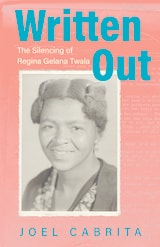
cover of Written Out: The Silencing of Regina Gelana Twala

Written Out

The Silencing of Regina Gelana Twala

Joel Cabrita

Ohio University Press, 2023

Systemic racism and sexism caused one of South Africa’s most important writers to disappear from public consciousness. Is it possible to justly restore her historical presence? Regina Gelana Twala, a Black South African woman who died in 1968 in Swaziland (now Eswatini), was an extraordinarily prolific writer of books, columns, articles, and letters. Yet today Twala’s name is largely unknown. Her literary achievements are forgotten. Her books are unpublished. Her letters languish in the dusty study of a deceased South African academic. Her articles are buried in discontinued publications. Joel Cabrita argues that Twala’s posthumous obscurity has not developed accidentally as she exposes the ways prejudices around race and gender blocked Black African women like Twala from establishing themselves as successful writers. Drawing upon Twala’s family papers, interviews, newspapers, and archival records from Pretoria, Uppsala, and Los Angeles, Cabrita argues that an entire cast of characters—censorious editors, territorial White academics, apartheid officials, and male African politicians whose politics were at odds with her own—conspired to erase Twala’s legacy. Through her unique documentary output, Twala marked herself as a radical voice on issues of gender, race, and class. The literary gatekeepers of the racist and sexist society of twentieth-century southern Africa clamped down by literally writing her out of the region’s history. Written Out also scrutinizes the troubled racial politics of African history as a discipline that has been historically dominated by White academics, a situation that many people within the field are now examining critically. Inspired by this recent movement, Cabrita interrogates what it means for her—a White historian based in the Northern Hemisphere—to tell the story of a Black African woman. Far from a laudable “recovery” of an important lost figure, Cabrita acknowledges that her biography inevitably reproduces old dynamics of White scholarly privilege and dominance. Cabrita’s narration of Twala’s career resurrects it but also reminds us that Twala, tragically, is still not the author of her own life story.
[more]