Results by title
6 books match the query 'Ants'
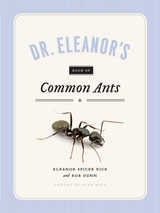
Dr. Eleanor's Book of Common Ants
Eleanor Spicer Rice, Alex Wild, and Rob Dunn
University of Chicago Press, 2017
No longer! In this witty, accessible, and beautifully illustrated guide, Eleanor Spicer Rice, Alex Wild, and Rob Dunn metamorphose creepy-crawly revulsion into myrmecological wonder. Emerging from Dunn’s ambitious citizen science project Your Wild Life (an initiative based at North Carolina State University), Dr. Eleanor’s Book of Common Ants provides an eye-opening entomological overview of the natural history of species most noted by project participants—and even offers tips on keeping ant farms in your home. Exploring species from the spreading red imported fire ant to the pavement ant, and featuring Wild’s stunning photography, this guide will be a tremendous resource for teachers, students, and scientists alike. But more than this, it will transform the way we perceive the environment around us by deepening our understanding of its littlest inhabitants, inspiring everyone to find their inner naturalist, get outside, and crawl across the dirt—magnifying glass in hand.
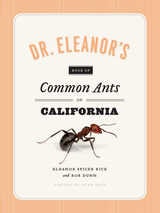
Dr. Eleanor's Book of Common Ants of California
Eleanor Spicer Rice, Alex Wild, and Rob Dunn
University of Chicago Press, 2017
No longer! In this witty, accessible, and beautifully illustrated guide, Eleanor Spicer Rice, Alex Wild, and Rob Dunn metamorphose creepy-crawly revulsion into myrmecological wonder. Emerging from Dunn’s ambitious citizen science project Your Wild Life (an initiative based at North Carolina State University) and the work of Brian Fisher with the California Academy of Sciences, Dr. Eleanor’s Book of Common Ants of California provides an eye-opening entomological overview of the natural history of California’s species most noted by project participants—and even offers tips on keeping ant farms in your home. Exploring species from the high noon and harvester ants to the honeypot and acrobat ants, and featuring Wild’s stunning photography, this guide will be a tremendous resource for teachers, students, and scientists alike. But more than this, it will transform the way Californians perceive the environment around them by deepening their understanding of its littlest inhabitants, inspiring everyone to find their inner naturalist, get outside, and crawl across the dirt—magnifying glass in hand.
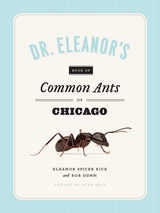
Dr. Eleanor's Book of Common Ants of Chicago
Eleanor Spicer Rice, Alex Wild, and Rob Dunn
University of Chicago Press, 2017
No longer! In this witty, accessible, and beautifully illustrated guide, Eleanor Spicer Rice, Alex Wild, and Rob Dunn metamorphose creepy-crawly revulsion into myrmecological wonder. Emerging from Dunn’s ambitious citizen science project Your Wild Life (an initiative based at North Carolina State University), Dr. Eleanor’s Book of Common Ants of Chicago provides an eye-opening entomological overview of the natural history of Chicago’s species most noted by project participants—and even offers tips on keeping ant farms in your home. Exploring species from the hobbit ant to the tiny trapjaw ant, and featuring contributions from E. O. Wilson and Field Museum ant scientist Corrie Moreau as well as Wild’s stunning photography, this guide will be a tremendous resource for teachers, students, and scientists alike. But more than this, it will transform the way Chicagoans perceive the environment around them by deepening their understanding of its littlest inhabitants, inspiring everyone to find their inner naturalist, get outside, and crawl across the dirt—magnifying glass in hand.
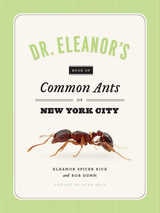
Dr. Eleanor's Book of Common Ants of New York City
Eleanor Spicer Rice, Alex Wild, and Rob Dunn
University of Chicago Press, 2017
No longer! In this witty, accessible, and beautifully illustrated guide, Eleanor Spicer Rice, Alex Wild, and Rob Dunn metamorphose creepy-crawly revulsion into myrmecological wonder. Emerging from Dunn’s ambitious citizen science project Your Wild Life (an initiative based at North Carolina State University), Dr. Eleanor’s Book of Common Ants of New York City provides an eye-opening entomological overview of the natural history of New York’s species most noted by project participants—and even offers insight into the ant denizens of the city’s subways and Central Park. Exploring species from the honeyrump ant to the Japanese crazy ant, and featuring Wild’s stunning photography as well as tips on keeping ant farms in your home, this guide will be a tremendous resource for teachers, students, and scientists alike. But more than this, it will transform the way New Yorkers perceive the environment around them by deepening their understanding of its littlest inhabitants, inspiring everyone to find their inner naturalist, get outside, and crawl across the dirt—magnifying glass in hand.
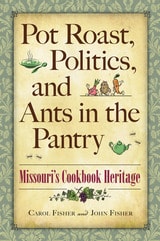
Pot Roast, Politics, and Ants in the Pantry
Missouri's Cookbook HeritageCarol Fisher & John Fisher
University of Missouri Press, 2008
When is a cookbook more than just a cookbook? When it’s a gateway to our culinary heritage. For well over a hundred years, Missouri’s cookbooks have helped readers serve up tasty dishes to the state’s tables, but these publications also document the evolution of our kitchens and households.
Pot Roast,Politics, and Ants in the Pantry, a treasure trove of anecdotes and nuggets of historical information about cookery in the Show-Me State, draws from more than 150 publications to reveal Missouri’s cookbook heritage and to deliver a generous sampling of recipes. Carol Fisher and John Fisher look back to manuscript cookbooks from 1821 St. Louis, then progress through the years and around Missouri before arriving at today’s online recipes. Along the way, they dish out servings of kitchen medicine, household hints, and cookbook literature gleaned from the state’s cache of culinary gems.
From handwritten family recipe collections and mimeographed publications to glossy color editions, the texts the Fishers have obtained from libraries and historical societies as well as their own extensive cookbook collection include such curiosities as the Julia Clark Household Memoranda Book from the William Clark papers, an 1880 production by the Ladies of St. Louis called My Mother’s Cookbook, Mary Foote Henderson’s Practical Cooking and Dinner Giving, and Albert E. Brumley’s All-Day Singin’ and Dinner on the Ground. They tell how various ethnic communities raised money by creating cookbooks, how the state’s Beef Council and Pork Association put recipes on the Internet, and how restaurants like the Blue Owl in Kimmswick and Stephenson’s Apple Farm Restaurant near Kansas City enhanced their reputations with their own cookbooks. Festival cookbooks, company cookbooks, even cookbooks tied to world events—they’re all here in one delightful book.
In this vastly entertaining review, readers will learn where to find recipes for dandelion wine, mock turtle soup (requiring a large calf’s head split open by the butcher), and vinegar pie—as well as the curative properties of potato water, tips for raising chickens in the basement, and even “how to cook a husband.” An extensive bibliography includes information to help readers track down the books discussed and also those on their own wish lists.
Pot Roast, Politics, and Ants in the Pantry: Missouri’s Cookbook Heritage shows how, instead of being just collections of recipes, cookbooks provide history lessons, document changing food ways, and demonstrate the cultural diversity of the state. From Julia Clark’s simple frontier recipes for puddings and preserves to Irma Rombauer’s encyclopedic Joy of Cooking—originally self-published in Missouri—Carol Fisher and John Fisher have laid out a smorgasbord of reading pleasure for cookbook collectors, nostalgia buffs, and gourmands alike.
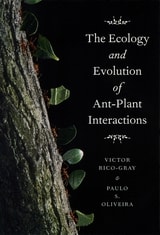
The Ecology and Evolution of Ant-Plant Interactions
Victor Rico-Gray and Paulo S. Oliveira
University of Chicago Press, 2007
Ants are probably the most dominant insect group on Earth, representing ten to fifteen percent of animal biomass in terrestrial ecosystems. Flowering plants, meanwhile, owe their evolutionary success to an array of interspecific interactions—such as pollination, seed dispersal, and herbivory—that have helped to shape their great diversity. The Ecology and Evolution of Ant-Plant Interactions brings together findings from the scientific literature on the coevolution of ants and plants to provide a better understanding of the unparalleled success of these two remarkable groups, of interspecific interactions in general, and ultimately of terrestrial biological communities.
The Ecology and Evolution of Ant-Plant Interactions synthesizes the dynamics of ant-plant interactions, including the sources of variation in their outcomes. Victor Rico-Gray and Paulo S. Oliveira capture both the emerging appreciation of the importance of these interactions within ecosystems and the developing approaches that place studies of these interactions into a broader ecological and evolutionary context. The collaboration of two internationally renowned scientists, The Ecology and Evolution of Ant-Plant Interactions will become a standard reference for understanding the complex interactions between these two taxa.