Results by title

3 books match the query 'Aotearoa New Zealand'

cover of Governing Visions of the Real: The National Film Unit and Griersonian Documentary Film in Aotearoa/New Zealand

Governing Visions of the Real

The National Film Unit and Griersonian Documentary Film in Aotearoa/New Zealand

Lars Weckbecker

Intellect Books, 2015

Governing Visions of the Real traces the emergence, development, and techniques of Griersonian documentary—named for pioneering Scottish filmmaker John Grierson—in New Zealand throughout the first half of the twentieth century. Paying close attention to the productions of the National Film Unit in the 1940s and ’50s, Lars Weckbecker follows the shifting practices and governmentality of documentary’s “visions of the real” as New Zealand and its population—particularly workers and its indigenous population—came to be envisioned through NFU film for an ensemble of political, pedagogic, and propagandistic purposes.
[more]
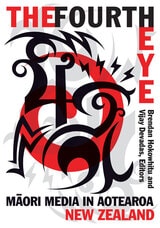
cover of The Fourth Eye: Maori Media in Aotearoa New Zealand

The Fourth Eye

Maori Media in Aotearoa New Zealand

Brendan Hokowhitu

University of Minnesota Press, 2013

From the signing of the Treaty of Waitangi between Indigenous and settler cultures to the emergence of the first-ever state-funded Māori television network, New Zealand has been a hotbed of Indigenous concerns. Given its history of colonization, coping with biculturalism is central to New Zealand life. Much of this “bicultural drama” plays out in the media and is molded by an anxiety surrounding the ongoing struggle over citizenship rights that is seated within the politics of recognition. The Fourth Eye brings together Indigenous and non-Indigenous scholars to provide a critical and comprehensive account of the intricate and complex relationship between the media and Māori culture.

Examining the Indigenous mediascape, The Fourth Eye shows how Māori filmmakers, actors, and media producers have depicted conflicts over citizenship rights and negotiated the representation of Indigenous people. From nineteenth-century Māori-language newspapers to contemporary Māori film and television, the contributors explore a variety of media forms including magazine cover stories, print advertisements, commercial images, and current Māori-language newspapers to illustrate the construction, expression, and production of indigeneity through media.

Focusing on New Zealand as a case study, the authors address the broader question: what is Indigenous media? While engaging with distinct themes such as the misrepresentation of Māori people in the media, access of Indigenous communities to media technologies, and the use of media for activism, the essays in this much-needed new collection articulate an Indigenous media landscape that converses with issues that reach far beyond New Zealand.

Contributors: Sue Abel, U of Auckland; Joost de Bruin, Victoria U of Wellington; Suzanne Duncan, U of Otago; Kevin Fisher, U of Otago; Allen Meek, Massey U; Lachy Paterson, U of Otago; Chris Prentice, U of Otago; Jay Scherer, U of Alberta; Jo Smith, Victoria U of Wellington; April Strickland; Stephen Turner, U of Auckland.
[more]
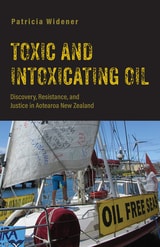
cover of Toxic and Intoxicating Oil: Discovery, Resistance, and Justice in Aotearoa New Zealand

Toxic and Intoxicating Oil

Discovery, Resistance, and Justice in Aotearoa New Zealand

Patricia Widener

Rutgers University Press, 2021

When oil and gas exploration was expanding across Aotearoa New Zealand, Patricia Widener was there interviewing affected residents and environmental and climate activists, and attending community meetings and anti-drilling rallies. Exploration was occurring on an unprecedented scale when oil disasters dwelled in recent memory, socioecological worries were high, campaigns for climate action were becoming global, and transitioning toward a low carbon society seemed possible. Yet unlike other communities who have experienced either an oil spill, or hydraulic fracturing, or offshore exploration, or climate fears, or disputes over unresolved Indigenous claims, New Zealanders were facing each one almost simultaneously. Collectively, these grievances created the foundation for an organized civil society to construct and then magnify a comprehensive critical oil narrative--in dialogue, practice, and aspiration. Community advocates and socioecological activists mobilized for their health and well-being, for their neighborhoods and beaches, for Planet Earth and Planet Ocean, and for terrestrial and aquatic species and ecosystems. They rallied against toxic, climate-altering pollution; the extraction of fossil fuels; a myriad of historic and contemporary inequities; and for local, just, and sustainable communities, ecologies, economies, and/or energy sources. In this allied ethnography, quotes are used extensively to convey the tenor of some of the country’s most passionate and committed people. By analyzing the intersections of a social movement and the political economy of oil, Widener reveals a nuanced story of oil resistance and promotion at a time when many anti-drilling activists believed themselves to be on the front lines of the industry’s inevitable decline.
[more]