Results by title
3 books match the query 'Apartment houses'
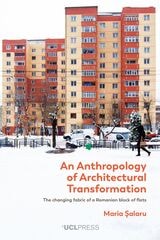
An Anthropology of Architectural Transformation
The Changing Fabric of a Romanian Block of FlatsMaria Salaru
University College London, 2025
Maria Salaru takes readers inside a Romanian apartment block, tracing its evolution from 1974 to the present as residents navigate shifting political and economic landscapes. Through rich ethnographic detail, this work exposes how everyday acts of repair and maintenance reshape both individual apartments and the broader urban fabric of Piatra-Neamț. As state support for housing recedes, new forms of solidarity emerge—whether through self-organized communities, housing associations, or activist interventions—presenting a new perspective on the lived experience of architectural transformation.
This book opposes the view of architecture as static and instead presents buildings as dynamic spaces co-created over time by their inhabitants. It will appeal to social scientists exploring the intersection of materiality and urban change, as well as architects interested in the evolving relationship between people and the built environment. By capturing the micro-scale transformations that collectively redefine city life, An Anthropology of Architectural Transformation provides a persuasive case for rethinking how we study and inhabit our shared spaces.
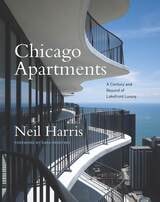
Chicago Apartments
A Century and Beyond of Lakefront LuxuryNeil Harris and Teri J. Edelstein
University of Chicago Press, 2020

House, but No Garden
Apartment Living in Bombay's Suburbs, 1898-1964Nikhil Rao
University of Minnesota Press, 2013
Between the well-documented development of colonial Bombay and sprawling contemporary Mumbai, a profound shift in the city’s fabric occurred: the emergence of the first suburbs and their distinctive pattern of apartment living. In House, but No Garden Nikhil Rao considers this phenomenon and its significance for South Asian urban life. It is the first book to explore an organization of the middle-class neighborhood that became ubiquitous in the mid-twentieth-century city and that has spread throughout the subcontinent.
Rao examines how the challenge of converting lands from agrarian to urban use created new relations between the state, landholders, and other residents of the city. At the level of dwellings, apartment living in self-contained flats represented a novel form of urban life, one that expressed a compromise between the caste and class identities of suburban residents who are upper caste but belong to the lower-middle or middle class. Living in such a built environment, under the often conflicting imperatives of maintaining the exclusivity of caste and subcaste while assembling residential groupings large enough to be economically viable, led suburban residents to combine caste with class, type of work, and residence to forge new metacaste practices of community identity.
As it links the colonial and postcolonial city—both visually and analytically—Rao’s work traces the appearance of new spatial and cultural configurations in the middle decades of the twentieth century in Bombay. In doing so, it expands our understanding of how built environments and urban identities are constitutive of one another.