Results by title
3 books match the query 'Apor, Péter'
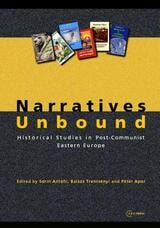
Narratives Unbound
Historical studies in post-communist Eastern EuropePéter Apor
Central European University Press, 2007
The first work that covers the post-Communist development of historical studies in six Eastern European countries: Bulgaria, Czech Republic, Hungary, Poland, Romania, and Slovakia. A uniquely critical and qualitative analysis from a comparative and critical perspective, written by scholars from the region itself. Focusing on the first post-Communist decade, 1989–1999, the book offers a longer-term perspective that includes the immediate 'prehistory' of that momentous decade as well as its 'posthistoire'. The authors capture the spirit of 1989, that heady mix of elation, surprise, determination, and hope: l'ivresse du possible. This was the paradoxical beginning of Eastern European post-Communism: ushered in by 'anti-Utopian' revolutions, and slowly finding its course towards a bureaucratic, imitative, challenging, and anachronistic restoration of a capitalism that had changed almost beyond recognition when it had mutated into the negative double of Communism. Each individual chapter has numerous and detailed notes and references.
[more]
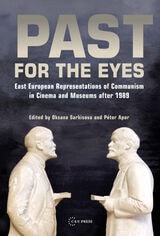
Past for the Eyes
East European Representations of Communism in Cinema and Museums After 1989Oksana Sarkisova
Central European University Press, 2008
How do museums and cinema shape the image of the Communist past in today’s Central and Eastern Europe? This volume is the first systematic analysis of how visual techniques are used to understand and put into context the former regimes. After history “ended” in the Eastern Bloc in 1989, museums and other memorials mushroomed all over the region. These efforts tried both to explain the meaning of this lost history, as well as to shape public opinion on their society’s shared post-war heritage. Museums and films made political use of recollections of the recent past, and employed selected museum, memorial, and media tools and tactics to make its political intent historically credible. Thirteen essays from scholars around the region take a fresh look at the subject as they address the strategies of fashioning popular perceptions of the recent past.
[more]
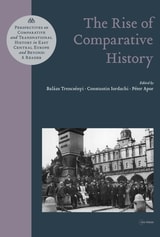
The Rise of Comparative History
Balázs Trencsényi
Central European University Press, 2021
This book—the first of a three-volume overview of comparative and transnational historiography in Europe—focuses on the complex engagement of various comparative methodological approaches with different transnational and supranational frameworks. It considers scales from universal history to meso-regional (i.e. Balkans, Central Europe, etc.) perspectives. In the form of a reader, it displays 18 historical studies written between 1900 and 1943. The collection starts with the French and German methodological discussions around the turn of the twentieth century, stemming from the effort to integrate history with other emerging social sciences on a comparative methodological basis. The volume then turns to the question of structural and institutional comparisons, revisiting various historiographical ventures that tried to sketch out a broader (regional or European-level) interpretative framework to assess the legal systems, patterns of agrarian production, and the common ethnographic and sociocultural features.
In the third part, a number of texts are presented, which put forward a supra-national research framework as an antidote to national exclusivism. While in Western Europe the most obvious such framework was pan-European, in East Central Europe the agenda of comparison was linked usually to a meso-regional framework.
The studies are accompanied by short contextual introductions including biographical information on the respective authors.
[more]