Results by title
7 books match the query 'Apostle'
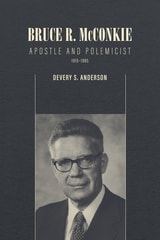
Bruce R. McConkie
Apostle and Polemicist, 1915–1985Anderson, Devery S.
Signature Books, 2024
Although he served as an apostle in the Church of Jesus Christ of Latter-day Saints for only twelve and a half years, Bruce R. McConkie’s twenty-six years’ service in the First Council of Seventy had already made him a household name within the church. Called to full-time church service at age thirty-one, McConkie quickly gained a reputation as a theologian and doctrinal teacher. He became a prolific writer, and his controversial book, Mormon Doctrine, remained a bestseller for decades. His writing style, dogmatic approach, and quickness to reprimand others he believed in error made him many enemies, while others endeared themselves to him because of those very traits.
McConkie the man was far more complex than the serious and focused general authority most church members saw and heard at the pulpit. Those who knew him best experienced his profound sense of humor. His passion for jogging, rock hounding, and jewelry making occupied much of his free time. Those who witnessed his final address delivered days before his death felt compassion toward him, no matter how they had always viewed him as a writer, speaker, or leader. Truly, to understand Bruce R. McConkie one must look closely at the entire picture.
Commentary on Saint John the Apostle and Evangelist, Homilies 1–47
Saint John Chrysostom
Catholic University of America Press, 1957
Commentary on Saint John the Apostle and Evangelist, Homilies 48–88
Saint John Chrysostom
Catholic University of America Press, 1957
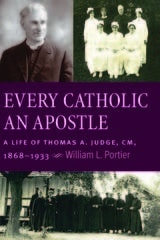
Every Catholic An Apostle
A Life of Thomas A. Judge, CM, 1868-1933William L. Portier
Catholic University of America Press, 2017
Paul Unbound
Other Perspectives on the ApostleMark D. Given
SBL Press, 2022
"As long as there are readers of Paul, there will be always be other perspectives."
The essays in this second edition of Paul Unbound: Other Perspectives on the Apostle provide introductions to Paul's relationship to and views on the Roman Empire, first-century economic stratification, his opponents, ethnicity, the law, Judaism, women, and Greco-Roman rhetoric. Contributors Warren Carter, Charles H. Cosgrove, A. Andrew Das, Steven J. Friesen, Mark D. Given, Deborah Krause, Mark D. Nanos, and Jerry L. Sumney have added addendums to their original essays and updated the bibliography to take into account scholarship produced in the decade since the publication of the first edition. The collection provides essential background and sets out new directions for study useful to students of the New Testament and Paul's letters.
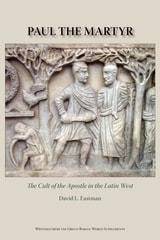
Paul the Martyr
The Cult of the Apostle in the Latin WestDavid L. Eastman
SBL Press, 2011
Ancient iconography of Paul is dominated by one image: Paul as martyr. Whether he is carrying a sword—the traditional instrument of his execution—or receiving a martyr's crown from Christ, the apostle was remembered and honored for his faithfulness to the point of death. As a result, Christians created a cult of Paul, centered on particular holy sites and characterized by practices such as the telling of stories, pilgrimage, and the veneration of relics. This study integrates literary, archaeological, artistic, and liturgical evidence to describe the development of the Pauline cult within the cultural context of the late antique West.
The Apostle of Tennessee
The Indefatigable Life and Ministry of Father Aloysius OrengoJoe Pagetta
Vanderbilt University Press, 2026
When Nashville became a Catholic diocese in 1837, it was mostly an aspirational exercise. The few Catholics scattered throughout the state were ministered to only occasionally by missionary priests who traveled by horseback from Kentucky. It is believed that Hugh Rogan, who arrived in Middle Tennessee in 1780 after working as a surveyor for the Continental Army, did not see a priest for fifty years.
That all changed when the Italian-born Father Aloysius “Luigi” Orengo arrived in Nashville in 1848. He traveled all over the state, sleeping in the woods, using his saddle for a pillow, and eating cheese and crackers. He’s credited with building churches in Franklin, Columbia, Pulaski, East Nashville, Tracy City, Gallatin, Humboldt, Brownsville, Grand Junction, Covington, Jackson, and McEwen.
But as influential as he was, Father Orengo’s story remained untold—until now.