Results by title
9 books match the query 'Appalachians (People)'
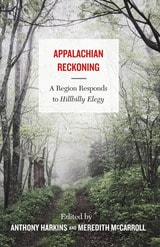
Appalachian Reckoning
A Region Responds to Hillbilly ElegyAnthony Harkins
West Virginia University Press, 2019
2020 American Book Award winner, Walter & Lillian Lowenfels Criticism Award
2019 Weatherford Award winner, nonfiction
With hundreds of thousands of copies sold, a Ron Howard movie in the works, and the rise of its author as a media personality, J. D. Vance’s Hillbilly Elegy: A Memoir of a Family and Culture in Crisis has defined Appalachia for much of the nation. What about Hillbilly Elegy accounts for this explosion of interest during this period of political turmoil? Why have its ideas raised so much controversy? And how can debates about the book catalyze new, more inclusive political agendas for the region’s future?
Appalachian Reckoning is a retort, at turns rigorous, critical, angry, and hopeful, to the long shadow Hillbilly Elegy has cast over the region and its imagining. But it also moves beyond Hillbilly Elegy to allow Appalachians from varied backgrounds to tell their own diverse and complex stories through an imaginative blend of scholarship, prose, poetry, and photography. The essays and creative work collected in Appalachian Reckoning provide a deeply personal portrait of a place that is at once culturally rich and economically distressed, unique and typically American. Complicating simplistic visions that associate the region almost exclusively with death and decay, Appalachian Reckoning makes clear Appalachia’s intellectual vitality, spiritual richness, and progressive possibilities.
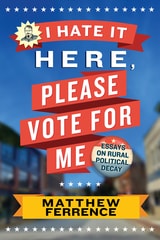
I Hate It Here, Please Vote for Me
Essays on Rural Political DecayMatthew Ferrence
West Virginia University Press, 2024
The Best Narrative & Biography Books of 2024, Selected by Porchlight
When a progressive college professor runs for the Pennsylvania House of Representatives in a deeply conservative rural district, he loses. That’s no surprise. But the story of how Ferrence loses and, more importantly, how American political narratives refuse to recognize the existence and value of nonconservative rural Americans offers insight into the political morass of our nation.
In essays focused on showing goats at the county fair, planting native grasses in the front lawn, the political power of poetry, and getting wiped out in an election, Ferrence offers a counter-narrative to stereotypes of monolithic rural American voters and emphasizes the way stories told about rural America are a source for the bitter divide between Red America and Blue America.
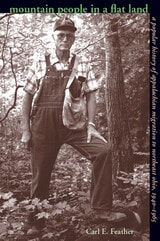
Mountain People in a Flat Land
A Popular History of Appalachian Migration to Northeast Ohio, 1940–1965Carl E. Feather
Ohio University Press, 1998
But the cost of a bus ticket was more than a week's wages in a lumber camp, and the mountaineer paid dearly in loss of kin, culture, homeplace, and freedom.
Numerous scholarly works have addressed this migration that brought more than one million mountaineers to Ohio alone. But Mountain People in a Flat Land is the first popular history of Appalachian migration to one community — Ashtabula County, an industrial center in the fabled “best location in the nation.”
These migrants share their stories of life in Appalachia before coming north. There are tales of making moonshine, colorful family members, home remedies harvested from the wild, and life in coal company towns and lumber camps.
The mountaineers explain why, despite the beauty of the mountains and the deep kinship roots, they had to leave Appalachia.
Stories of their hardships, cultural clashes, assimilation, and ultimate successes in the flatland provide a moving look at an often stereotyped people.
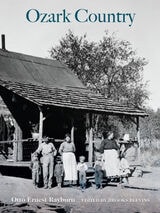
Ozark Country
Otto Ernest Rayburn
University of Arkansas Press, 2021
Published just days before America’s entry into World War II, Ozark Country is Otto Ernest Rayburn’s love letter to his adopted region. One of several chronicles of the Ozarks that garnered national attention during the Depression and war years, when many Americans craved stories about people and places seemingly untouched by the difficulties of the times, Rayburn’s colorful tour takes readers from the fictional village of Woodville into the backcountry of a region teeming with storytellers, ballad singers, superstitions, and home remedies.
Rayburn’s tales—fantastical, fun, and unapologetically romantic—portray a world that had already nearly disappeared by the time they were written. Yet Rayburn’s depiction of the Ozarks resonates with notions of the region that have persisted in the American consciousness ever since.
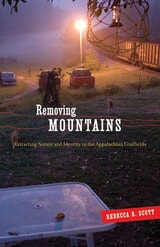
Removing Mountains
Extracting Nature and Identity in the Appalachian CoalfieldsRebecca R. Scott
University of Minnesota Press, 2010
In this rich ethnography of life in Appalachia, Scott examines mountaintop removal in light of controversy and protests from environmental groups calling for its abolishment. But Removing Mountains takes the conversation in a new direction, telling the stories of the businesspeople, miners, and families who believe they depend on the industry to survive. Scott reveals these southern Appalachian coalfields as a meaningful landscape where everyday practices and representations help shape a community's relationship to the environment.
Removing Mountains demonstrates that the paradox that faces this community-forced to destroy their land to make a wage-raises important questions related not only to the environment but also to American national identity, place, and white working-class masculinity.
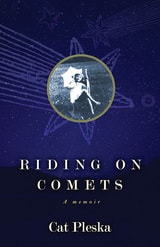
Riding on Comets
A MemoirCat Pleska
West Virginia University Press, 2015
Riding on Comets is the true story of an only child growing up in a working-class family during the 1950s and ‘60s.
As the family storyteller, Cat Pleska whispers and shouts about her life growing up around savvy, strong women and hard-working, hard-drinking men. Unlike many family stories set within Appalachia, this story provides an uncommon glimpse into this region: not coal, but an aluminum plant; not hollers, but small-town America; not hillbillies, but a hard-working family with traditional values.
From the dinner table, to the back porch, to the sprawling countryside, Cat Pleska reveals the sometimes tender, sometimes frightening education of a child who listens at the knees of these giants. She mimics and learns every nuance, every rhythm—how they laugh, smoke, cuss, fight, love, and tell stories—as she unwittingly prepares to carry their tales forward, their words and actions forever etched in her mind. And finally, she discovers a life story of her own.
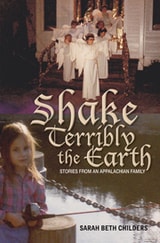
Shake Terribly the Earth
Stories from an Appalachian FamilySarah Beth Childers
Ohio University Press, 2013
In a thoughtful, humorous voice born of Appalachian storytelling, Childers brings to life in these essays events that affected the entire region: large families that squeezed into tiny apartments during the Great Depression, a girl who stepped into a rowboat from a second-story window during Huntington’s 1937 flood, brothers who were whisked away to World War II and Vietnam, and a young man who returned home from the South Pacific and worked his life away as a railroad engineer.
Childers uses these family tales to make sense of her personal journey and find the joy and clarity that often emerge after the earth shakes terribly beneath us.
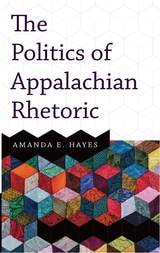
The Politics of Appalachian Rhetoric
Amanda E Hayes
West Virginia University Press, 2018
In exploring the ways that Appalachian people speak and write, Amanda E. Hayes raises the importance of knowing and respecting communication styles within a marginalized culture. Diving deep into the region’s historical roots—especially those of the Scotch-Irish and their influence on her own Appalachian Ohio—Hayes reveals a rhetoric with its own unique logic, utility, and poetry.
Hayes also considers the headwinds against Appalachian rhetoric, notably ideologies about poverty and the biases of the school system. She connects these to challenges that Appalachian students face in the classroom and pinpoints pedagogical and structural approaches for change.
Throughout, Hayes blends conventional scholarship with autobiography, storytelling, and language, illustrating Appalachian rhetoric’s validity as a means of creating and sharing knowledge.

To Make My Bread
Grace Lumpkin
University of Illinois Press, 1959
new South, To Make My Bread revolves around a family of Appalachian
mountaineers—small farmers, hunters, and moonshiners—driven
by economic conditions to the milltown and transformed into millhands,
strikers, and rebels against the established order. Recognized as one
of the major works on the Gastonia textile strike, Grace Lumpkin's novel
is also important for anyone interested in cultural or feminist history
as it deals with early generations of women radicals committed to addressing
the difficult connections of class and race. Suzanne Sowinska's introduction
looks at Lumpkin's volatile career and this book's critical reception.
Originally published in 1932
"[The book's] meaning
rises out of people in dramatic conflict with other people and with the
conditions of their life. . . . [Lumpkin] treats her theme with a craftsman's
and a psychologist's respect. The novel springs naturally from its author's
immersion in and personal knowledge of her absorbing subject material."
-- The New York Times
"Unpretentious . . .
written in a simple and matter-of-fact prose, and yet reading it has been
a more real, more satisfying experience than that which almost any other
recent work of fiction has given me. I cannot imagine how anyone could
read it and not be moved by it." -- The Nation
"A beautiful and sincere
novel, outstanding." -- The New Republic
The late