Results by title
3 books match the query 'Appetite'
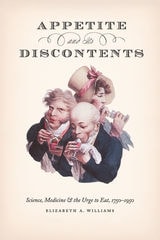
Appetite and Its Discontents
Science, Medicine, and the Urge to Eat, 1750-1950Elizabeth A. Williams
University of Chicago Press, 2020
Williams charts the history of inquiry into appetite between 1750 and 1950, as scientific and medical concepts of appetite shifted alongside developments in physiology, natural history, psychology, and ethology. She shows how, in the eighteenth century, trust in appetite was undermined when researchers who investigated ingestion and digestion began claiming that science alone could say which ways of eating were healthy and which were not. She goes on to trace nineteenth- and twentieth-century conflicts over the nature of appetite between mechanists and vitalists, experimentalists and bedside physicians, and localists and holists, illuminating struggles that have never been resolved. By exploring the core disciplines in investigations in appetite and eating, Williams reframes the way we think about food, nutrition, and the nature of health itself..
Hungry Subjects
Mapping Appetites in the African Cultural LandscapeNjeri Githire
University of Michigan Press, 2026
Against the backdrop of media representations of Africa through persistent and pervasive images of emaciated, starving Africans and the critical need to marshall food aid in response, Hungry Subjects places Africa’s food anxiety within a broader historical context and expands ongoing food scholarship beyond its current confines in the social sciences. Njeri Githire weaves together coming-of-age texts across the African and African diasporic literary landscape in English, French, and Portuguese expression to ask how African writers incorporate food into their storylines to transmit cultural information, question norms, and propose alternatives. Eating is an intimately personal yet inherently social experience codified by public rituals and commerce, invariably linked to a larger tapestry of historical, cultural, economic, and political dynamics. Delving into the political dynamics of food as a tool of power and control alongside subversive potentialities, Hungry Subjects appraises the narrative and political thrust of (not-)eating and exposes the ways in which postcolonial manifestations of colonial-era power relations are symbolized in food’s many functions and meanings.
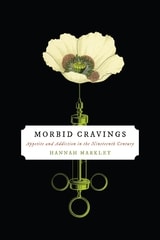
Morbid Cravings
Appetite and Addiction in the Nineteenth CenturyHannah Markley
The Ohio State University Press, 2027
Morbid Cravings is the first book toexamine how eating disorders and drug addiction developed in the nineteenth century as entwined psychosocial responses to imperial-driven cultural demands that Britons regulate their appetites. Through close readings of Jane Austen, Thomas De Quincey, Sydney Whiting, and Arthur Conan Doyle, Hannah Markley explores the comorbidity of these disorders in relation to imperial trade and colonial conquest, applying a postcolonial lens to show us how emerging, separate diagnostic categories were in fact structured by the same social and economic systems.
During the seventeenth and eighteenth centuries, the influx of sugar, tea, coffee, opium, chocolate, and tobacco began to transform British diets and nervous systems, creating dependence on not only these substances but on the colonial systems that delivered them. In turn, medicine attempted to curtail these appetites by promoting restrictive dietary practices. By focusing on how anorexia nervosa, opium-eating, dyspepsia, and compulsive injection emerged in relation to attempts to regulate British appetites for colonial substances, Markley argues that the medico-ideological imperative to restrict appetites produced interrelated representations of eating disorders and addictions that ultimately enacted the voracious logic of British racial capitalism.