Results by title
6 books match the query 'Applied Sciences'

A New Basis for Animal Ethics
Telos and Common SenseBernard E. Rollin
University of Missouri Press, 2016
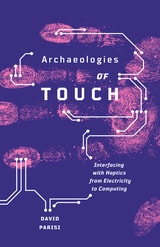
Archaeologies of Touch
Interfacing with Haptics from Electricity to ComputingDavid Parisi
University of Minnesota Press, 2018
A material history of haptics technology that raises new questions about the relationship between touch and media
Since the rise of radio and television, we have lived in an era defined increasingly by the electronic circulation of images and sounds. But the flood of new computing technologies known as haptic interfaces—which use electricity, vibration, and force feedback to stimulate the sense of touch—offering an alternative way of mediating and experiencing reality.
In Archaeologies of Touch, David Parisi offers the first full history of these increasingly vital technologies, showing how the efforts of scientists and engineers over the past three hundred years have gradually remade and redefined our sense of touch. Through lively analyses of electrical machines, videogames, sex toys, sensory substitution systems, robotics, and human–computer interfaces, Parisi shows how the materiality of touch technologies has been shaped by attempts to transform humans into more efficient processors of information.
With haptics becoming ever more central to emerging virtual-reality platforms (immersive bodysuits loaded with touch-stimulating actuators), wearable computers (haptic messaging systems like the Apple Watch’s Taptic Engine), and smartphones (vibrations that emulate the feel of buttons and onscreen objects), Archaeologies of Touch offers a timely and provocative engagement with the long history of touch technology that helps us confront and question the power relations underpinning the project of giving touch its own set of technical media.
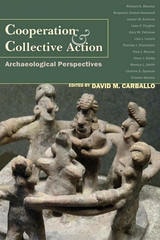
Cooperation and Collective Action
Archaeological PerspectivesDavid M. Carballo
University Press of Colorado, 2013
Disentangling the motivations and institutions that foster group cooperation among competitive individuals remains one of the few great conundrums within evolutionary theory. The breadth and material focus of archaeology provide a much needed complement to existing research on cooperation and collective action, which thus far has relied largely on game-theoretic modeling, surveys of college students from affluent countries, brief ethnographic experiments, and limited historic cases. In Cooperation and Collective Action, diverse case studies address the evolution of the emergence of norms, institutions, and symbols of complex societies through the last 10,000 years. This book is an important contribution to the literature on cooperation in human societies that will appeal to archaeologists and other scholars interested in cooperation research.
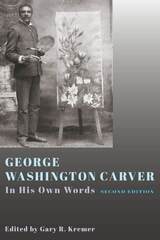
George Washington Carver
In His Own Words, Second EditionGary R. Kremer
University of Missouri Press, 2017
With a new chapter on the oral history interviews Dr. Kremer conducted (several years after publication of the first edition) with people who knew Carver personally, and the addition of newly uncovered documents and a bank of impressive photographs of Carver and some of his friends, this second edition of our classic title commemorates the 75th anniversary of Carver’s death on January 5, 2018.

The Story of Coal and Iron in Alabama
Ethel Armes
University of Alabama Press, 2011
“The principal authority for the general treatment of the history of coal, and of iron and steel, in
Alabama is the work of Miss Ethel Armes. The Story of Coal and Iron in Alabama is a comprehensive
and scholarly work portraying in attractive style the growth of the mineral industries in its
relation to the development of the state and of the South, in preparation of which the author spent
more than five years.”
—Thomas McAdory Owen, History of Alabama and Dictionary of Alabama Biography

Thermal Microwave Radiation
Applications for remote sensingC. Mätzler
The Institution of Engineering and Technology, 2006