Results by title
2 books match the query 'Archaeological Perspective'
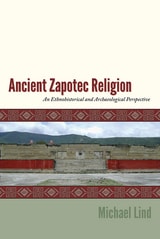
Ancient Zapotec Religion
An Ethnohistorical and Archaeological PerspectiveMichael Lind
University Press of Colorado, 2027
Ancient Zapotec Religion is the first comprehensive study of Zapotec religion as it existed in the southern Mexican state of Oaxaca on the eve of the Spanish Conquest. Author Michael Lind brings a new perspective, focusing not on underlying theological principles but on the material and spatial expressions of religious practice.
Using sixteenth- and seventeenth-century Spanish colonial documents and archaeological findings related to the time period leading up to the Spanish Conquest, he presents new information on deities, ancestor worship and sacred bundles, the Zapotec cosmos, the priesthood, religious ceremonies and rituals, the nature of temples, the distinctive features of the sacred and solar calendars, and the religious significance of the murals of Mitla—the most sacred and holy center. He also shows how Zapotec religion served to integrate Zapotec city-state structure throughout the valley of Oaxaca, neighboring mountain regions, and the Isthmus of Tehuantepec.
Ancient Zapotec Religion is the first in-depth and interdisciplinary book on the Zapotecs and their religious practices and will be of great interest to archaeologists, epigraphers, historians, and specialists in Native American, Latin American, and religious studies.
Food Production in Native North America
An Archaeological PerspectiveKristen J. Gremillion
University Press of Colorado, 2018