Results by title
4 books match the query 'Arson'
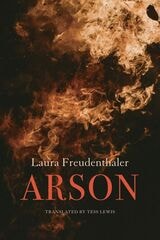
Arson
Laura Freudenthaler
Seagull Books, 2025
A feverish and unsettling meditation on climate collapse, Arson is told through the fragmented perspectives of two individuals struggling to make sense of a world consumed by fire. An unnamed narrator, a writer plagued by anxiety and writer’s block, watches as the planet, her relationships, and even her ability to dream are ravaged by environmental disaster. Meanwhile, an insomniac scientist, obsessed with tracking wildfires, clings to data as his last grip on control, meticulously recording every flame that devours the forests.
Their narratives unfold in a disorienting rhythm—one slipping between lyrical introspection and panic, the other drowning in statistics and methodical observation. As fires rage across the planet, both search for meaning and survival: the narrator wanders the charred countryside in search of life amid destruction, while the scientist compulsively documents landscapes that should never be burning. Echoing Ingeborg Bachmann’s famous words, “With my burned hand I write about the nature of fire,” Laura Freudenthaler crafts a haunting, kaleidoscopic portrait of a world on the brink. Arson is not just a novel about climate change—it is an urgent, dreamlike reckoning with our fascination and horror at the beauty and devastation wrought by fire.
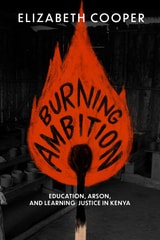
Burning Ambition
Education, Arson, and Learning Justice in KenyaElizabeth Cooper
University of Wisconsin Press, 2022
Drawing from years of research and a rich array of sources, Cooper accounts for how school fires stoke a national conversation about the limited means for ordinary Kenyans, and especially youth, to peacefully influence the governance of their own lives. Further, Cooper argues that Kenyan students’ actions challenge the existing complacency with the globalized agenda of “education for all,” demonstrating that submissive despondency is not the only possible response to the failed promises of education to transform material and social inequalities.
From Hate to Hallows
Reframing Black Church ArsonTodne Thomas
Duke University Press, 2026
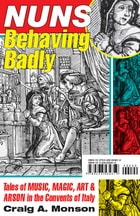
Nuns Behaving Badly
Tales of Music, Magic, Art, and Arson in the Convents of ItalyCraig A. Monson
University of Chicago Press, 2010
Witchcraft. Arson. Going AWOL. Some nuns in sixteenth- and seventeenth-century Italy strayed far from the paradigms of monastic life. Cloistered in convents, subjected to stifling hierarchy, repressed, and occasionally persecuted by their male superiors, these women circumvented authority in sometimes extraordinary ways. But tales of their transgressions have long been buried in the Vatican Secret Archive. That is, until now.
In Nuns Behaving Badly, Craig A. Monson resurrects forgotten tales and restores to life the long-silent voices of these cloistered heroines. Here we meet nuns who dared speak out about physical assault and sexual impropriety (some real, some imagined). Others were only guilty of misjudgment or defacing valuable artwork that offended their sensibilities. But what unites the women and their stories is the challenges they faced: these were women trying to find their way within the Catholicism of their day and through the strict limits it imposed on them. Monson introduces us to women who were occasionally desperate to flee cloistered life, as when an entire community conspired to torch their convent and be set free. But more often, he shows us nuns just trying to live their lives. When they were crossed—by powerful priests who claimed to know what was best for them—bad behavior could escalate from mere troublemaking to open confrontation.
In resurrecting these long-forgotten tales and trials, Monson also draws attention to the predicament of modern religious women, whose “misbehavior”—seeking ordination as priests or refusing to give up their endowments to pay for priestly wrongdoing in their own archdioceses—continues even today. The nuns of early modern Italy, Monson shows, set the standard for religious transgression in their own age—and beyond.