Results by title

6 books match the query 'Art, British'

cover of After the Pre-Raphaelites: Art and Aestheticism in Victorian England

After the Pre-Raphaelites

Art and Aestheticism in Victorian England

Elizabeth Prettejohn

Rutgers University Press, 1999

What happened in Victorian painting and sculpture after the Pre-Raphaelites? Aestheticism has been called the next avant-garde movement but attention has centered on literary figures such as Algernon Charles Swinburne, Walter Pater, and Oscar Wilde. This volume is the first scholarship study of parallel trends in the visual arts, including the work of Dante Gabriel Rossetti, James McNeill Whistler, Edward Burne-Jones, Simeon Solomon, and Albert Moore among others.

Victorian Aestheticism has often been traded as a frivolous elevation of art above the concerns of political and social life. This book reinterprets Aestheticism as a significant exploration of what it might mean to produce works of art in the modern world. The chapters address not only "art for art's sake" but also linkages with the realms of science and morality. A major concern is the relationship between art and sexuality, from the experiments of the Rossetti circle in the 1860s to the male nude in late-Victorian sculpture. Both homosexual and heterosexual eroticism emerge as key issues in the artistic debates of the late-Victorian period.

As a complement to the existing literature on Pre-Raphaelitism, this collection is essential reading for all students of nineteenth-century art, literature, and culture.

Contributors are: Caroline Arscott, Robyn Asleson, Colin Cruise, Whitney Davis, Kate Flint, Alastair Grieve, Michael Hatt, Anne Koval, Alison Smith, and Robin Spencer
[more]
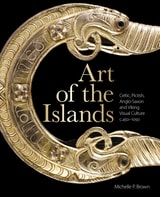
cover of Art of the Islands: Celtic, Pictish, Anglo-Saxon and Viking Visual Culture, c. 450-1050

Art of the Islands

Celtic, Pictish, Anglo-Saxon and Viking Visual Culture, c. 450-1050

Michelle P. Brown

Bodleian Library Publishing, 2015

The Celtic, Pictish, Anglo-Saxon, and Viking peoples who inhabited the British Isles and Ireland from late prehistory to the Normal Conquest left behind a rich visual heritage that continues to be felt today. The traditions of each of these peoples has been studied separately, but rarely has the historical interaction of these cultures been adequately considered.
           
Michelle P. Brown remedies this oversight, presenting an extensively illustrated art historical overview of this formative period in the region’s history. Describing the interactions between the region’s inhabitants, she also explores the formation of national and regional identities. Brown ranges across works as diverse as the Book of Kells, the Tara Brooch, the Aberlemno Stone, the Lindisfarne Gospels, the Alfred Jewel, and the Benedictional of St. Ethelwold, showing how their complex imagery can be best interpreted. She also considers the impact of the art of this period upon the history of art in general, exploring how it has influenced many movements since, from the Carolingian Renaissance and the Romanesque style to the nineteenth-century Arts and Crafts movement.
[more]
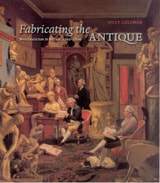
cover of Fabricating the Antique: Neoclassicism in Britain, 1760-1800

Fabricating the Antique

Neoclassicism in Britain, 1760-1800

Viccy Coltman

University of Chicago Press, 2006

Between 1760 and 1800, British aristocrats became preoccupied with the acquisition of ancient Greek and Roman artifacts. From marble busts to intricately painted vases, these antiquities were amassed in vast collections held in country houses and libraries throughout Britain. In Fabricating the Antique, Viccy Coltman examines these objects and their owners, as well as dealers, restorers, designers, and manufacturers. She provides a close look at the classical revival that resulted in this obsession with collecting antiques.

Looking at the theoretical foundations of neoclassicism, Coltman contends this reinvention of ancient material culture was more than a fabrication of style. Based in the strong emphasis on classical education during this time, neoclassicism, Coltman claims, could be more accurately described as a style of thought translated into material possessions. Fabricating the Antique is a new take on both well-known collections of ancient art and newly cataloged artifacts. This book also covers how these objects—once removed from their original context—were received, preserved, and displayed. Art historians, classicists, and archaeologists alike will benefit from this important examination of British eighteenth-century history.
[more]
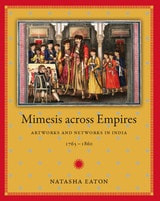
cover of Mimesis across Empires: Artworks and Networks in India, 1765-1860

Mimesis across Empires

Artworks and Networks in India, 1765-1860

Natasha Eaton

Duke University Press, 2013
In Mimesis Across Empires, Natasha Eaton examines the interactions, attachments, and crossings between the visual cultures of the Mughal and British Empires during the formative period of British imperial rule in India. Eaton explores how the aesthetics of Mughal "vernacular" art and British "realist" art mutually informed one another to create a hybrid visual economy. By tracing the exchange of objects and ideas—between Mughal artists and British collectors, British artists and Indian subjects, and Indian elites and British artists—she shows how Mughal artists influenced British conceptions of their art, their empire, and themselves, even as European art gave Indian painters a new visual vocabulary with which to critique colonial politics and aesthetics. By placing her analysis of visual culture in relation to other cultural encounters—ethnographic, legislative, diplomatic—Eaton uncovers deeper intimacies and hostilities between the colonizer and the colonized, linking artistic mimesis to the larger colonial project in India.
[more]
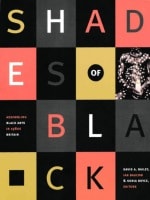
cover of Shades of Black: Assembling Black Arts in 1980s Britain

Shades of Black

Assembling Black Arts in 1980s Britain

David A. Bailey, Ian Baucom, and Sonia Boyce, eds.

Duke University Press, 2005

In the 1980s—at the height of Thatcherism and in the wake of civil unrest and rioting in a number of British cities—the Black Arts Movement burst onto the British art scene with breathtaking intensity, changing the nature and perception of British culture irreversibly. This richly illustrated volume presents a history of that movement. It brings together in a lively dialogue leading artists, curators, art historians, and critics, many of whom were actively involved in the Black Arts Movement. Combining cultural theory with anecdote and experience, the contributors debate how the work of the black British artists of the 1980s should be viewed historically. They consider the political, cultural, and artistic developments that sparked the movement even as they explore the extent to which such a diverse body of work can be said to constitute a distinct artistic movement—particularly given that “black” in Britain in the 1980s encompassed those of South Asian, North and sub-Saharan African, and Caribbean descent, referring as much to shared experiences of disenfranchisement as to shades of skin.

In thirteen original essays, the contributors examine the movement in relation to artistic practice, public funding, and the transnational art market and consider its legacy for today’s artists and activists. The volume includes a unique catalog of images, an extensive list of suggested readings, and a descriptive timeline situating the movement vis-à-vis relevant artworks and films, exhibitions, cultural criticism, and political events from 1960 to 2000. A dynamic living archive of conversations, texts, and images, Shades of Black will be an essential resource.

Contributors. Stanley Abe, Jawad Al-Nawab, Rasheed Araeen, David A. Bailey, Adelaide Bannerman, Ian Baucom, Dawoud Bey, Sonia Boyce, Allan deSouza, Jean Fisher, Stuart Hall, Lubaina Himid, Naseem Khan, susan pui san lok, Kobena Mercer, Yong Soon Min, Keith Piper, Zineb Sedira, Gilane Tawadros, Leon Wainwright, Judith Wilson
[more]
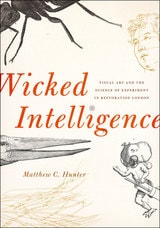
cover of Wicked Intelligence: Visual Art and the Science of Experiment in Restoration London

Wicked Intelligence

Visual Art and the Science of Experiment in Restoration London

Matthew C. Hunter

University of Chicago Press, 2013

In late seventeenth-century London, the most provocative images were produced not by artists, but by scientists. Magnified fly-eyes drawn with the aid of microscopes, apparitions cast on laboratory walls by projection machines, cut-paper figures revealing the “exact proportions” of sea monsters—all were created by members of the Royal Society of London, the leading institutional platform of the early Scientific Revolution. Wicked Intelligence reveals that these natural philosophers shaped Restoration London’s emergent artistic cultures by forging collaborations with court painters, penning art theory, and designing triumphs of baroque architecture such as St Paul’s Cathedral.
 
Matthew C. Hunter brings to life this archive of experimental-philosophical visualization and the deft cunning that was required to manage such difficult research. Offering an innovative approach to the scientific image-making of the time, he demonstrates how the Restoration project of synthesizing experimental images into scientific knowledge, as practiced by Royal Society leaders Robert Hooke and Christopher Wren, might be called “wicked intelligence.” Hunter uses episodes involving specific visual practices—for instance, concocting a lethal amalgam of wax, steel, and sulfuric acid to produce an active model of a comet—to explore how Hooke, Wren, and their colleagues devised representational modes that aided their experiments. Ultimately, Hunter argues, the craft and craftiness of experimental visual practice both promoted and menaced the artistic traditions on which they drew, turning the Royal Society projects into objects of suspicion in Enlightenment England.
 
The first book to use the physical evidence of Royal Society experiments to produce forensic evaluations of how scientific knowledge was generated, Wicked Intelligence rethinks the parameters of visual art, experimental philosophy, and architecture at the cusp of Britain’s imperial power and artistic efflorescence.
[more]