Results by title

8 books match the query 'Art, Chinese'
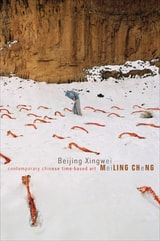
cover of Beijing Xingwei: Contemporary Chinese Time-based Art

Beijing Xingwei

Contemporary Chinese Time-based Art

Meiling Cheng

Seagull Books, 2013

From cannibalism to light-calligraphy, from self-harming to animal sacrifice, from meat entwined with sex toys to a commodity-embedded ice wall, the idiosyncratic output of Chinese time-based art over the past twenty-five years has invigorated contemporary global art movements and conversation. In Beijing Xingwei, Meiling Cheng engages with such artworks created to mark China's rapid social, economical, cultural, intellectual, and environmental transformations in its post-Deng era.
Beijing Xingwei—itself a critical artwork with text and images unfolding through the author’s experiences with the mutable medium—contemplates the conundrum of creating site-specific ephemeral and performance-based artworks for global consumption. Here, Cheng shows us how art can reflect, construct, confound, and enrich us. And at a moment when time is explicitly linked with speed and profit, Beijing Xingwei provides multiple alternative possibilities for how people with imagination can spend, recycle, and invent their own time.
 
 
[more]
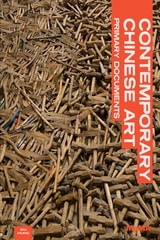
cover of Contemporary Chinese Art: Primary Documents

Contemporary Chinese Art

Primary Documents

Wu Hung, editor

Duke University Press, 2010

Despite the liveliness and creativity of avant-garde Chinese art in the post-Mao era and its prominence in the world of international contemporary art, until now there has been no systematic introduction to this important work in any Western language. Moreover, most of the relevant primary documents have existed only in Chinese, scattered in hard-to-find publications. Contemporary Chinese Art remedies this situation by bringing together carefully selected primary texts in English translation. Arranged in chronological order, the texts guide readers through the development of avant-garde Chinese art from 1976 until 2006. Because experimental Chinese art emerged as a domestic phenomenon in the 1970s and 1980s and its subsequent development has been closely related to China’s social and economical transformation, this volume focuses on art from mainland China. At the same time, it encompasses the activities of mainland artists residing overseas, since artists who emigrated in the 1980s and 1990s were often key participants in the early avant-garde movements and have continued to interact with the mainland art world. The primary documents include the manifestos of avant-garde groups, prefaces to important exhibitions, writings by representative artists, important critical and analytical essays, and even some official documents. Each chapter and section begins with a concise preface explaining the significance of the texts and providing the necessary historical background; the volume includes a timeline summarizing important art phenomena and related political events.

Publication of the Museum of Modern Art
[more]
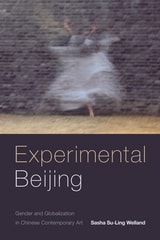
cover of Experimental Beijing: Gender and Globalization in Chinese Contemporary Art

Experimental Beijing

Gender and Globalization in Chinese Contemporary Art

Sasha Su-Ling Welland

Duke University Press, 2018
During the lead-up to the 2008 Beijing Olympics, the censorious attitude that characterized China's post-1989 official response to contemporary art gave way to a new market-driven, culture industry valuation of art. Experimental artists who once struggled against state regulation of artistic expression found themselves being courted to advance China's international image. In Experimental Beijing Sasha Su-Ling Welland examines the interlocking power dynamics in this transformational moment and rapid rise of Chinese contemporary art into a global phenomenon. Drawing on ethnographic fieldwork and experience as a videographer and curator, Welland analyzes encounters between artists, curators, officials, and urban planners as they negotiated the social role of art and built new cultural institutions. Focusing on the contradictions and exclusions that emerged, Welland traces the complex gender politics involved and shows that feminist forms of art practice hold the potential to reshape consciousness, produce a nonnormative history of Chinese contemporary art, and imagine other, more just worlds.
[more]
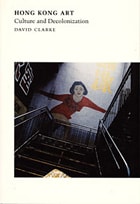
cover of Hong Kong Art: Culture and Decolonization

Hong Kong Art

Culture and Decolonization

David Clarke

Duke University Press, 2002

Hong Kong Art is the first comprehensive survey of contemporary art from Hong Kong presented within the changing social and political context of the territory’s 1997 handover from British to Chinese sovereignty. Tracing a distinctive and increasingly vibrant art scene from the late 1960s through the present, David Clarke discusses a wide range of media, including painting, sculpture, photography, video, and installations, as well as other kinds of visual production such as architecture, fashion, graphic design, and graffiti.
Clarke shows how a sense of local identity emerged in Hong Kong as the transition approached and found expression in the often politicized art produced. Given the recent international exposure of mainland Chinese contemporary art, this book considers the uniqueness of the art of China’s most cosmopolitan city. With a modern visual culture that was flourishing even when the People’s Republic was still closed to the outside world, Hong Kong has established itself as an exemplary site for both local and transnational elements to formulate into brilliant and groundbreaking art.
The author writes about individual artists and art works with a detail that will appeal to artists, curators, and art historians, as well as to postcolonial scholars, cultural studies scholars, and others.
[more]
cover of Minor China: Method, Materialisms, and the Aesthetic

Minor China

Method, Materialisms, and the Aesthetic

Hentyle Yapp

Duke University Press, 2021
In Minor China Hentyle Yapp analyzes contemporary Chinese art as it circulates on the global art market to outline the limitations of Western understandings of non-Western art. Yapp reconsiders the all-too-common narratives about Chinese art that celebrate the heroic artist who embodies political resistance against the authoritarian state. These narratives, as Yapp establishes, prevent Chinese art, aesthetics, and politics from being discussed in the West outside the terms of Western liberalism and notions of the “universal.” Yapp engages with art ranging from photography and performance to curation and installations to foreground what he calls the minor as method—tracking aesthetic and intellectual practices that challenge the predetermined ideas and political concerns that uphold dominant conceptions of history, the state, and the subject. By examining the minor in the work of artists such as Ai Weiwei, Zhang Huan, Cao Fei, Cai Guo-Qiang, Carol Yinghua Lu, and others, Yapp demonstrates that the minor allows for discussing non-Western art more broadly and for reconfiguring dominant political and aesthetic institutions and structures.
[more]
cover of Ordinary Images

Ordinary Images

Stanley K. Abe

University of Chicago Press, 2002

This richly illustrated book explores the large body of sculpture, paintings, and other religious imagery produced for China's common classes from the third to the sixth centuries C.E. In contrast to the works made for imperial patrons, illustrious monastics, or other luminaries, these ordinary images-modest in scale, mass produced, and at times incomplete-were created for those of lesser standing. Because they cannot be related to well-known historical figures or social groups, these images have been considered a largely nebulous, undistinguished mass of works.

Situating his study in the gaps between conventional categories such as Buddhism, Daoism, and Chinese popular art, Abe examines works—including some of the earliest known examples of Buddha-like images in China—that were commissioned by patrons of modest standing and produced by nameless artists and artisans. Sophisticated and lucidly written, Ordinary Images offers an unprecedented exploration of the lively and diverse nature of image making and popular practices.
[more]
cover of Paris and the Art of Transposition: Early Twentieth Century Sino-French Encounters

Paris and the Art of Transposition

Early Twentieth Century Sino-French Encounters

Angie Chau

University of Michigan Press, 2023

A brief stay in France was, for many Chinese workers and Chinese Communist Party leaders, a vital stepping stone for their careers during the cultural and political push to modernize China after World War I. For the Chinese students who went abroad specifically to study Western art and literature, these trips meant something else entirely. Set against the backdrop of interwar Paris, Paris and the Art of Transposition uncovers previously marginalized archives to reveal the artistic strategies employed by Chinese artists and writers in the early twentieth-century transnational imaginary and to explain why Paris played such a central role in the global reception of modern Chinese literature and art. 

While previous studies of Chinese modernism have focused on how Western modernist aesthetics were adapted or translated to the Chinese context, Angie Chau does the opposite by turning to Paris in the Chinese imaginary and discussing the literary and visual artwork of five artists who moved between France and China: the painter Chang Yu, the poet Li Jinfa, the art critic Fu Lei, the painter Pan Yuliang, and the writer Xu Xu. Chau draws the idea of transposition from music theory where it refers to shifting music from one key or clef to another, or to adapting a song originally composed for one instrument to be played by another. Transposing transposition to the study of art and literature, Chau uses the term to describe a fluid and strategic art practice that depends on the tension between foreign and familiar, new and old, celebrating both novelty and recognition—a process that occurs when a text gets placed into a fresh context.
[more]
cover of Transience: Chinese Experimental Art at the End of the Twentieth Century

Transience

Chinese Experimental Art at the End of the Twentieth Century

Wu Hung

University of Chicago Press, 2006

In a groundbreaking approach to avant-garde Chinese art, the 1999 exhibition "Transience: Chinese Experimental Art at the End of the Twentieth Century" established a historical framework for current artistic production in China. Organized by the David and Alfred Smart Museum of Art at the University of Chicago, the show and its catalog highlighted the diverse responses of twenty-two artists to Chinas recent history and current social transformation.

These detailed essays on the artists and their works are now available in a revised edition of the exhibition catalog. Written by Wu Hung, a leading authority and the curator of the exhibit, Transience explores contemporary Chinese art through the themes of demystification, ruins, and transience, and represents an original perspective in the continuing discussion on Chinese experimental art.
[more]