Results by title
4 books match the query 'Art and mental illness'
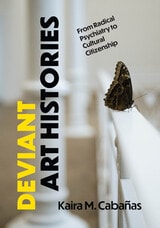
Deviant Art Histories
From Radical Psychiatry to Cultural CitizenshipKaira M. Cabañas
University of Chicago Press, 2027
A groundbreaking examination of the entanglement between psychiatry, art, and art history.
Looking beyond the white walls of art galleries and museums, Kaira M. Cabañas explores art history through the psychiatric wards of the twentieth century, offering a reevaluation of the relationship between madness, making, and the art world and considering the deeply intertwined fields of psychiatry and art.
Putting aside romanticized myths about “outsider art,” Cabañas argues for a radical revisioning that centers artists in psychiatric settings not as deviants and curiosities but rather as skilled, sophisticated innovators and active participants in shared culture. Beginning with the story of legendary art historian Aby Warburg, whose own psychiatric internment and subsequent recovery serve as a point of departure, the narrative then covers the globe, following visionary reformers such as Nise da Silveira in Brazil and Franco and Franca Basaglia in Italy. The book tracks how psychiatrists collaborated with professional artists and patients to turn clinical spaces into laboratories of liberation. By documenting how patient-artists moved from being subjects of clinical study to recognized cultural producers, Deviant Art Histories demonstrates how art was a primary vehicle for reclaiming their agency. Featuring a diverse cast of figures—including Lygia Clark, Ornette Coleman, and Antonin Artaud—the book offers a powerful testament to art’s ability to break the clinical frame and transform the definition of what it means to be a creative citizen in the modern world.

Learning from Madness
Brazilian Modernism and Global Contemporary ArtKaira M. Cabañas
University of Chicago Press, 2018
Kaira M. Cabañas shows that at the center of this advocacy stood such significant proponents as psychiatrists Osório César and Nise da Silveira, who championed treatments that included painting and drawing studios; and the art critic Mário Pedrosa, who penned Gestaltist theses on aesthetic response. Cabañas examines the lasting influence of this unique era of Brazilian modernism, and how the afterlife of this “outsider art” continues to raise important questions. How do we respect the experiences of the mad as their work is viewed through the lens of global art? Why is this art reappearing now that definitions of global contemporary art are being contested?
Learning from Madness offers an invigorating series of case studies that track the parallels between psychiatric patients’ work in Western Europe and its reception by influential artists there, to an analogous but altogether distinct situation in Brazil.
Learning from the High Priestess
Affect, Femme Care, and Somatic PracticeAnn Cvetkovich
Duke University Press, 2026

Mental Traveler
A Father, a Son, and a Journey through SchizophreniaW. J. T. Mitchell
University of Chicago Press, 2020
Gabriel Mitchell was diagnosed with schizophrenia at age twenty-one and died by suicide eighteen years later. He left behind a remarkable archive of creative work and a father determined to honor his son’s attempts to conquer his own illness. Before his death, Gabe had been working on a film that would show madness from inside and out, as media stereotype and spectacle, symptom and stigma, malady and minority status, disability and gateway to insight. He was convinced that madness is an extreme form of subjective experience that we all endure at some point in our lives, whether in moments of ecstasy or melancholy, or in the enduring trauma of a broken heart. Gabe’s declared ambition was to transform schizophrenia from a death sentence to a learning experience, and madness from a curse to a critical perspective.
Shot through with love and pain, Mental Traveler shows how Gabe drew his father into his quest for enlightenment within madness. It is a book that will touch anyone struggling to cope with mental illness, and especially for parents and caregivers of those caught in its grasp.