Results by title
8 books match the query 'Art and philosophy'
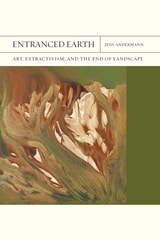
Entranced Earth
Art, Extractivism, and the End of LandscapeJens Andermann
Northwestern University Press, 2023
A sweeping analysis of the lasting effects of neocolonial extractivism in Latin American aesthetic modernity from 1920 to the present
Looking to the extractive frontier as a focal point of Latin American art, literature, music, and film, Jens Andermann asks what emerges at the other end of landscape. Art in the Global South has long represented and interrogated “insurgent nature”—organic and inorganic matter, human and nonhuman life, thrown into turmoil.
In Entranced Earth: Art, Extractivism, and the End of Landscape, Andermann traces the impact of despaisamiento—world-destroying un-landscaping—throughout the Latin American modernist archive. At the same time, he explores innovative, resilient modes of allyship forged between diverse actors through their shared experiences of destruction. From the literary regionalism of the 1930s to contemporary bio art, from modernist garden architecture to representations of migration and displacement in sound art and film, Entranced Earth tracks the crisis of landscape and environmental exhaustion beyond despair toward speculative, experimental forms of survival.

Kierkegaard, Literature, and the Arts
Edited by Eric Ziolkowski
Northwestern University Press, 2018
The essays in Kierkegaard, Literature, and the Arts, contextualized with an insightful introduction by Eric Ziolkowski, explore Kierkegaard’s relationship to literature (poetry, prose, and storytelling), the performing arts (theater, music, opera, and dance), and the visual arts, including film. The collection is rounded out with a comparative section that considers Kierkegaard in juxtaposition with a romantic poet (William Blake), a modern composer (Arnold Schoenberg), and a contemporary singer‑songwriter (Bob Dylan). Kierkegaard was as much an aesthetic thinker as a philosopher, and his philosophical writings are complemented by his literary and music criticism.
Kierkegaard, Literature, and the Arts will offer much of interest to scholars concerned with Kierkegaard as well as teachers, performers, and readers in the various aesthetic fields discussed.
CONTRIBUTORS: Christopher B. Barnett, Martijn Boven, Anne Margrete Fiskvik, Joakim Garff, Ronald M. Green, Peder Jothen, Ragni Linnet, Jamie A. Lorentzen, Edward F. Mooney, George Pattison, Nils Holger Petersen, Howard Pickett, Marcia C. Robinson, James Rovira
On Obliteration
An Interview with Françoise Armengaud Concerning the Work of Sacha SosnoEmmanuel Levinas
Diaphanes, 2019
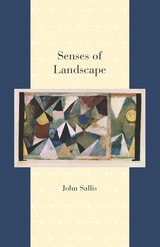
Senses of Landscape
John Sallis
Northwestern University Press, 2015
Beginning with the assertion that earth is the elemental place that grants an abode to humans and to other living things, in Senses of Landscape the philosopher John Sallis turns to landscapes, and in particular to their representation in painting, to present a powerful synthetic work.
Senses of Landscape proffers three kinds of analyses, which, though distinct, continually intersect in the course of the book. The first consists of extended analyses of distinctive landscapes from four exemplary painters, Paul Cezanne, Caspar David Friedrich, Paul Klee, and Guo Xi. Sallis then turns to these artists’ own writings—treatises, essays, and letters—about art in general and landscape painting in particular, and he sets them into a philosophical context. The third kind of analysis draws both on Sallis’s theoretical writings and on the canonical texts in the philosophy of art (Kant, Schelling, Hegel, and Heidegger). These analyses present for a wide audience a profound sense of landscape and of the earthly abode of the human.
The Dionysian Vision of the World
Friedrich Nietzsche
University of Minnesota Press, 2012
Before the world knew of the thinker who “philosophizes with a hammer,” there was a young, passionate thinker who was captivated by the two forces found within Greek art: Dionysus and Apollo. In this essay, which was the forerunner to his groundbreaking book The Birth of Tragedy, The Dionysian Vision of the World provides an unparalleled look into the philosophical mind of one of Europe’s greatest and provocative intellects at the beginning of his philosophical interrogation on the subject of art. “While dreaming is the game man plays with reality as an individual, the visual artist (in the larger sense) plays a game with dreaming.” This is the Dionysian vision of the world.
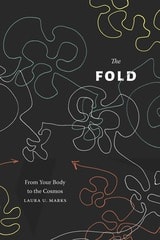
The Fold
From Your Body to the CosmosLaura U. Marks
Duke University Press, 2024
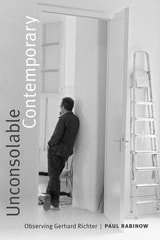
Unconsolable Contemporary
Observing Gerhard RichterPaul Rabinow
Duke University Press, 2017
Violence and Splendor
Alphonso Lingis
Northwestern University Press, 2011
“The Sacred” studies the ways death—the death of others and our own death—fascinates and energizes us. It exhibits the glory in violence and sacrilege. The book culminates in “Splendor,” a study of collective performances that create splendor. Concerning itself most immediately with philosophy, psychology, aesthetics, anthropology, and the theory of religion, Violence and Splendor bridges the discourses of continental philosophy and cross-cultural studies. Further drawing insights from both Western and non-Western traditions, it brings such diverse fields as psychology, art and aesthetics, botany, politics, history, zoology, and religious theory into a new and significant dialogue about the nature of humanity.