Results by title

11 books match the query 'Art and science'
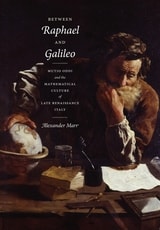
cover of Between Raphael and Galileo: Mutio Oddi and the Mathematical Culture of Late Renaissance Italy

Between Raphael and Galileo

Mutio Oddi and the Mathematical Culture of Late Renaissance Italy

Alexander Marr

University of Chicago Press, 2011

Although largely unknown today, during his lifetime Mutio Oddi of Urbino (1569–1639) was a highly esteemed scholar, teacher, and practitioner of a wide range of disciplines related to mathematics. A prime example of the artisan-scholar so prevalent in the late Renaissance, Oddi was also accomplished in the fields of civil and military architecture and the design and retail of mathematical instruments, as well as writing and publishing. 

In Between Raphael and Galileo, Alexander Marr resurrects the career and achievements of Oddi in order to examine the ways in which mathematics, material culture, and the book shaped knowledge, society, and the visual arts in late Renaissance Italy. Marr scrutinizes the extensive archive of Oddi papers, documenting Oddi’s collaboration with prominent intellectuals and officials and shedding new light on the practice of science and art during his day. What becomes clear is that Oddi, precisely because he was not spectacularly innovative and did not attain the status of a hero in modern science, is characteristic of the majority of scientific practitioners and educators active in this formative age, particularly those whose energetic popularization of mathematics laid the foundations for the Scientific Revolution. Marr also demonstrates that scientific change in this era was multivalent and contested, governed as much by friendship as by principle and determined as much by places as by purpose.

Plunging the reader into Oddi’s world, Between Raphael and Galileo is a finely wrought and meticulously researched tale of science, art, commerce, and society in the late sixteenth and early seventeenth century. It will become required reading for any scholar interested in the history of science, visual art, and print culture of the Early Modern period.
[more]
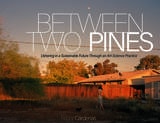
cover of Between Two Pines: Ushering in a Sustainable Future Through an Art-Science Practice

Between Two Pines

Ushering in a Sustainable Future Through an Art-Science Practice

Edgar Cardenas

Michigan Publishing Services, 2019

The stories we tell matter. They shape and frame how we identify, understand, and address challenges. Many of the sustainability stories being told and re-told have been predicated on the idea that techno-scientific solutions will be our salvation. Rarely do they deeply interrogate the cultural and aesthetic factors that contribute to our human-environment relationships. Between Two Pines builds on the growing realization that artists must contribute to and enlarge our current conceptions of sustainability. This book explores how conceptions of the sublime, beauty, and the picturesque influenced the development of our natural aesthetic sensibilities and resolves that sustainability stewardship will require the intersection of ecology, aesthetics, and ethics. Pivoting off the history of landscape photography, Cardenas proposes a sustainability aesthetic, a framework for how the arts can reposition themselves for a sustainability social practice. The book concludes with one hundred little dramas, a body of photographic work that puts to practice his sustainability aesthetic. Between Two Pines places scholarship and art on equal footing, ultimately providing a framework and examples of how art practice can and must be integrated into dialogues and narratives on transitioning into a more sustainable future.
 
*   *   *

“I am truly thankful that Dr. Edgar Cardenas’s thoughtful research is now available in this beautiful book. I have recommended his work to more people, both in my personal and professional spheres of my life, than I can count, and I’m glad to have this provocative and elegant publication to put into people’s hands. Cardenas shows us how each of us really can make a difference.”
Rebecca A. Senf, Chief Curator, Center for Creative Photography, University of Arizona, and author of Making a Photographer
 
“A truly beautiful and thought provoking treatise on the productive relationship between art and science. In Between Two Pines, Cardenas breaks new interdisciplinary ground through an innovative rethinking of sustainability. This book is a call to action that forces the reader to rethink the antiquated and often paralyzing divisions between the arts and the hard sciences.”
Jason De León, Anthropology and Chicana/o Studies, UCLA, MacArthur Fellow, and author of The Land of Open Graves
 
“Understanding that broad and complex fields of inquiry must be committed to multiple approaches, Edgar Cardenas makes a cogent and well-grounded case for artistic research in the literatures of sustainability. He also offers his own visual essay—punctuated by philosophical reference and personal reflection—on what it means to live fully engaged with the often unnoticed world at our fingertips. Between Two Pines is an insightful offering on how to open the door to artistic practices in research.”
Joey Orr, Andrew W. Mellon Curator for Research, Spencer Museum of Art, University of Kansas

“Between Two Pines anticipates and leads the discussion of scholarship around questions of land and landscape. This work brilliantly and ethically refocuses our vision, from distanced scrutiny to connection and proximity, rooted in daily care-taking and ecological efforts. Thoughtfully imaged, the photographs offer an aesthetic that is based in balanced, enduring reflection, rather than on the grand view. These beautiful images reveal discoveries that bridge the arts, ecology, and sociology, and will serve to reconnect every reader with the world in their backyard and beyond.”
Rebekah Modrak, School of Art & Design, University of Michigan, and author of Reframing Photography

“Drawing from a long photographic tradition of examining the relationship between humans and their environment, Edgar Cardenas has found a voice that is as compassionate as it is poignant. Yet he is not content for his photographs to be mere observations, recording the relationship. Between Two Pines is a call to action – a platform by which we might imagine together, with all of the tools in our tool kit, a sustainable future.”
J.D. Talasek, Director, Cultural Programs of the National Academy of Sciences
 
"This book is about many things.  It is about storytelling, and it tells stories.  It is about aesthetics and awareness, and it envelopes us in its distinctive aesthetic and heightens our awareness.  It presents science and art as complementary modes of inquiry, and uses art and science to guide us along a path of inquiry.  Words and images combine to carry us along an exploration of what sustainability means as a principle in everyday life.  "One hundred little dramas" complete the book by immersing the reader--who has now become an observer and inquirer, collaborating with the author--in a world re-enchanted through compassionate observation, free of glamour or pity." 
Edward J. Hackett, Vice Provost for Research, Brandeis University
[more]
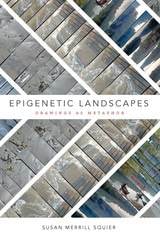
cover of Epigenetic Landscapes: Drawings as Metaphor

Epigenetic Landscapes

Drawings as Metaphor

Susan Merrill Squier

Duke University Press, 2017
Devised in the 1940s by the biologist C. H. Waddington, the epigenetic landscape is a metaphor for how gene regulation modulates cellular development. As a scientific model, it fell out of use in the late 1960s but returned at the beginning of the twenty-first century with the advent of big-data genomic research because of its utility among scientists across the life sciences to think more creatively about and to discuss genetics. In Epigenetic Landscapes Susan Merrill Squier follows the model’s cultural trail, from its first visualization by the artist John Piper to its use beyond science. Squier examines three cases in which the metaphor has been imaginatively deployed to illustrate complex systems that link scientific and cultural practices: graphic medicine, landscape architecture, and bioArt. Challenging reductive understandings of epigenetics, Squier boldly reclaims the broader significance of the epigenetic landscape as a figure at the nexus of art, design, and science.
[more]
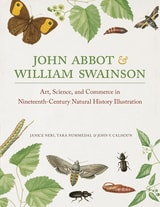
cover of John Abbot and William Swainson: Art, Science, and Commerce in Nineteenth-Century Natural History Illustration

John Abbot and William Swainson

Art, Science, and Commerce in Nineteenth-Century Natural History Illustration

Janice Neri, Tara Nummedal, and John V. Calhoun

University of Alabama Press, 2019

An archive of never-before-published illustrations of insects and plants painted by a pioneering naturalist

During his lifetime (1751–ca. 1840), English-born naturalist and artist John Abbot rendered more than 4,000 natural history illustrations and profoundly influenced North American entomology, as he documented many species in the New World long before they were scientifically described. For sixty-five years, Abbot worked in Georgia to advance knowledge of the flora and fauna of the American South by sending superbly mounted specimens and exquisitely detailed illustrations of insects, birds, butterflies, and moths, on commission, to collectors and scientists all over the world.

Between 1816 and 1818, Abbot completed 104 drawings of insects on their native plants for English naturalist and patron William Swainson (1789–1855). Both Abbot and Swainson were artists, naturalists, and collectors during a time when natural history and the sciences flourished. Separated by nearly forty years in age, Abbot and Swainson were members of the same international communities and correspondence networks upon which the study of nature was based during this period.
 
The relationship between these two men—who never met in person—is explored in John Abbot and William Swainson: Art, Science, and Commerce in Nineteenth-Century Natural History Illustration. This volume also showcases, for the first time, the complete set of original, full-color illustrations discovered in 1977 in the Alexander Turnbull Library in Wellington, New Zealand. Originally intended as a companion to an earlier survey of insects from Georgia, the newly rediscovered Turnbull manuscript presents beetles, grasshoppers, butterflies, moths, and a wasp. Most of the insects are pictured with the flowering plants upon which Abbot thought them to feed. Abbot’s journal annotations about the habits and biology of each species are also included, as are nomenclature updates for the insect taxa.

Today, the Turnbull drawings illuminate the complex array of personal and professional concerns that informed the field of natural history in the eighteenth and nineteenth centuries. These illustrations are also treasured artifacts from times past, their far-flung travels revealing a world being reshaped by the forces of global commerce and information exchange even then. The shared project of John Abbot and William Swainson is now brought to completion, signaling the beginning of a new phase of its significance for modern readers and scholars.
[more]
cover of NanoCulture: Implications of the New Technoscience

NanoCulture

Implications of the New Technoscience

Edited by N. Katherine Hayles

Intellect Books, 2004

"Nano" denotes a billionth; a nanometer is a billionth of a meter. New instrumentation and techniques have for the first time made possible materials research and engineering at this level, the scale of individual molecules and atoms.
Extraordinary visions of material abundance, unprecedented materials, and powerful engineering capabilities have marked the arrival of nanotechnology, as well as dystopian scenarios of self-replicating devices running amok and causing global catastrophe. Largely a future possibility rather than present actuality, nanotechnology has become a potent cultural signifier.

NanoCulture explores the ways in which nanotechnology interacts with, and itself becomes, a cultural construction. Topics include the co-construction of nanoscience and science fiction; the influence of risk assessment and nanotechnology on the shapes of narratives; intersections between nanoscience as a writing practice and experimental literature at the limits of fabrication; the Alice-in-Wonderland metaphor for nanotechnology; and the effects of mediation on nanotechnology and electronic literature.

NanoCulture is produced in collaboration with the nano art exhibit at the Los Angeles County Museum of Art (December 2003-September 2004), created by an interdisciplinary team led by media artist Victoria Vesna and nanoscientist James Gimzewski. NanoCulture is richly illustrated with images from the nano exhibit, which also provides the basis for an ethnographic analysis of collaborative process and an exploration of changing concepts of museum space.

The dynamic uniting these diverse perspectives is boundary crossing: between art, science, and literature; cultural imaginaries, scientific facts, and technological possibilities; actual. virtual, and hybrid spaces; the science of fictions and the fictions of science; and utopian dreams, material constraints, and dystopian nightmares.

The first book-length study focus on cultural implications of nanotechnology, NanoCulture breaks new ground in showing the importance of the new technoscience to contemporary culture and of culture to the development, interpretation, and future of this technoscience.
[more]
cover of Natures of Data: A Discussion between Biologists, Artists and Science Scholars

Natures of Data

A Discussion between Biologists, Artists and Science Scholars

Philipp Fischer, Gabriele Gramelsberger, Christoph Hoffmann, Hans Hofmann, Hans-Jörg Rheinberger, and Hannes Rickli

Diaphanes, 2020
Computer-based technologies for the production and analysis of data have been an integral part of biological research since the 1990s at the latest. This not only applies to genomics and its offshoots but also to less conspicuous subsections such as ecology. But little consideration has been given to how this new technology has changed research practically. How and when do data become questionable? To what extent does necessary infrastructure influence the research process? What status is given to software and algorithms in the production and analysis of data? These questions are discussed by the biologists Philipp Fischer and Hans Hofmann, the philosopher Gabriele Gramelsberger, the historian of science and biology Hans-Jörg Rheinberger, the science theorist Christoph Hoffmann, and the artist Hannes Rickli. The conditions of experimentation in the digital sphere are examined in four chapters—“Data,” “Software,” “Infrastructure,” and “in silico”—in which the different perspectives of the discussion partners complement one another. Rather than confirming any particular point of view, Natures of Data deepens understanding of the contemporary basis of biological research.
[more]
cover of Picturing the Book of Nature: Image, Text, and Argument in Sixteenth-Century Human Anatomy and Medical Botany

Picturing the Book of Nature

Image, Text, and Argument in Sixteenth-Century Human Anatomy and Medical Botany

Sachiko Kusukawa

University of Chicago Press, 2012

Because of their spectacular, naturalistic pictures of plants and the human body, Leonhart Fuchs’s De historia stirpium and Andreas Vesalius’s De humani corporis fabrica are landmark publications in the history of the printed book. But as Picturing the Book of Nature makes clear, they do more than bear witness to the development of book publishing during the Renaissance and to the prominence attained by the fields of medical botany and anatomy in European medicine. Sachiko Kusukawa examines these texts, as well as Conrad Gessner’s unpublished Historia plantarum, and demonstrates how their illustrations were integral to the emergence of a new type of argument during this period—a visual argument for the scientific study of nature.
 
To set the stage, Kusukawa begins with a survey of the technical, financial, artistic, and political conditions that governed the production of printed books during the Renaissance. It was during the first half of the sixteenth century that learned authors began using images in their research and writing, but because the technology was so new, there was a great deal of variety of thought—and often disagreement—about exactly what images could do: how they should be used, what degree of authority should be attributed to them, which graphic elements were bearers of that authority, and what sorts of truths images could and did encode. Kusukawa investigates the works of Fuchs, Gessner, and Vesalius in light of these debates, scrutinizing the scientists’ treatment of illustrations and tracing their motivation for including them in their works. What results is a fascinating and original study of the visual dimension of scientific knowledge in the sixteenth century.
[more]
cover of Ribbon of Darkness: Inferencing from the Shadowy Arts and Sciences

Ribbon of Darkness

Inferencing from the Shadowy Arts and Sciences

Barbara Maria Stafford

University of Chicago Press, 2019

Over the course of her career, Barbara Stafford has established herself the preeminent scholar of the intersections of the arts and sciences, articulating new theories and methods for understanding the sublime, the mysterious, the inscrutable. Omnivorous in her research, she has published work that embraces neuroscience and philosophy, biology and culture, pinpointing connections among each discipline’s parallel concerns. Ribbon of Darkness is a monument to the scope of her work and the range of her intellect. At times associative, but always incisive, the essays in this new volume take on a distinctly contemporary purpose: to uncover the ethical force and moral aspects of overlapping scientific and creative inquiries. This shared territory, Stafford argues, offers important insights into—and clarifications of—current dilemmas about personhood, the supposedly menial nature of manual skill, the questionable borderlands of gene editing, the potentially refining value of dualism, and the limits of a materialist worldview.

Stafford organizes these essays around three concepts that structure the book: inscrutability, ineffability, and intuitability. All three, she explains, allow us to examine how both the arts and the sciences imaginatively infer meaning from the “veiled behavior of matter,” bringing these historically divided subjects into a shared intellectual inquiry and imbuing them with an ethical urgency. A vanguard work at the intersection of the arts and sciences, this book will be sure to guide readers from either realm into unfamiliar yet undeniably fertile territory.
 
[more]
cover of The Body of the Artisan: Art and Experience in the Scientific Revolution

The Body of the Artisan

Art and Experience in the Scientific Revolution

Pamela H. Smith

University of Chicago Press, 2004

Since the time of Aristotle, the making of knowledge and the making of objects have generally been considered separate enterprises. Yet during the late sixteenth and early seventeenth centuries, the two became linked through a "new" philosophy known as science. In The Body of the Artisan, Pamela H. Smith demonstrates how much early modern science owed to an unlikely source-artists and artisans.

From goldsmiths to locksmiths and from carpenters to painters, artists and artisans were much sought after by the new scientists for their intimate, hands-on knowledge of natural materials and the ability to manipulate them. Drawing on a fascinating array of new evidence from northern Europe including artisans' objects and their writings, Smith shows how artisans saw all knowledge as rooted in matter and nature. With nearly two hundred images, The Body of the Artisan provides astonishingly vivid examples of this Renaissance synergy among art, craft, and science, and recovers a forgotten episode of the Scientific Revolution-an episode that forever altered the way we see the natural world.
[more]
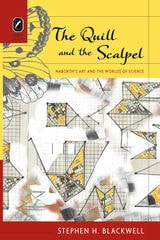
cover of The Quill and the Scalpel: Nabokov's Art and the Worlds of Science

The Quill and the Scalpel

Nabokov's Art and the Worlds of Science

Stephen H. Blackwell

The Ohio State University Press, 2009
Most famous as a literary artist, Vladimir Nabokov was also a professional biologist and a lifelong student of science. By exploring the refractions of physics, psychology, and biology within his art and thought, The Quill and the Scalpel: Nabokov’s Art and the Worlds of Science,by Stephen H. Blackwell, demonstrates how aesthetic sensibilities contributed to Nabokov’s scientific work, and how his scientific passions shape, inform, and permeate his fictions.
            Nabokov’s attention to holistic study and inductive empirical work gradually reinforced his underlying suspicion of mechanistic explanations of nature. He perceived chilling parallels between the overconfidence of scientific progress and the dogmatic certainty of the Soviet regime. His scientific work and his artistic transfigurations of science underscore the limitations of human knowledge as a defining element of life. In provocative novels like Lolita,Pale Fire,The Gift,Ada, and others, Nabokov advances a surprisingly modest epistemology, urging skepticism toward all portrayals of nature, artistic and scientific. Simultaneously, he challenges his readers to recognize in the arts a vital branch of human discovery, one that both complements and informs traditional scientific research.
 
 
[more]
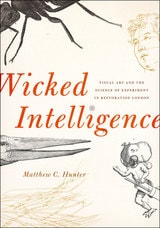
cover of Wicked Intelligence: Visual Art and the Science of Experiment in Restoration London

Wicked Intelligence

Visual Art and the Science of Experiment in Restoration London

Matthew C. Hunter

University of Chicago Press, 2013

In late seventeenth-century London, the most provocative images were produced not by artists, but by scientists. Magnified fly-eyes drawn with the aid of microscopes, apparitions cast on laboratory walls by projection machines, cut-paper figures revealing the “exact proportions” of sea monsters—all were created by members of the Royal Society of London, the leading institutional platform of the early Scientific Revolution. Wicked Intelligence reveals that these natural philosophers shaped Restoration London’s emergent artistic cultures by forging collaborations with court painters, penning art theory, and designing triumphs of baroque architecture such as St Paul’s Cathedral.
 
Matthew C. Hunter brings to life this archive of experimental-philosophical visualization and the deft cunning that was required to manage such difficult research. Offering an innovative approach to the scientific image-making of the time, he demonstrates how the Restoration project of synthesizing experimental images into scientific knowledge, as practiced by Royal Society leaders Robert Hooke and Christopher Wren, might be called “wicked intelligence.” Hunter uses episodes involving specific visual practices—for instance, concocting a lethal amalgam of wax, steel, and sulfuric acid to produce an active model of a comet—to explore how Hooke, Wren, and their colleagues devised representational modes that aided their experiments. Ultimately, Hunter argues, the craft and craftiness of experimental visual practice both promoted and menaced the artistic traditions on which they drew, turning the Royal Society projects into objects of suspicion in Enlightenment England.
 
The first book to use the physical evidence of Royal Society experiments to produce forensic evaluations of how scientific knowledge was generated, Wicked Intelligence rethinks the parameters of visual art, experimental philosophy, and architecture at the cusp of Britain’s imperial power and artistic efflorescence.
[more]