Results by title
14 books match the query 'Art and the war'
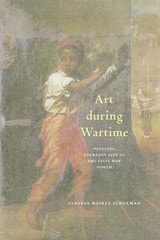
Art during Wartime
Painting Everyday Life in the Civil War NorthVanessa Meikle Schulman
University of Massachusetts Press, 2024
While the Civil War raged on, many northern artists depicted everyday life rather than grand battles or landscapes of noble sacrifice. Amidst a conflict that was upending antebellum social norms, these artists created realistic scenes of mundane events, known as genre paintings. While many of the paintings seem merely to show everyday incidents, Vanessa Meikle Schulman argues that artists connected the visuals to larger concerns.
With attention to how the war shaped new definitions of gender, race, and disability, Art during Wartime uncovers the complexity of these genre paintings. Schulman uses seven case studies of prominent and lesser-known artists who explored how the war instigated social change and shaped northern opinions about current events, including George Cochran Lambdin, Vincent Colyer, and Eastman Johnson. Utilizing detailed visual analysis and extensive historical research, Art during Wartime reframes our narrative of Civil War visual culture, placing genre painting in a central ideological role.
Art in a Disrupted World
Poland 1939–1949Agata Pietrasik
Museum of Modern Art in Warsaw, 2020
Employing an accessible, essayistic style, Pietrasik offers a new look at life in the ten years following the outbreak of World War II and features artists—including Marian Bogusz, Jadwiga Simon-Pietkiewicz, and Józef Szajna—whose work has not yet found substantial audiences in the English-speaking world. Her reading of the art and artists of this period strives to capture their autonomous artistic language and poses critical questions about the ability of traditional art history writing to properly accommodate artworks created in direct response to traumatic experiences.
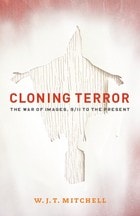
Cloning Terror
The War of Images, 9/11 to the PresentW. J. T. Mitchell
University of Chicago Press, 2010
The phrase “War on Terror” has quietly been retired from official usage, but it persists in the American psyche, and our understanding of it is hardly complete. Nor will it be, W. J. T Mitchell argues, without a grasp of the images that it spawned, and that spawned it.
Exploring the role of verbal and visual images in the War on Terror, Mitchell finds a conflict whose shaky metaphoric and imaginary conception has created its own reality. At the same time, Mitchell locates in the concept of clones and cloning an anxiety about new forms of image-making that has amplified the political effects of the War on Terror. Cloning and terror, he argues, share an uncanny structural resemblance, shuttling back and forth between imaginary and real, metaphoric and literal manifestations. In Mitchell’s startling analysis, cloning terror emerges as the inevitable metaphor for the way in which the War on Terror has not only helped recruit more fighters to the jihadist cause but undermined the American constitution with “faith-based” foreign and domestic policies.
Bringing together the hooded prisoners of Abu Ghraib with the cloned stormtroopers of the Star Wars saga, Mitchell draws attention to the figures of faceless anonymity that stalk the ever-shifting and unlocatable “fronts” of the War on Terror. A striking new investigation of the role of images from our foremost scholar of iconology, Cloning Terror will expand our understanding of the visual legacy of a new kind of war and reframe our understanding of contemporary biopower and biopolitics.
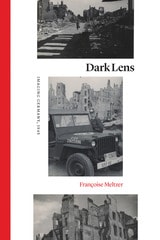
Dark Lens
Imaging Germany, 1945Françoise Meltzer
University of Chicago Press, 2019
The ruins of war have long held the power to stupefy and appall. Can such ruins ever be persuasively depicted and comprehended? Can images of ruins force us to identify with the suffering of the enemy and raise uncomfortable questions about forgiveness and revenge?
Françoise Meltzer explores these questions in Dark Lens, which uses the images of war ruins in Nazi Germany to investigate problems of aestheticization and the representation of catastrophe. Through texts that give accounts of bombed-out towns in Germany in the last years of the war, painters’ attempts to depict the destruction, and her own mother’s photographs taken in 1945, Meltzer asks if any medium offers a direct experience of war ruins for the viewer. Refreshingly accessible and deeply personal, Dark Lens is a compelling look at the role images play in constructing memory.
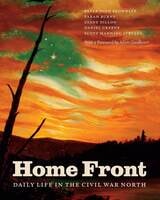
Home Front
Daily Life in the Civil War NorthPeter John Brownlee, Sarah Burns, Diane Dillon, Daniel Greene, and Scott Manning Stevens
University of Chicago Press, 2013
Home Front: Daily Life in the Civil War North reveals this side of the war as it happened, comprehensively examining the visual culture of the Northern home front. Through contributions from leading scholars from across the humanities, we discover how the war influenced household economies and the cotton economy; how the absence of young men from the home changed daily life; how war relief work linked home fronts and battle fronts; why Indians on the frontier were pushed out of the riven nation’s consciousness during the war years; and how wartime landscape paintings illuminated the nation’s past, present, and future.
A companion volume to a collaborative exhibition organized by the Newberry Library and the Terra Foundation for American Art, Home Front is the first book to expose the visual culture of a world far removed from the horror of war yet intimately bound to it.
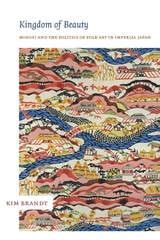
Kingdom of Beauty
Mingei and the Politics of Folk Art in Imperial JapanKim Brandt
Duke University Press, 2007
Kingdom of Beauty shows that the discovery of mingei (folk art) by Japanese intellectuals in the 1920s and 1930s was central to the complex process by which Japan became both a modern nation and an imperial world power. Kim Brandt’s account of the mingei movement locates its origins in colonial Korea, where middle-class Japanese artists and collectors discovered that imperialism offered them special opportunities to amass art objects and gain social, cultural, and even political influence. Later, mingei enthusiasts worked with (and against) other groups—such as state officials, fascist ideologues, rival folk art organizations, local artisans, newspaper and magazine editors, and department store managers—to promote their own vision of beautiful prosperity for Japan, Asia, and indeed the world. In tracing the history of mingei activism, Brandt considers not only Yanagi Muneyoshi, Hamada Shōji, Kawai Kanjirō, and other well-known leaders of the folk art movement but also the often overlooked networks of provincial intellectuals, craftspeople, marketers, and shoppers who were just as important to its success. The result of their collective efforts, she makes clear, was the transformation of a once-obscure category of pre-industrial rural artifacts into an icon of modern national style.
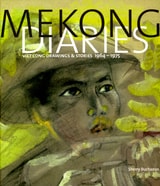
Mekong Diaries
Viet Cong Drawings and Stories, 1964-1975Sherry Buchanan
University of Chicago Press, 2008
These guerrilla artists—some military officers and some civilians—lived clandestinely with the fighters, moving camp alongside them, going on reconnaissance missions, and carrying their sketchbooks, ink, and watercolors into combat. Trained by professors from the Hanoi Institute of Fine Arts who journeyed down the perilous Ho Chi Minh Trail to ensure a pictorial history of the war, they recorded battles and events from Operation Junction City to Khe Sanh to the Tet Offensive. They also sketched as the spirit moved them, rendering breathtaking landscapes, hut and bunker interiors, activities at base camps, troops on the move, portraits for the families of fallen soldiers, and the unimaginable devastation that the conflict left in its wake.
Their collective record—which Sherry Buchanan skillfully compiles here—is an extraordinary historical and artistic document of people at war. As such, it serves as a powerful response to the self-centeredness of American accounts of Vietnam, filling a profound gap in our national memory by taking us into the misunderstood worlds of those whom we once counted among our worst enemies.
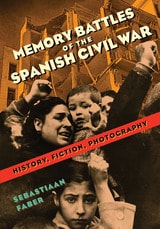
Memory Battles of the Spanish Civil War
History, Fiction, PhotographySebastiaan Faber
Vanderbilt University Press, 2017
Faber traces the curious trajectories of iconic Spanish Civil War photographs by Robert Capa, Gerda Taro, and David Seymour; critically reads a dozen recent Spanish novels and essays; interrogates basic scholarly assumptions about history, memory, and literature; and interviews nine scholars, activists, and documentarians who in the past decade and a half have helped redefine Spain's relationship to its past. In this book Faber argues that recent political developments in Spain--from the grassroots call for the recovery of historical memory to the indignados movement and the foundation of Podemos--provide an opportunity for scholars in the humanities to engage in a more activist, public, and democratic practice.
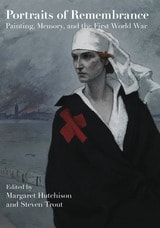
Portraits of Remembrance
Painting, Memory, and the First World WarEdited by Margaret Hutchison and Steven Trout
University of Alabama Press, 2020
Although photography and moving pictures achieved ubiquity during the First World War as technological means of recording history, the far more traditional medium of painting played a vital role in the visual culture of combatant nations. The public’s appetite for the kind of up-close frontline action that snapshots and film footage could not yet provide resulted in a robust market for drawn or painted battle scenes.
Painting also figured significantly in the formation of collective war memory after the armistice. Paintings became sites of memory in two ways: first, many governments and communities invested in freestanding panoramas or cycloramas that depicted the war or featured murals as components of even larger commemorative projects, and second, certain paintings, whether created by official artists or simply by those moved to do so, emerged over time as visual touchstones in the public’s understanding of the war.
Portraits of Remembrance: Painting, Memory, and the First World War examines the relationship between war painting and collective memory in Australia, Austria, Belgium, Canada, Croatia, France, Germany, Great Britain, New Zealand, Russia, Serbia, Turkey, and the United States. The paintings discussed vary tremendously, ranging from public murals and panoramas to works on a far more intimate scale, including modernist masterpieces and crowd-pleasing expressions of sentimentality or spiritualism. Contributors raise a host of topics in connection with the volume’s overarching focus on memory, including national identity, constructions of gender, historical accuracy, issues of aesthetic taste, and connections between painting and literature, as well as other cultural forms.
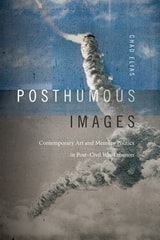
Posthumous Images
Contemporary Art and Memory Politics in Post–Civil War LebanonChad Elias
Duke University Press, 2018
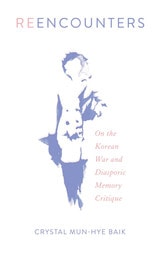
Reencounters
On the Korean War and Diasporic Memory CritiqueCrystal Mun-hye Baik
Temple University Press, 2020
In Reencounters,Crystal Mun-hye Baik examines what it means to live with and remember an ongoing war when its manifestations—hypervisible and deeply sensed—become everyday formations delinked from militarization. Contemplating beyond notions of inherited trauma and post memory, Baik offers the concept of reencounters to better track the Korean War’s illegible entanglements through an interdisciplinary archive of diasporic memory works that includes oral history projects, performances, and video installations rarely examined by Asian American studies scholars.
Baik shows how Korean refugee migrations are repackaged into celebrated immigration narratives, how transnational adoptees are reclaimed by the South Korean state as welcomed “returnees,” and how militarized colonial outposts such as Jeju Island are recalibrated into desirable tourist destinations. Baik argues that as the works by Korean and Korean/American artists depict this Cold War historiography, they also offer opportunities to remember otherwise the continuing war.
Ultimately, Reencounters wrestles with questions of the nature of war, racial and sexual violence, and neoliberal surveillance in the twenty-first century.
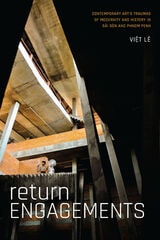
Return Engagements
Contemporary Art's Traumas of Modernity and History in Sài Gòn and Phnom PenhViet Lê
Duke University Press, 2021
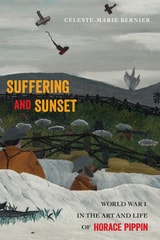
Suffering and Sunset
World War I in the Art and Life of Horace PippinCeleste-Marie Bernier
Temple University Press, 2017
For self-made artist and soldier Horace Pippin—who served in the 369th all-black infantry in World War I until he was wounded—war provided a formative experience that defined much of his life and work. His ability to transform combat service into canvases of emotive power, psychological depth, and realism showed not only how he viewed the world but also his mastery as a painter. In Suffering and Sunset, Celeste-Marie Bernier painstakingly traces Pippin’s life story of art as a life story of war.
Illustrated with more than sixty photographs, including works in various mediums—many in full color—this is the first intellectual history and cultural biography of Pippin. Working from newly discovered archives and unpublished materials, Bernier provides an in-depth investigation into the artist’s development of an alternative visual and textual lexicon and sheds light on his work in its aesthetic, social, and political contexts.
Suffering and Sunset illustrates Pippin’s status as a groundbreaking artist as it shows how this African American painter suffered from but also staged many artful resistances to racism in a white-dominated art world.
The God behind the Marble
The Fate of Art in the German Aesthetic StateAlice Goff
University of Chicago Press, 2024
For German philosophers at the turn of the nineteenth century, beautiful works of art acted as beacons of freedom, instruments of progress that could model and stimulate the moral autonomy of their beholders. Amid the Revolutionary and Napoleonic wars, Germans struggled to uphold these ideals as they contended with the destruction of art collections, looting, and questions about cultural property. As artworks fell prey to the violence they were supposed to transcend, some began to wonder how art could deliver liberation if it could also quickly become a spoil of war. Alice Goff considers a variety of works—including forty porphyry columns from the tomb of Charlemagne, the Quadriga from the Brandenburg Gate in Berlin, the Laocoön group from Rome, a medieval bronze reliquary from Goslar, a Last Judgment from Danzig, and the mummified body of an official from the Rhenish hamlet of Sinzig—following the conflicts over the ownership, interpretation, conservation, and exhibition of German collections during the Napoleonic period and its aftermath.