Results by title
7 books match the query 'Articles'
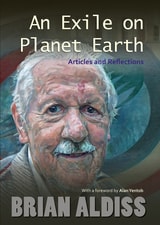
An Exile on Planet Earth
Articles and ReflectionsBrian Aldiss
Bodleian Library Publishing, 2012
Brian Aldiss is one of the great figures in science fiction. Classics in the genre, his books serve as portals to other worlds, captivating readers with strange and shocking narratives that have been a force for further experimentation within the genre. In addition to a highly successful career as a writer of both fiction and science fiction, Aldiss is also an accomplished artist and literary critic.
Articles of Faith
Elizabeth Oness
University of Iowa Press, 2000
In her award-winning collection, Elizabeth Oness travels a vast emotional terrain, from the loss of innocence to sexual betrayal to the helplessness of parents before their children. In “Momentum, ” a woman carries the burden of a dead friend's secret for years until she finally decides to reveal it, only to discover that other, darker secrets still lie in wait. “Rufus” follows the quandary of a young man who is forced to choose between the affection of his girlfriend and his compassion for a homeless man who has taken up residence in his car.
Articles of Faith is a collection of stories about silence and the complications that arise when a silence is kept too long or suddenly broken. As one narrator relates, “I knew that life was full of these things which matter so enormously and make us what we are—but remain unsaid because to voice them does not make them go away, and instead shakes everything around us apart. ”

Articles on American Literature, 1950-1967
Lewis Leary
Duke University Press, 0
This compilation is collaborative; its core is a conflation of items based on the quarterly checklists of "Articles on American Literature Appearing in Current Periodicals" in American Literature from January 1951 through January 1958. Other items have been added frot the annual bibliographies in the Publications of the Modern Language Association of America, the American Quarterly, and the New England Quarterly. And finally, there have been added listings from other more specialized bibliographies on genres or authors.
The accumulated listings are arranged in a single author alphabet, with miscellaneous articles divided into convenient categories. That this volume is nearly twice the length of its predecessor is an indication of the burgeoning scholarship devoted to American literature in the last twenty years. It is of the greatest importance then that the scholar have the kind of comprehensive guide which will free him from the time -consuming task of searching out materials. Lewis Leary's book provides just such a guide.
Appearing concurrently with this volume is a reprinting of the popular Articles on American Literature 1900-1950, originally published in 1954. This compilation (itself a revision and extension of the 1947 Articles on American Literature Appearing in Current Periodicals, 1920-1945) is an alphabetical listing of articles on American literature, primarily in English, appearing in periodicals from 1900 through 1950.
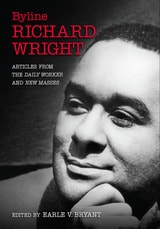
Byline, Richard Wright
Articles from the DAILY WORKER and NEW MASSESEdited by Earle V. Bryant
University of Missouri Press, 2015
A writer perhaps best known for the revolutionary works Black Boy and Native Son, Richard Wright also worked as a journalist during one of the most explosive periods of the 20th century. From 1937 to 1938, Wright turned out more than two hundred articles for the Daily Worker, the newspaper that served as the voice of the American Communist Party. Byline, Richard Wright assembles more than one hundred of those articles plus two of Wright’s essays from New Masses, revealing to readers the early work of an American icon.
As both reporter and Harlem bureau chief, Wright covered most of the major and minor events, personalities, and issues percolating through the local, national, and global scenes in the late 1930s. Because the Daily Worker wasn’t a mainstream paper, editors gave Wright free rein to cover the stories he wanted, and he tackled issues that no one else covered. Although his peers criticized his journalistic writing, these articles offer revealing portraits of Depression-era America rendered in solid, vivid prose.
Featuring Earle V. Bryant’s informative, detailed introduction and commentary contextualizing the compiled articles, Byline, Richard Wright provides insight into the man before he achieved fame as a novelist, short story writer, and internationally recognized voice of social protest. This collection opens new territory in Wright studies, and fans of Wright’s novels will delight in discovering the lost material of this literary great.
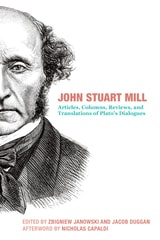
John Stuart Mill
Articles, Columns, Reviews and Translations of Plato's DialoguesJohn Stuart Mill
St. Augustine's Press, 2021
The contribution of Mill’s most authoritative biographer, Nicholas Capaldi, is a singular and unmatched highlight. The tenor of St. Augustine’s Press volumed on Mill is distinct in its intention to place his work in the framework of political philosophy and the conversation of the viability of liberalism as a tradition of thought.
The Articles of Confederation
An Interpretation of the Social-Constitutional History of the American Revolution, 1774-1781Merrill Jensen
University of Wisconsin Press, 1959
"An admirable analysis. It presents, in succinct form, the results of a generation of study of this chapter of our history and summarizes fairly the conclusions of that study."—Henry Steele Commager, New York Times Book Review
We Have Not a Government
The Articles of Confederation and the Road to the ConstitutionGeorge William Van Cleve
University of Chicago Press, 2017
In George William Van Cleve’s book, we encounter a sharply divided America. The Confederation faced massive war debts with virtually no authority to compel its members to pay them. It experienced punishing trade restrictions and strong resistance to American territorial expansion from powerful European governments. Bitter sectional divisions that deadlocked the Continental Congress arose from exploding western settlement. And a deep, long-lasting recession led to sharp controversies and social unrest across the country amid roiling debates over greatly increased taxes, debt relief, and paper money. Van Cleve shows how these remarkable stresses transformed the Confederation into a stalemate government and eventually led previously conflicting states, sections, and interest groups to advocate for a union powerful enough to govern a continental empire.
Touching on the stories of a wide-ranging cast of characters—including John Adams, Patrick Henry, Daniel Shays, George Washington, and Thayendanegea—Van Cleve makes clear that it was the Confederation’s failures that created a political crisis and led to the 1787 Constitution. Clearly argued and superbly written, We Have Not a Government is a must-read history of this crucial period in our nation’s early life.