Results by title
3 books match the query 'Artillery operations'
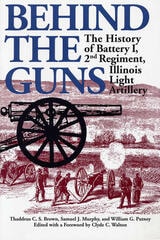
Behind the Guns
The History of Battery I, 2nd Regiment, Illinois Light ArtilleryThaddeus C. S. Brown, Samuel J. Murphy, and William G. Putney. Edited with a Foreword by Clyde C. Walton
Southern Illinois University Press, 2000
Much has been written of the infantry and the cavalry during the Civil War, but little attention has been paid the artillery. Through the battles of Chickamauga and Missionary Ridge in 1863 and the Atlanta Campaign of 1864 and with General Sherman’s forces on the famous March to the Sea, the acts of a courageous fighting group are vividly recounted in Behind the Guns: The History of Battery I, 2nd Regiment, Illinois Light Artillery. Originally published in 1965 in a limited edition, this regimental history of a light artillery unit was written by three of its soldiers, including the bugler.
Battery I was formed in 1861 by Charles W. Keith of Joliet and Henry B. Plant of Peoria. More than a hundred men were mustered into service in December near Springfield and left for Cairo in February 1862. The battery trained at Camp Paine across the Ohio River in Kentucky until March, when the men were dispatched to the South. During the war, the Battery was attached to three different armies: the Army of the Mississippi, the Army of the Ohio, and the Army of the Cumberland.
Clyde C. Walton’s foreword and the narrative discuss the variety of weapons used by the unit, including James, Parrott, and Rodman guns and the bronze, muzzle-loading Napoleons that fired twelve-pound projectiles. The book also includes an account of the prisoner-of-war experience of Battery I lieutenant Charles McDonald, biographical sketches of the battery soldiers, and eighteen maps and five line drawings.
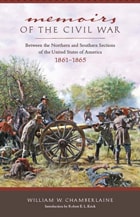
Memoirs of the Civil War
Between the Northern and Southern Sections of the United States of America 1861 to 1865William W. Chamberlaine
University of Alabama Press, 2011
Memoirs of the Civil War, though relatively little known because of its rarity in the original edition, contains much valuable information and engaging narrative passages. A Virginian whose Confederate career included service in an infantry regiment early in the war, Chamberlaine’s most important military service was as a staff officer attached to Brigadier General Reuben Lindsay Walker, who commanded the Third Corps artillery in the Army of Northern Virginia.
Includes excellent material on the duties of staff officers, operation of Confederate conscription, and the role of artillery in Lee’s campaigns. He is especially eloquent and revealing about a number of famous battles: the Seven Days; Antietam, where Chamberlaine distinguished himself and was wounded; and the Wilderness, where he had a memorable encounter with Lee.

The Perfect Lion
The Life and Death of Confederate Artillerist John PelhamJerry H. Maxwell
University of Alabama Press, 2011