Results by title
100 books match the query 'Arts & Humanities' and 10 start with a
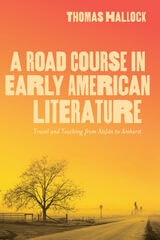
A Road Course in Early American Literature
Travel and Teaching from Atzlán to AmherstThomas Hallock
University of Alabama Press, 2021
Essays that fuse literary scholarship and personal travelogue to explore American identity
A Road Course in Early American Literature: Travel and Teaching from Atzlán to Amherst explores a two-part question: what does travel teach us about literature, and how can reading guide us to a deeper understanding of place and identity? Thomas Hallock charts a teacher’s journey to answering these questions, framing personal experiences around the continued need for a survey course covering early American literature up to the mid-nineteenth century.
Hallock approaches literary study from the overlapping perspectives of pedagogue, scholar, unrepentant tourist, husband, father, friend, and son. Building on Ralph Waldo Emerson’s premise that there is “creative reading as well as creative writing,” Hallock turns to the vibrant and accessible tradition of American travel writing, employing the form of biblio-memoir to bridge the impasse between public and academic discourse and reintroduce the dynamic field of early American literature to wider audiences.
Hallock’s own road course begins and ends at the Low country of Georgia and South Carolina, following a circular structure of reflection. He weaves his journey through a wide swath of American literatures and authors: from Native American and African American oral traditions, to Wheatley and Equiano, through Emerson, Poe, and Dickinson, among others. A series of longer, place-oriented narratives explore familiar and lesser-known literary works from the sixteenth-century invasion of Florida through the Mexican War of 1846–1848 and the American Civil War. Shorter chapters bridge the book’s central themes—the mapping of cognitive and physical space, our personal stake in reading, the tensions that follow earlier acts of erasure, and the impossibility of ever fully shutting out the past.
Exploring complex cultural histories and contemporary landscapes filled with ghosts and new voices, this volume draws inspiration from a tradition of travel, place-oriented, and literature-based works ranging from William Carlos Williams’s In the American Grain and Jack Kerouac’s On the Road to Alice Walker’s In Search of Our Mother’s Gardens, Wendy Lesser’s Why I Read: The Serious Pleasure of Books, and Rebecca Mead’s My Life in Middlemarch.
An accompanying bibliographic essay is periodically updated and available at Hallock’s website: www.roadcourse.us.
A Sourcebook for Ancient Greek
Grammar, Poetry, and ProseJohn Tomarchio
Catholic University of America Press, 2022
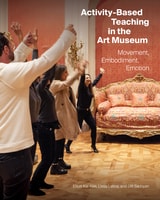
Activity-Based Teaching in the Art Museum
Movement, Embodiment, EmotionElliott Kai-Kee
J. Paul Getty Trust, The, 2020
An essential resource for museum professionals, teachers, and students, the award winning Teaching in the Art Museum (Getty Publications, 2011) set a new standard in the field of gallery education. This follow-up book blends theory and practice to help educators—from teachers and docents to curators and parents—create meaningful interpretive activities for children and adults.
Written by a team of veteran museum educators, Activity-Based Teaching in the Art Museum offers diverse perspectives on embodiment, emotions, empathy, and mindfulness to inspire imaginative, spontaneous interactions that are firmly grounded in history and theory. The authors begin by surveying the emergence of activity-based teaching in the 1960s and 1970s and move on to articulate a theory of play as the cornerstone of their innovative methodology. The volume is replete with sidebars describing activities facilitated with museum visitors of all ages.
Table of Contents
Introduction
Part I History
1 The Modern History of Presence and Meaning
A philosophical shift from a language-based understanding of the world to direct, physical interaction with it.
2 A New Age in Museum Education: The 1960s and 1970s
A brief history of some of the innovative museum education programs developed in the United States in the late 1960s and 1970s. The sudden and widespread adoption of nondiscursive gallery activities during this period, especially but not exclusively in programs designed for younger students and school groups, expressed the spirit of the times.
Part II Theory
3 Starts and Stops
Two attempts by American museum educators to articulate a theory for their new, nondiscursive programs: the first deriving from the early work of Project Zero, the Harvard Graduate School of Education program founded by the philosopher Nelson Goodman to study arts learning as a cognitive activity; the second stemming from the work of Viola Spolin, the acclaimed theater educator and coach whose teaching methods, embodied in a series of “theater games,” were detailed in her well-known book Improvisation for the Theater (1963).
4 A Theory of Play in the Museum
A theory of play that posits activities in the museum as forms of play that take place in spaces (or “playgrounds”) temporarily designated as such by educators and their adult visitors or students. Play is defined essentially as movement—both physical and imaginary (metaphorical)—toward and away from, around, and inside and outside the works of art that are foregrounded within those spaces. Gallery activities conceived in this way respond to the possibilities that the objects themselves offer for the visitor to explore and engage with them. The particular movements characterizing an activity are crucially conditioned by the object in question; they constitute a process of discovery and learning conceptually distinct from, but supportive of, traditional dialogue-based modes of museum education, which they supplement rather than supplant.
Part III Aspects of Play
5 Embodiment, Affordances
The idea of embodiment adopted here recognizes that both mind and body are joined in their interactions with things. Investigating works of art thus involves apprehending them physically as well as intellectually—in the sense of responding to the ways in which a particular work allows and even solicits the viewer’s physical grasp of it.
6 Skills
Ways in which objects present themselves to us, as viewers, and what we might do in response as they fit with the bodily skills we have developed over the course of our lives. Such skills might be as simple as getting dressed, washing, or eating; or as specialized as doing one’s hair, dancing, playing an instrument, or acting—all of which may allow us to “grasp” and even feel that we inhabit particular works of art.
7 Movement
Embodied looking is always looking from somewhere. We apprehend objects as we physically move around and in front of them; they reveal themselves differently as we approach them from different viewpoints. Viewers orient themselves spatially to both the surfaces of objects and to the things and spaces depicte4d in or suggested by representational works of art. Activity-based teaching gets visitors and students to move among the objects—away from them, close to them, and even into them.
8 The Senses
Both adult visitors and younger students come to the museum expecting to use their eyes, yet “visual” art appeals to several of the senses at once, though rarely to the same degree. Sculpture, for example, almost always appeals to touch (whether or not that is actually possible or allowed) as well as sight. A painting depicting a scene in which people appear to be talking may induce viewers to not only look but also “listen” to what the figures might be saying.
9 Drawing in the Museum
Looking at art with a pencil in hand amplifies viewers’ ability to imaginatively touch and feel their way across and around an artwork. Contour drawing by its nature requires participants to imagine that they are touching the contours of an object beneath the tips of their pencils. Other types of drawing allow viewers to feel their way around objects through observation and movement.
10 Emotion
Visitors’ emotional responses to art represent a complex process with many components, from physiological to cognitive, and a particular work of art may elicit a wide range of emotional reactions. This chapter describes specific ways in which museum educators can go well beyond merely asking visitors how a work of art makes them feel.
11 Empathy and Intersubjectivity
One aspect of viewers’ emotional responses to art that is often taken for granted, if not neglected altogether: the empathetic connections that human beings make to images of other people. This chapter advocates an approach that prompts viewers to physically engage with the representations of people they see.
12 Mindful Looking
Mindfulness involves awareness and attention, both as a conscious practice and as an attitude that gallery teachers can encourage in museum visitors. This is not solely a matter of cultivating the mind, however; it is also a matter of cultivating the body, since mindfulness is only possible when mind and body are in a state of harmonious, relaxed attentiveness. Mindfulness practice in the art museum actively directs the viewer’s focus on the object itself and insists on returning to it over and over; yet it also balances activity with conscious stillness.
Afterword
Acknowledgments
An Arkansas History for Young People
Fourth EditionShay E. Hopper
University of Arkansas Press, 2008
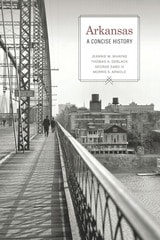
Arkansas
A Concise HistoryJeannie M. Whayne
University of Arkansas Press, 2019
Distilled from Arkansas: A Narrative History, the definitive work on the subject since its original publication in 2002, Arkansas: A Concise History is a succinct one-volume history of the state from the prehistory period to the present. Featuring four historians, each bringing his or her expertise to a range of topics, this volume introduces readers to the major issues that have confronted the state and traces the evolution of those issues across time.
After a brief review of Arkansas’s natural history, readers will learn about the state’s native populations before exploring the colonial and plantation eras, early statehood, Arkansas’s entry into and role in the Civil War, and significant moments in national and global history, including Reconstruction, the Gilded Age, the Progressive Era, the Elaine race massacre, the Great Depression, both world wars, and the Civil Rights Movement. Linking these events together, Arkansas: A Concise History offers both an understanding of the state’s history and a perspective on that history’s implications for the political, economic, and social realities of today.
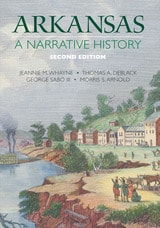
Arkansas
A Narrative HistoryJeannie M. Whayne
University of Arkansas Press, 2013
Arkansas: A Narrative History is a comprehensive history of the state that has been invaluable to students and the general public since its original publication. Four distinguished scholars cover prehistoric Arkansas, the colonial period, and the nineteenth and twentieth centuries and incorporate the newest historiography to bring the book up to date for 2012.
A new chapter on Arkansas geography, new material on the civil rights movement and the struggle over integration, and an examination of the state’s transition from a colonial economic model to participation in the global political economy are included. Maps are also dramatically enhanced, and supplemental teaching materials are available.
“No less than the first edition, this revision of Arkansas: A Narrative History is a compelling introduction for those who know little about the state and an insightful survey for others who wish to enrich their acquaintance with the Arkansas past.”
—Ben Johnson, from the Foreword

Art, Sustainability and Learning Communities
Call to ActionEdited by Raphael Vella and Victoria Pavlou
Intellect Books, 2024
The main aim of Art, Sustainability and Learning Communities is to show how shared spaces for exchange in the fields of art education and continuous professional development can reflect, inspire, and integrate sustainability principles that are becoming crucial in today’s world. The authors propose the idea that coordinated action can lead to a more sustainable future by promoting a sense of community, lifelong learning, and confidence in the possibility of changing current conditions.
Its three parts combine expertise in visual arts education, education for sustainable development, contemporary art practice, and sustainability activism. While Part I focuses on literature in the field and the interrelation of different disciplines, Part II provides concrete examples of professional learning communities and pedagogies that can be used to enrich the field of art education. Finally, Part III presents brief case studies illustrating international projects by contemporary artists, curators, environmentalists, and others, providing educators with several inspirational models of concrete and creative action.
Arts Education in Action
Collaborative Pedagogies for Social JusticeEdited by Sarah Travis, Jody Stokes-Casey, and Seoyeon Kim
University of Illinois Press, 2020
This edition of Common Threads investigates the intersection of social justice work with education in the visual arts, music, theatre, dance, and literature. Weaving together resources from a range of University of Illinois Press journals, the editors offer articles on the scholarly inquiry, theory, and practice of social justice arts education. Selections from the past three decades reflect the synergy of the diverse scholars, educators, and artists actively engaged in such projects. Together, the contributors bring awareness to the importance of critically reflective and inclusive pedagogy in arts educational contexts. They also provide pedagogical theory and practical tools for building a social justice orientation through the arts.
Contributors: Joni Boyd Acuff, Seema Bahl, Elizabeth Delacruz, Elizabeth Garber, Elizabeth Gould, Kirstin Hotelling, Tuulikki Laes, Monica Prendergast, Elizabeth Saccá, Alexandra Schulteis, Amritjit Singh, and Stephanie Springgay
Assessment in the Second Language Writing Classroom
Deborah Crusan
University of Michigan Press, 2010
Assessment in the Second Language Writing Classroom is a teacher and prospective teacher-friendly book, uncomplicated by the language of statistics. The book is for those who teach and assess second language writing in several different contexts: the IEP, the developmental writing classroom, and the sheltered composition classroom. In addition, teachers who experience a mixed population or teach cross-cultural composition will find the book a valuable resource. Other books have thoroughly covered the theoretical aspects of writing assessment, but none have focused as heavily as this book does on pragmatic classroom aspects of writing assessment. Further, no book to date has included an in-depth examination of the machine scoring of writing and its effects on second language writers.
Crusan not only makes a compelling case for becoming knowledgeable about L2 writing assessment but offers the means to do so. Her highly accessible, thought-provoking presentation of the conceptual and practical dimensions of writing assessment, both for the classroom and on a larger scale, promises to engage readers who have previously found the technical detail of other works on assessment off-putting, as well as those who have had no previous exposure to the study of assessment at all.
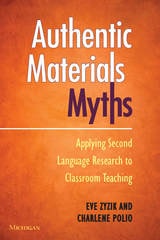
Authentic Materials Myths
Applying Second Language Research to Classroom TeachingEve Zyzik and Charlene Polio
University of Michigan Press, 2017
The myths examined in this book are:
- Authentic texts are inaccessible to beginners.
- Authentic texts cannot be used to teach grammar.
- Shorter texts are more beneficial for language learners.
- Activating background knowledge or making a word list is sufficient to prepare students for authentic texts.
- Authentic texts can be used to teach only listening and reading.
- Modifying or simplifying authentic texts always helps language learners.
- For learners to benefit from using authentic texts, the associated tasks must also be authentic.