Results by title
13 books match the query 'Asceticism'
Ascetical Works
Saint Gregory of Nyssa
Catholic University of America Press, 1967
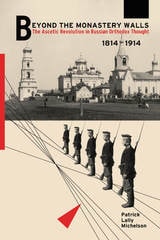
Beyond the Monastery Walls
The Ascetic Revolution in Russian Orthodox Thought, 1814–1914Patrick Lally Michelson
University of Wisconsin Press, 2017
Patrick Lally Michelson's intellectual history of asceticism in Russian Orthodox thought traces the development of these competing arguments from the early nineteenth century to the early months of World War I. He demonstrates that this discourse was an imaginative interpretation of lived Orthodoxy, primarily meant to satisfy the ideological needs of Russian thinkers and Orthodox intellectuals as they responded to the socioeconomic, political, and cultural challenges of modernity.
Letters, Volume 1
John Barsanuphius and John
Catholic University of America Press, 2006
Letters, Volume 2
John Barsanuphius and John
Catholic University of America Press, 2006
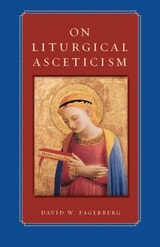
On Liturgical Asceticism
David W. Fagerberg
Catholic University of America Press, 2013
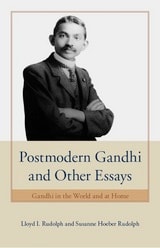
Postmodern Gandhi and Other Essays
Gandhi in the World and at HomeLloyd I. Rudolph and Susanne Hoeber Rudolph
University of Chicago Press, 2006
Gandhi, with his loincloth and walking stick, seems an unlikely advocate of postmodernism. But in Postmodern Gandhi, Lloyd and Susanne Rudolph portray him as just that in eight thought-provoking essays that aim to correct the common association of Gandhi with traditionalism.
Combining core sections of their influential book Gandhi: The Traditional Roots of Charisma with substantial new material, the Rudolphs reveal here that Gandhi was able to revitalize tradition while simultaneously breaking with some of its entrenched values and practices. Exploring his influence both in India and abroad, they tell the story of how in London the young activist was shaped by the antimodern “other West” of Ruskin, Tolstoy, and Thoreau and how, a generation later, a mature Gandhi’s thought and action challenged modernity’s hegemony. Moreover, the Rudolphs argue that Gandhi’s critique of modern civilization in his 1909 book Hind Swaraj was an opening salvo of the postmodern era and that his theory and practice of nonviolent collective action (satyagraha) articulate and exemplify a postmodern understanding of situational truth.
This radical interpretation of Gandhi's life will appeal to anyone who wants to understand Gandhi’s relevance in this century, as well as students and scholars of politics, history, charismatic leadership, and postcolonialism.
Spiritual Despots
Modern Hinduism and the Genealogies of Self-RuleJ. Barton Scott
University of Chicago Press, 2016
Through this alternative genealogy of the self-ruling subject, Spiritual Despots demonstrates that Hindu reform movements cannot be understood solely within the precolonial tradition, but rather need to be read alongside other movements of their period. The book’s focus moves fluidly between Britain and India—engaging thinkers such as James Mill, Keshub Chunder Sen, Max Weber, Karsandas Mulji, Helena Blavatsky, M. K. Gandhi, and others—to show how colonial Hinduism shaped major modern discourses about the self. Throughout, Scott sheds much-needed light how the rhetoric of priestcraft and practices of worldly asceticism played a crucial role in creating a new moral and political order for twentieth-century India and demonstrates the importance of viewing the emergence of secularism through the colonial encounter.
The Ascetic Imperative in Culture and Criticism
Geoffrey Galt Harpham
University of Chicago Press, 1988
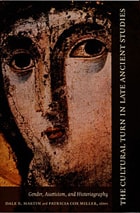
The Cultural Turn in Late Ancient Studies
Gender, Asceticism, and HistoriographyDale B. Martin and Patricia Cox Miller, eds.
Duke University Press, 2005
The contributors investigate three key concerns of late ancient studies: gender, asceticism, and historiography. They consider Macrina’s scar, Mary’s voice, and the harlot’s body as well as Augustine, Jovinian, Gregory of Nazianzus, Julian, and Ephrem the Syrian. Whether examining how animal bodies figured as a means for understanding human passion and sexuality in the monastic communities of Egypt and Palestine or meditating on the almost modern epistemological crisis faced by Theodoret in attempting to overcome the barriers between the self and the wider world, these essays highlight emerging theoretical and critical developments in the field.
Contributors. Daniel Boyarin, David Brakke, Virginia Burrus, Averil Cameron, Susanna Elm, James E. Goehring, Susan Ashbrook Harvey, David G. Hunter, Blake Leyerle, Dale B. Martin, Patricia Cox Miller, Philip Rousseau, Teresa M. Shaw, Maureen A. Tilley, Dennis E. Trout, Mark Vessey
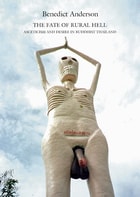
The Fate of Rural Hell
Asceticism and Desire in Buddhist ThailandBenedict Anderson
Seagull Books, 2012
The Fate of Rural Hell
Asceticism and Desire in Buddhist Thailand, New EditionBenedict Anderson
Seagull Books, 2016
A new edition of Benedict Anderson's masterpiece of political and social interpretation, which asks what a rural Thai “hell temple” reveals about Buddhism and modern life.
In 1975, political scientist Benedict Anderson encountered Wat Phai Rong Wua, a vast temple complex conceived by the monk Luang Phor Khom. Built as a cautionary museum, it uses striking tableaux, hell scenes, didactic statues, and eclectic displays, to imagine karmic consequence and to draw steady flows of Thai visitors.
Returning to the temple over several decades, Anderson treats the site as a travelogue, an ethnographic puzzle, and a social commentary. He asks what kinds of piety, hierarchy, and desire are staged there, and what local community sustains it. The temple also becomes his lens on how capitalism and rural change reshape religious practice in Thailand.
The Religion of Existence
Asceticism in Philosophy from Kierkegaard to SartreNoreen Khawaja
University of Chicago Press, 2016
At the heart of existentialism, Noreen Khawaja argues, is a story about secular thought experimenting with the traditions of European Christianity. This book explores how a distinctly Protestant asceticism formed the basis for the chief existentialist ideal, personal authenticity, which is reflected in approaches ranging from Kierkegaard’s religious theory of the self to Heidegger’s phenomenology of everyday life to Sartre’s global mission of atheistic humanism. Through these three philosophers, she argues, we observe how ascetic norms have shaped one of the twentieth century’s most powerful ways of thinking about identity and difference—the idea that the “true” self is not simply given but something that each of us is responsible for producing.
Engaging with many central figures in modern European thought, this book will appeal to philosophers and historians of European philosophy, scholars of modern Christianity, and those working on problems at the intersection of religion and modernity.
To Train His Soul in Books
Syriac Asceticism in Early ChristianityRobin Darling Young
Catholic University of America Press, 2011