Results by title
8 books match the query 'Asia (General)'

Absinthe
World Literature in Translation: Vol. 23 Unscripted: An Armenian PalimpsestEdited by Tamar M. Boyadjian
Michigan Publishing Services, 2017
Absinthe 23, guest-edited by Tamar M. Boyadjian, invites translators to move beyond purely prescriptive applications of translation, interpretation, and the localization of national literatures—and the mere translation of a “minor” literature into a major language—to consider their translations of contemporary Armenian literature as part of larger, non-compartmentalized cultural and theoretical frameworks and disciplines such as comparative literature, Mediterranean studies, Postcolonial studies, Diaspora studies, Trauma studies, and others. The issue includes contemporary Armenian texts from living authors, chosen as significant works that challenge, shape, and complicate conversations on transcultural analysis, and theories and practices related to translating.
Absinthe: A Journal of World Literature in Translation publishes foreign literature in English translation, with a particular focus on previously untranslated contemporary fiction, poetry, and creative non-fiction by living authors. The magazine has its home in the Department of Comparative Literature at the University of Michigan and is edited by graduate students in the Department, as well as by occasional guest editors.
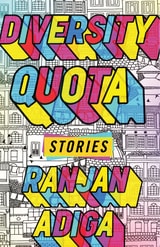
Diversity Quota
Ranjan Adiga
University of Wisconsin Press, 2024
In these stories, the lines between “winners” and “losers” in a rapidly globalizing world become frayed and warped. A Nepali migrant’s worst fears materialize in “Leech.” A couple in “Denver” tries to acclimate to a new social class. A middle-aged man is attracted to his barber in “Haircut and Massage.” A Nepali professor is captivated by a white American student in “The Diversity Committee.” In often unexpected ways, Adiga captures moments of survival amid worlds colored by precarity.
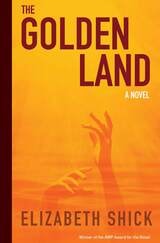
The Golden Land
Elizabeth Shick
New Issues Poetry and Prose, 2022
When Etta's grandmother dies, she is compelled to travel to Myanmar to explore complicated adolescent memories of her grandmother's family and the violence she witnessed there. Full of rich detail and complex relationships, The Golden Land explores those personal narratives that might lie beneath the surface of historical accounts.
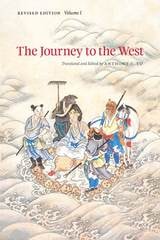
The Journey to the West, Revised Edition, Volume 1
Translated and Edited by Anthony C. Yu
University of Chicago Press, 2012
Read the legendary Chinese classic that inspired the hit game Black Myth: Wukong!
With over a hundred chapters written in both prose and poetry, The Journey to the West has always been a complicated and difficult text to render in English while preserving the lyricism of its language and the content of its plot. But Yu has successfully taken on the task, and in this new edition he has made his translations even more accurate and accessible. The explanatory notes are updated and augmented, and Yu has added new material to his introduction, based on his original research as well as on the newest literary criticism and scholarship on Chinese religious traditions. He has also modernized the transliterations included in each volume, using the now-standard Hanyu Pinyin romanization system. Perhaps most important, Yu has made changes to the translation itself in order to make it as precise as possible.
One of the great works of Chinese literature, The Journey to the West is not only invaluable to scholars of Eastern religion and literature, but, in Yu’s elegant rendering, also a delight for any reader.
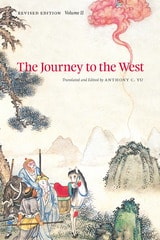
The Journey to the West, Revised Edition, Volume 2
Translated and Edited by Anthony C. Yu
University of Chicago Press, 2012
Read the legendary Chinese classic that inspired the hit game Black Myth: Wukong!
With over a hundred chapters written in both prose and poetry, The Journey to the West has always been a complicated and difficult text to render in English while preserving the lyricism of its language and the content of its plot. But Yu has successfully taken on the task, and in this new edition he has made his translations even more accurate and accessible. The explanatory notes are updated and augmented, and Yu has added new material to his introduction, based on his original research as well as on the newest literary criticism and scholarship on Chinese religious traditions. He has also modernized the transliterations included in each volume, using the now-standard Hanyu Pinyin romanization system. Perhaps most important, Yu has made changes to the translation itself in order to make it as precise as possible.
One of the great works of Chinese literature, The Journey to the West is not only invaluable to scholars of Eastern religion and literature, but, in Yu’s elegant rendering, also a delight for any reader.
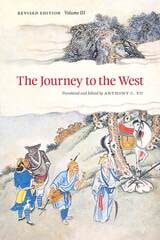
The Journey to the West, Revised Edition, Volume 3
Translated and Edited by Anthony C. Yu
University of Chicago Press, 2012
Read the legendary Chinese classic that inspired the hit game Black Myth: Wukong!
With over a hundred chapters written in both prose and poetry, The Journey to the West has always been a complicated and difficult text to render in English while preserving the lyricism of its language and the content of its plot. But Yu has successfully taken on the task, and in this new edition he has made his translations even more accurate and accessible. The explanatory notes are updated and augmented, and Yu has added new material to his introduction, based on his original research as well as on the newest literary criticism and scholarship on Chinese religious traditions. He has also modernized the transliterations included in each volume, using the now-standard Hanyu Pinyin romanization system. Perhaps most important, Yu has made changes to the translation itself in order to make it as precise as possible.
One of the great works of Chinese literature, The Journey to the West is not only invaluable to scholars of Eastern religion and literature, but, in Yu’s elegant rendering, also a delight for any reader.
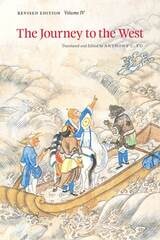
The Journey to the West, Revised Edition, Volume 4
Translated and Edited by Anthony C. Yu
University of Chicago Press, 2012
Read the legendary Chinese classic that inspired the hit game Black Myth: Wukong!
With over a hundred chapters written in both prose and poetry, The Journey to the West has always been a complicated and difficult text to render in English while preserving the lyricism of its language and the content of its plot. But Yu has successfully taken on the task, and in this new edition he has made his translations even more accurate and accessible. The explanatory notes are updated and augmented, and Yu has added new material to his introduction, based on his original research as well as on the newest literary criticism and scholarship on Chinese religious traditions. He has also modernized the transliterations included in each volume, using the now-standard Hanyu Pinyin romanization system. Perhaps most important, Yu has made changes to the translation itself in order to make it as precise as possible.
One of the great works of Chinese literature, The Journey to the West is not only invaluable to scholars of Eastern religion and literature, but, in Yu’s elegant rendering, also a delight for any reader.
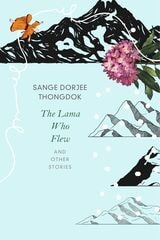
The Lama Who Flew
and Other Tales from My VillageSange Dorjee Thongdok
Seagull Books, 2025
The Flying Lama: Tales Around the Hearth invites readers into the enchanting world of a small Himalayan village in Arunachal Pradesh, where the past lingers in every rustling leaf and the supernatural feels as close as the wind against one’s skin. Drawing from his Shertukpen heritage, Sange Dorjee Thongdok crafts a collection of stories brimming with mysticism and an unshakable connection to the rhythms of nature. A lama who seems to defy gravity, a village where tradition and modernity stand in quiet conversation—each tale is steeped in folklore and rendered with cinematic detail, divulging a world that is both remote and deeply familiar. Blending wry humor with profound emotion, Thongdok’s storytelling captures the essence of a place often overlooked, yet teeming with life.