Results by title
3 books match the query 'Asturias (Spain)'
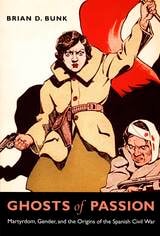
Ghosts of Passion
Martyrdom, Gender, and the Origins of the Spanish Civil WarBrian D. Bunk
Duke University Press, 2007
In commemorating the uprising, revolutionaries and conservatives used the same methods to promote radically different political agendas: they deployed religious imagery to characterize the political situation as a battle between good and evil, with the fate of the nation hanging in the balance, and exploited traditional gender stereotypes to portray themselves as the defenders of social order against chaos. The resulting atmosphere of polarization combined with increasing political violence to plunge the country into civil war.
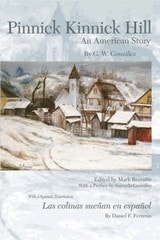
Pinnick Kinnick Hill
An American StoryBy G. W. González, Edited by Mark Brazaitis, with a Preface by Suronda González, with a Spanish translation Las colinas sueñan en español by Daniel Ferreras
West Virginia University Press, 2006
Nearly a century ago, hundreds of families journeyed from Spain to the United States, to search for a better life in the growing zinc-industry towns of Harrison County, West Virginia. As they created a new culture and a new home in this strange land, they added another thread to the rich fabric of our nation. Writing from his perspective as a first-generation son of this immigrant community, González recounts his childhood memories of his neighborhood, where these immigrants raised their families, worked in the often insufferable conditions of the zinc factories, and celebrated "romerias" and feast days with their neighbors.

This World, Other Worlds
Sickness, Suicide, Death, and the Afterlife among the Vaqueiros de Alzada of SpainMaría Cátedra
University of Chicago Press, 1992
Applying sensitive ethnographic insight to a rich body of oral testimony, Cátedra discloses an unsuspected symbolic universe native to the Vaqueiros. Death is seen here in close, coherent relation to pain, age, and suffering; sickness and suicide, one must understand the cultural valuation of different ways of dying and the conditions under which suicides take place. To understand what it means to be a Vaqueiro is to understand how suicide can be perceived by a people as acceptable.
A groundbreaking work in European ethnography, This World, Other Worlds takes symbolic analysis to a new level. In its illumination of local conceptions of death, grace, and sainthood, the book also makes a substantial contribution to the anthropology of religion.