Results by title
11 books match the query 'Atheism'
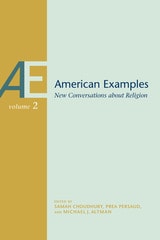
American Examples, Vol 2
New Conversations about ReligionEdited by Samah Choudhury, Prea Persaud, and Michael J. Altman
University of Alabama Press, 2022
Fresh new perspectives on the study of religion, ranging from SoulCycle to Mark Twain
American Examples: New Conversations about Religion, Volume Two, is the second in a series of annual anthologies produced by the American Examples workshop hosted by the Department of Religious Studies at The University of Alabama. In the latest volume from this dynamic academic project, nine scholars with diverse topics and methodologies vividly reimagine the meaning of all three words in the phrase “American religious history.” The essays use case studies from America, broadly conceived, to ask trenchant theoretical questions that are of interest to scholars and students beyond the subfield of American religious history.
Cody Musselman uses a Weberian analysis to explore questions of identity, authority, and authenticity in the world of SoulCycle while Zachary T. Smith finds commonality between the rhetoric and practices of scholarship and mixed martial arts. Erik Kline provides a new perspective on the psychedelic mysticism of the 1960s, and Brook Wilensky-Lanford takes stock of the cultural power of parody in Mark Twain’s last work of fiction. Christopher Cannon Jones examines the reciprocal relationship between religious texts and cultural contexts by comparing early Mormon missions to Hawai‘i and Jamaica and Lindsey Jackson explores what debates over circumcision can tell us about gender stereotypes and motherhood. Dana Lloyd uses the 1988 Supreme Court decision in Lyng v. Northwest Indian Cemetery Protective Association as a case study in order to consider how Indigenous religion and sovereignty have been understood and adjudicated in the American legal system. Matt Sheedy studies the identity categories of “atheist” and “ex-Muslim” and Brad Stoddard uses ethnographic fieldwork to evaluate the role of religious pluralism in regulating and policing correctional institutions. Editors Samah Choudhury and Prea Persaud provide an introduction that reconsiders the trajectory of the American Examples project in light of the siege on the US Capitol in January 2021 and the continuing COVID pandemic.
Visit americanexamples.ua.edu for more information on upcoming workshop dates and future projects.
CONTRIBUTORS
Michael J. Altman / Samah Choudhury / Lindsey Jackson / Christopher Cannon Jones / / Erik Kline / Dana Lloyd / Cody Musselman / Prea Persaud / Matt Sheedy / Zachary T. Smith / Brad Stoddard / Brook Wilensky-Lanford

Atheism
A Philosophical JustificationMichael Martin
Temple University Press, 1992
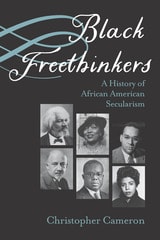
Black Freethinkers
A History of African American SecularismChristopher Cameron
Northwestern University Press, 2019
Christopher Cameron suggests an alternative origin of nonbelief and religious skepticism in America, namely the brutality of the institution of slavery. He also traces the growth of atheism and agnosticism among African Americans in two major political and intellectual movements of the 1920s: the New Negro Renaissance and the growth of black socialism and communism. In a final chapter, he explores the critical importance of freethought among participants in the civil rights and Black Power movements of the 1960s and 1970s.
Examining a wealth of sources, including slave narratives, travel accounts, novels, poetry, memoirs, newspapers, and archival sources such as church records, sermons, and letters, the study follows the lives and contributions of well-known figures, including Frederick Douglass, Zora Neale Hurston, James Baldwin, and Alice Walker, as well as lesser-known thinkers such as Louise Thompson Patterson, Sarah Webster Fabio, and David Cincore.

Doubt, Atheism, and the Nineteenth-Century Russian Intelligentsia
Victoria Frede
University of Wisconsin Press, 2011
The autocratic rule of both tsar and church in imperial Russia gave rise not only to a revolutionary movement in the nineteenth century but also to a crisis of meaning among members of the intelligentsia. Personal faith became the subject of intense scrutiny as individuals debated the existence of God and the immortality of the soul, debates reflected in the best-known novels of the day. Friendships were formed and broken in exchanges over the status of the eternal. The salvation of the entire country, not just of each individual, seemed to depend on the answers to questions about belief.
Victoria Frede looks at how and why atheism took on such importance among several generations of Russian intellectuals from the 1820s to the 1860s, drawing on meticulous and extensive research of both published and archival documents, including letters, poetry, philosophical tracts, police files, fiction, and literary criticism. She argues that young Russians were less concerned about theology and the Bible than they were about the moral, political, and social status of the individual person. They sought to maintain their integrity against the pressures exerted by an autocratic state and rigidly hierarchical society. As individuals sought to shape their own destinies and searched for truths that would give meaning to their lives, they came to question the legitimacy both of the tsar and of Russia’s highest authority, God.
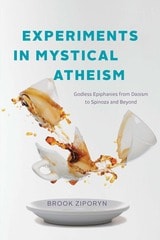
Experiments in Mystical Atheism
Godless Epiphanies from Daoism to Spinoza and BeyondBrook Ziporyn
University of Chicago Press, 2024
Western philosophy is stuck in an irresolvable conflict between two approaches to the spiritual malaise of our times: either we need more God (the “turn to religion”) or less religion (the New Atheism). In this book, Brook Ziporyn proposes an alternative that avoids both totalizing theomania and atomizing reductionism. What we need, he argues, is a deeper, more thoroughgoing, even religious rejection of God: an affirmative atheism without either a creator to provide meaning or finite creatures in need of it—a mystical atheism.
In the legacies of Daoism and Buddhism as well as Spinoza, Nietzsche, and Bataille, Ziporyn discovers a critique of theism that develops into a new, positive sensibility—at once deeply atheist and richly religious. Experiments in Mystical Atheism argues that these “godless epiphanies” hold the key to renewing philosophy today.
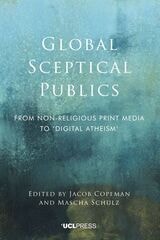
Global Sceptical Publics
From Nonreligious Print Media to ‘Digital Atheism'Edited by Jacob Copeman and Mascha Schulz
University College London, 2022
Diverse media ranging from print publications and TV series to social media platforms are crucial for producing and participating in the secular public sphere, setting the stage for debates, controversies, and activism related both specifically and non-specifically to atheistic discourse. Global Sceptical Publics brings together contributions that analyze the diverse ways in which a variety of religious skeptics, doubters, and atheists engage with different forms of media as the framework for understanding contemporary communication and the formation of nonreligious publics. With authors from diverse backgrounds and disciplines, the book contributes new insights to the growing field of nonreligion studies, in particular, by demonstrating how skeptical groups can unsettle preconceived expectations of the public sphere.

Nonreligious Lifeworlds in Egypt
Sense-Making, Emotion, and EmbodimentKarin van Nieuwkerk
University of Texas Press, 2026
An analysis of the growing visibility of nonreligion in Egypt.
Egypt's 2011 Uprising, while often perceived as a failed revolution, nonetheless nonetheless had durable social effects. Among these has been a rise in expressing atheism and agnosticism, especially among educated and affluent youth—the country’s future leaders.
An intimate ethnography, Nonreligious Lifeworlds in Egypt explores the intellectual and emotional transformations of atheists and agnostics inspired by the aspirational freedom-seeking of the Arab Spring. Rejecting both of Egypt’s dominant religious traditions, Islam and Coptic Christianity, nonreligious people are widely viewed as agents of moral outrage. Amid media-driven panics, their sanity is often questioned by their own families as they experiment with new ways of living and relating. Drawing from in-depth fieldwork, interviews, and social media analysis, Karin van Nieuwkerk reveals her interlocutors’ changing perspectives on sex and gender, eating and drinking, and life and death. Above all, she emphasizes the affective experiences of renouncing religion, marked by anxiety and regret—but also liberation and relief. With rigor and compassion, Van Nieuwkerk opens our minds to the arduous process of exchanging established norms for self-determination.
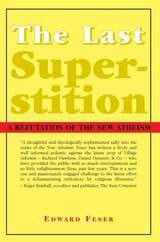
The Last Superstition
A Refutation of the New AtheismEdward Feser
St. Augustine's Press, 2010
The central contention of the “New Atheism” of Richard Dawkins, Daniel Dennett, Sam Harris, and Christopher Hitchens is that there has for several centuries been a war between science and religion, that religion has been steadily losing that war, and that at this point in human history a completely secular scientific account of the world has been worked out in such thorough and convincing detail that there is no longer any reason why a rational and educated person should find the claims of any religion the least bit worthy of attention.
But as Edward Feser argues inThe Last Superstition, in fact there is not, and never has been, any war between science and religion at all. There has instead been a conflict between two entirely philosophical conceptions of the natural order: on the one hand, the classical “teleological” vision of Plato, Aristotle, Augustine, and Aquinas, on which purpose or goal-directedness is as inherent a feature of the physical world as mass or electric charge; and the modern “mechanical” vision of Descartes, Hobbes, Locke, and Hume, according to which the physical world is comprised of nothing more than purposeless, meaningless particles in motion. As it happens, on the classical teleological picture, the existence of God, the immortality of the soul, and the natural-law conception of morality are rationally unavoidable. Modern atheism and secularism have thus always crucially depended for their rational credentials on the insinuation that the modern, mechanical picture of the world has somehow been established by science. Yet this modern “mechanical” picture has never been established by science, and cannot be, for it is not a scientific theory in the first place but merely a philosophical interpretation of science. Moreover, as Feser shows, the philosophical arguments in its favor given by the early modern philosophers were notable only for being surprisingly weak. The true reasons for its popularity were then, and are now, primarily political: It was a tool by which the intellectual foundations of ecclesiastical authority could be undermined and the way opened toward a new secular and liberal social order oriented toward commerce and technology. So as to further these political ends, it was simply stipulated, by fiat as it were, that no theory inconsistent with the mechanical picture of the world would be allowed to count as “scientific.” As the centuries have worn on and historical memory has dimmed, this act of dogmatic stipulation has falsely come to be remembered as a “discovery.”
However, not only is this modern philosophical picture rationally unfounded, it is demonstrably false. For the “mechanical” conception of the natural world, when worked out consistently, absurdly entails that rationality, and indeed the human mind itself, are illusory. The so-called “scientific worldview” championed by the New Atheists thus inevitably undermines its own rational foundations; and into the bargain (and contrary to the moralistic posturing of the New Atheists) it undermines the foundations of any possible morality as well. By contrast, and as The Last Superstition demonstrates, the classical teleological picture of nature can be seen to find powerful confirmation in developments from contemporary philosophy, biology, and physics; moreover, morality and reason itself cannot possibly be made sense of apart from it. The teleological vision of the ancients and medievals is thereby rationally vindicated – and with it the religious worldview they based upon it.
The Varieties of Atheism
Connecting Religion and Its CriticsEdited by David Newheiser
University of Chicago Press, 2022
The Varieties of Atheism reveals the diverse nonreligious experiences obscured by the combative intellectualism of Sam Harris, Richard Dawkins, and Christopher Hitchens. In fact, contributors contend that narrowly defining atheism as the belief that there is no god misunderstands religious and nonreligious persons altogether. The essays show that, just as religion exceeds doctrine, atheism also encompasses every dimension of human life: from imagination and feeling to community and ethics. Contributors offer new, expansive perspectives on atheism’s diverse history and possible futures. By recovering lines of affinity and tension between particular atheists and particular religious traditions, this book paves the way for fruitful conversation between religious and non-religious people in our secular age.
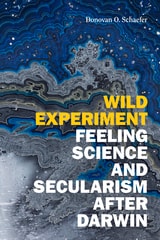
Wild Experiment
Feeling Science and Secularism after DarwinDonovan O. Schaefer
Duke University Press, 2022

Word Crimes
Blasphemy, Culture, and Literature in Nineteenth-Century EnglandJoss Marsh
University of Chicago Press, 1998
From extensive archival and literary research, Joss Marsh reconstructs a unified and particular account of blasphemy in Victorian England. Rewriting English history from the bottom up, she tells the forgotten stories of more than two hundred working-class "blasphemers," like Foote, whose stubborn refusal to silence their "hooligan" voices helped secure our rights to speak and write freely today. The new standards of criminality used to judge their "word crimes" rewrote the terms of literary judgment, demoting the Bible to literary masterpiece and raising Literature as the primary standard of Victorian cultural value.