Results by title
6 books match the query 'Atlantic Ocean'
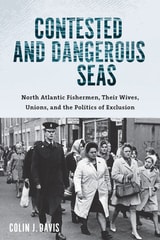
Contested and Dangerous Seas
North Atlantic Fishermen, Their Wives, Unions, and the Politics of ExclusionColin J. Davis
University of Massachusetts Press, 2019
During the 1960s and 1970s, these seafaring workers experienced new hardships. As modern fleets from many nations intensified their hunt for fish, they found themselves in increasing competition for disappearing prey. Colin J. Davis details the unfolding drama as New England and British fishermen and their wives, partners, and families reacted to this competition. Rather than acting as bystanders to these crises, the men and women chronicled in Contested and Dangerous Seas became fierce advocates for the health of the Atlantic Ocean fisheries and for their families' livelihoods.
Precarious Crossings
Immigration, Neoliberalism, and the AtlanticAlexandra Perisic
The Ohio State University Press, 2019
Perisic argues that in traveling beyond the postcolonial route that connects former colonizer and former colonized, these authors also shift their focus from cultural difference and national belonging to precarity—a condition characterized by a lack of economic and social stability and protection—as a shared characteristic under global neoliberalization. She demonstrates how contemporary Atlantic narratives reveal the contradictions inherent in neoliberalism as an ideology—thereby showing how they further participate in Atlantic literary and cultural dialogues and push against literary conventions of various genre as they explore the complexities of a globalized Atlantic.
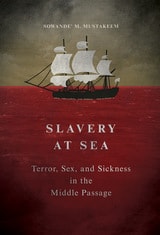
Slavery at Sea
Terror, Sex, and Sickness in the Middle PassageSowande M Mustakeem
University of Illinois Press, 2016
Sowande' Mustakeem's groundbreaking study goes inside the Atlantic slave trade to explore the social conditions and human costs embedded in the world of maritime slavery. Mining ship logs, records and personal documents, Mustakeem teases out the social histories produced between those on traveling ships: slaves, captains, sailors, and surgeons. As she shows, crewmen manufactured captives through enforced dependency, relentless cycles of physical, psychological terror, and pain that led to the the making--and unmaking--of enslaved Africans held and transported onboard slave ships. Mustakeem relates how this process, and related power struggles, played out not just for adult men, but also for women, children, teens, infants, nursing mothers, the elderly, diseased, ailing, and dying. Mustakeem offers provocative new insights into how gender, health, age, illness, and medical treatment intersected with trauma and violence transformed human beings into the world's most commercially sought commodity for over four centuries.

The Ocean Is a Wilderness
Atlantic Piracy and the Limits of State Authority, 1688-1856Guy Chet
University of Massachusetts Press, 2014
Chet shows how the traditional focus on the growth of the modern state overlooked the extent to which old attitudes and cultural practices continued to hold sway. Even as the British government extended its naval, legal, and bureaucratic reach, in many parts of the Atlantic world illegal trade was not only tolerated but encouraged. In part this was because Britain's constabulary command of the region remained more tenuous than some have suggested, and in part because maritime insurance and wartime tax policies ensured that piracy and smuggling remained profitable. When Atlantic piracy eventually waned in the early nineteenth century, it had more to do with a reduction in its profitability at port than with forceful confrontation at sea.
Challenging traditional accounts that chronicle forces of civilization taming a wild Atlantic frontier, this book is a valuable addition to a body of borderlands scholarship reevaluating the relationship between the emerging modern state and its imperial frontiers.
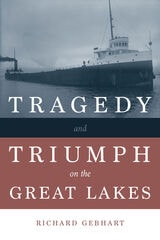
Tragedy and Triumph on the Great Lakes
Richard Gebhart
Michigan State University Press, 2024
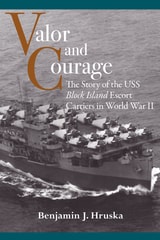
Valor and Courage
The Story of the USS Block Island Escort Carriers in World War IIBenjamin J. Hruska
University of Alabama Press, 2021
Recounts the stories of the USS Block Island CVE 21 and CVE 106 and their crews, many of whom served on both ships in the Atlantic and Pacific theatres
In Valor and Courage: The Story of the USS Block Island Escort Carriers in World War II Benjamin Hruska explores the history and commemoration of the USS Block Island—or, more properly, the Block Islands, as two escort carriers bore that name during WWII. The first, CVE 21, bears the distinction of having been the only American aircraft carrier sunk in the Atlantic Theatre after being torpedoed by a German U-boat off the coast of North Africa.
Of the CVE 21’s 957 crew members, six sailors were killed and eighteen injured in the strike, and four of the Block Island’s fighter pilots were lost later in the day searching for a safe place to land their planes. When the CVE 106 was commissioned to replace its predecessor, Captain Massie Hughes successfully persuaded the Navy to keep the CVE 21’s crew together in manning the new ship. After resurrection as the CVE 106, the Block Island was assigned to the Pacific theater where it fought until the end of the war. The saga of these two ships and the crew that navigated two very different theaters of war offers a unique lens on naval strategy and engineering as it evolved during WWII, especially as pertains to the escort carrier class—generally underappreciated both in naval studies and in public memory.
Using archival materials, dozens of oral histories, primary sources, and official records, Hruska traces the life of the Block Island from the CVE 21’s construction through its missions in the Atlantic, its work as an antisubmarine hunter, its destruction, and the lasting impact of those experiences on its crew. Hruska’s study juxtaposes traditional military history with an examination of the acts of remembrance and commemoration by veterans who served on the escort carriers, how those practices evolved over time, and how the meanings of personal wartime experiences and memories gradually shifted throughout that process.