Results by title
5 books match the query 'Atonement'
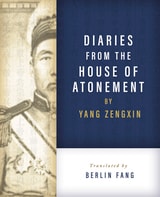
Diaries from the House of Atonement
By Zengxin Yang, translated by Berlin Fang
Bridwell Press, 2026
Diaries from the House of Atonement offers a rare glimpse into the intellectual world of Yang Zengxin (1864–1928), the pragmatic ruler who maintained relative stability in Xinjiang from the fall of the Qing dynasty until his assassination in 1928.
Rather than recounting his administration, Yang's diaries explore Confucian and Daoist thought, personal cultivation, political philosophy, and China's uncertain future. They reveal the intellectual principles that may have shaped his approach to governance, including his reflections on moral order, cultural tradition, and religion.
The diaries also show Yang's understanding of the Bagua (八卦) and the I Ching, showing how classical Chinese philosophy could inform practical life and political thought. This translation introduces English-language readers to Yang not merely as a regional ruler, but as a reflective thinker whose writings illuminate the encounter between Chinese tradition, political crisis, religious thought, and the search for social order.
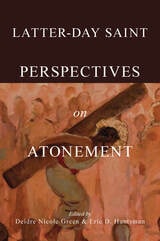
Latter-day Saint Perspectives on Atonement
Edited by Deidre Nicole Green and Eric D. Huntsman
University of Illinois Press, 2024
The Church of Jesus Christ of Latter-day Saints and other Christians have always shared a fundamental belief in the connection between personal salvation and the suffering, death, and resurrection of Jesus Christ. While having faith in and experiencing the atonement of Christ remains a core tenet for Latter-day Saints, some thinkers have in recent decades reconsidered traditional understandings of atonement.
Deidre Nicole Green and Eric D. Huntsman edit a collection that brings together multiple and diverse approaches to thinking about Latter-day Saint views on this foundational area of theology. The essayists draw on and go beyond a wide range of perspectives, classical atonement theories, and contemporary reformulations of atonement theory. The first section focuses on scriptural and historical foundations while the second concentrates on theological explorations. Together, the contributors evaluate what is efficacious and ethical in the Latter-day Saint outlook and offer ways to reconceive those views to provide a robust theological response to contemporary criticisms about atonement.
Contributors: Nicholas J. Frederick, Fiona Givens, Deidre Nicole Green, Sharon J. Harris, J.B. Haws, Eric D. Huntsman, Benjamin Keogh, Ariel Bybee Laughton, Adam S. Miller, Jenny Reeder, T. Benjamin Spackman, and Joseph M. Spencer
On the Motive of the Incarnation
Dylan The Salmanticenses
Catholic University of America Press, 2019
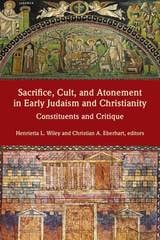
Sacrifice, Cult, and Atonement in Early Judaism and Christianity
Constituents and CritiqueHenrietta L. Wiley
SBL Press, 2016
Critical and creative studies that offer fresh perspectives on ancient ideas and practices
The contributions to this volume deal in various ways with the cult at the Jerusalem Temple that epitomized the religious, cultural, and socio-political identity of Judaism for many centuries. Some essays examine ancient constitutive practices and concepts, such as purification rituals, sacrifices, atonement, or sacred authorities at the temple, with the goal of interpreting their meanings for modern readers. Other essays explore alternatives to ancient cultic meaning and practice. Essays critique established traditions, attempt to renegotiate them, or use metaphor and spiritualization to expand the potential of these phenomena to serve as terminological and ideological resources. Thus they examine and affirm the continuing relevance of ancient Jewish cultic notions long after the destruction of the Second Temple in 70 CE.
- An international group of scholars representing different fields and diverse religious backgrounds
- A thorough examination of traditions as through the lens of contemporaneous interpretive traditions such as Jewish prophecy, the Dead Sea Scrolls, and Early Christian literature
- Examination of topics such as purification, sacrifice, and atonement, and the depiction and development of sacred authority throughout the Bible
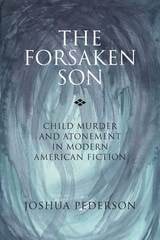
The Forsaken Son
Child Murder and Atonement in Modern American FictionJoshua Pederson
Northwestern University Press, 2015
The Forsaken Son engages the provocative coincidence of the vocabularies of infanticide and Christianity, specifically atonement theology, in six modern American novels: Flannery O’Connor’s The Violent Bear It Away, the first two installments of John Updike’s Rabbit tetralogy, Toni Morrison’s Beloved, Joyce Carol Oates’s My Sister, My Love, and Cormac McCarthy’s Outer Dark.
Christian atonement theology explains why God lets His son be crucified. Yet in recent years, as an increasing number of scholars have come to reject that explanation, the cross reverts from saving grace to trauma—or even crime. More bluntly, without atonement, the cross may be a filicide, in which God forces his son to die for no apparent reason. Pederson argues that the novels about child murder mentioned above likewise give voice to modern skepticism about traditional atonement theology.