Results by title
5 books match the query 'Authors, Canadian'

Coyote Country
Fictions of the Canadian WestArnold E. Davidson
Duke University Press, 1994
Davidson details the evolution of the U.S. and Canadian Western forms, tracing the divergence between the two as Canadian writers responded to their unique historical circumstances by reinventing the West as well as the Western and establishing a new literary landscape where author and reader could work out new possibilities of being. Surveying a range of texts by Canada’s most innovative writers, with special attention to women writers and Native stories of Coyote, he provides close readings of novels by Howard O’Hagan, Sheila Watson, Robert Kroetsch, Aritha van Herk, Anne Cameron, Peter Such, W. O. Mitchell, Beatrice Culleton, and Thomas King. A unique study, Coyote Country offers at one and the same time a theory of Canadian Western fiction, a history of crosscultural paradigms of the West as manifested in novels, and an intensive reading of some of Canada’s best literature.
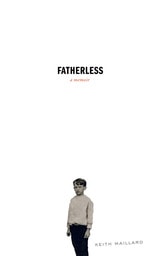
Fatherless
A MemoirKeith Maillard
West Virginia University Press, 2019
This story begins with a phone call out of the blue: a lawyer tells a writer that his ninety-six-year-old father, with whom he has had no contact since the age of three and whom he has twice tried to find without success, has just died, leaving him nothing. Half-reluctant, half-fascinated, both angry and curious, Keith Maillard begins to research his father’s life. The result is a suspenseful work of historical reconstruction—a social history often reading like a detective story—as well as a psychologically acute portrait of the impact of a father’s absence. Walking a tightrope between the known and the unknown, and following a trail that takes him from Vancouver to Montreal to his native Wheeling, West Virginia, Keith Maillard has pulled off a book that only a novelist of his stature could write.

Sui Sin Far / Edith Maude Eaton
A Literary BiographyAnnette White-Parks; Foreward by Roger Daniels
University of Illinois Press, 1995
Annette White-Parks offers the first full-length biography of the woman now remembered as North America's first published Asian writer. White-Parks reveals an author who defied the in vogue style of "yellow peril" literature to show Chinatowns and their inhabitants as complex, feeling human beings. Her insider's sympathy focused in particular on Chinese American women and children. Confronted with social divisions and discrimination, Sui Sin Far experimented with trickster characters and irony, sharing the coping mechanisms used by other writers who struggled to overcome the marginalization forced on them because of their race, gender, or class.
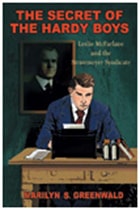
The Secret of the Hardy Boys
Leslie McFarlane and the Stratemeyer SyndicateMarilyn S. Greenwald
Ohio University Press, 2004
For generations of readers, the Hardy Boys were the creations of the legendary Franklin W. Dixon—except Dixon never existed. Behind the iconic series stood the Stratemeyer Syndicate, a powerhouse of children’s publishing, and one gifted but largely unrecognized writer: Leslie McFarlane.
In The Secret of the Hardy Boys, acclaimed biographer Marilyn S. Greenwald uncovers the remarkable story of the man who first brought Frank and Joe Hardy to life. A young Canadian journalist with ambitions beyond formula fiction, McFarlane infused the Syndicate’s rigid plots with wit, atmosphere, and narrative vitality—helping to shape one of the most enduring franchises in children’s literature.
Bound by contract and reluctant to claim authorship, McFarlane kept his role a secret for decades, receiving little financial reward for books that sold in the millions. Yet his story is far from one of regret. Drawing on extensive research, Greenwald paints a vivid portrait of a versatile writer who navigated the shifting landscape of twentieth-century media, from pulp magazines to radio and film.
Rich in literary history and human insight, The Secret of the Hardy Boys is both a revealing behind-the-scenes account of a cultural phenomenon and an inspiring testament to creativity, resilience, and the quiet architects of beloved stories.

The Truth About Stories
A Native NarrativeThomas King
University of Minnesota Press, 2005