Results by title
5 books match the query 'Authors, Spanish'
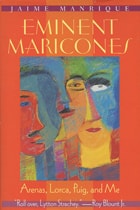
Eminent Maricones
Arenas, Lorca, Puig, and MeJaime Manrique
University of Wisconsin Press, 2001
Jaime Manrique weaves into his own memoir the lives of three important twentieth-century Hispanic writers: the Argentine Manuel Puig, author of Kiss of the Spider Woman; the Cuban Reinaldo Arenas, author of Before Night Falls; and Spanish poet and playwright Federico García Lorca. Manrique celebrates the lives of these heroic writers who were made outcasts for both their homosexuality and their politics.
"Manrique's double vision yields insights into Puig, Arenas, and Lorca unavailable to a writer less attuned to the complex interplay of culture and sexuality, as well as that of race and class in Latino and Anglo societies."—George DeStefano, The Nation
"A splendid memoir of Manuel Puig. It evokes him—how he really was—better than anything I've read."—Susan Sontag
"Where Manrique's tale differs from others is in its unabashed and sensitive treatment of sexuality. One reads his autobiographical account with pleasure and fascination."—Jose Quiroga, George Washington University
"Manrique's voice is wise, brave, and wholly original. This chronicle of self-discovery and literary encounters is heartening and deep."—Kennedy Fraser
"In this charmingly indiscreet memoir, Jaime Manrique writes with his customary humor and warm sympathy, engaging our delighted interest on every page. He has the rare gift of invoking and inviting intimacy, in this case a triangulated intimacy between himself, his readers, and his memories. These are rich double portraits."—Phillip Lopate
Sab and Autobiography
By Gertrudis Gómez de Avellaneda y Arteaga
University of Texas Press, 1993
Eleven years before Uncle Tom's Cabin fanned the fires of abolition in North America, an aristocratic Cuban woman told an impassioned story of the fatal love of a mulatto slave for his white owner's daughter. So controversial was Sab's theme of miscegenation and its parallel between the powerlessness and enslavement of blacks and the economic and matrimonial subservience of women that the book was not published in Cuba until 1914, seventy-three years after its original 1841 publication in Spain.
Also included in the volume is Avellaneda's Autobiography (1839), whose portrait of an intelligent, flamboyant woman struggling against the restrictions of her era amplifies the novel's exploration of the patriarchal oppression of minorities and women.
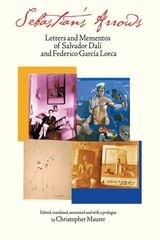
Sebastian's Arrows
Letters and Mementos of Salvador Dali and Federico Garcia LorcaSalvador Dali and Federico Garcia Lorca
Swan Isle Press, 2005
“In my ‘Saint Sebastian’ I remember you,” Salvador Dali replied to Garcia Lorca, referring to the essay on aesthetics that Dali had just written, “. . . and sometimes I think he is you. Let’s see whether Saint Sebastian turns out to be you.”
This exchange is but a glimpse into the complex relationship between two renowned and highly influential twentieth-century artists. On the centennial of Dali's birth, Sebastian’s Arrows presents a never-before-published collection of their letters, lectures, and mementos.
Written between 1925 and 1936, the letters and lectures bring to life a passionate friendship marked by a thoughtful dialogue on aesthetics and the constant interaction between poetry and painting. From their student days in Madrid's Residencia de Estudiantes, where the two waged war against cultural “putrefaction” and mocked the sacred cows of Spanish art, Dali and Garcia Lorca exchanged thoughts on the act of creation, modernity, and the meaning of their art. The volume chronicles how in their poetic skirmishes they sharpened and shaped each other’s work—Garcia Lorca defending his verses of absence and elegy and his love of tradition while Dali argued for his theories of “Clarity” and “Holy Objectivity” and the unsettling logic of Surrealism.
Christopher Maurer’s masterful prologue and selection of letters, texts, and images (many generously provided by the Fundacion Gala-Salvador Dali and Fundacion Federico Garcia Lorca), offer compelling and intimate insights into the lives and work of two iconic artists. The two men had a “tragic, passionate relationship,” Dali once wrote—a friendship pierced by the arrows of Saint Sebastian.
Simone
A NovelEduardo Lalo
University of Chicago Press, 2015
A tale of alienation, love, suspense, imagination, and literature set on the streets of San Juan, Puerto Rico, Simone tells the story of a self-educated Chinese immigrant student courting (and stalking) a disillusioned, unnamed writer who is struggling to make a name for himself in a place that is not exactly a hotbed of literary fame. By turns solipsistic and political, romantic and dark, Simone begins with the writer’s frustrated, satiric observations on his native city and the banal life of the university where he teaches—forces utterly at odds with the sensuality of his writing. But, as mysterious messages and literary clues begin to appear—scrawled on sidewalks and walls, inside volumes set out in bookstores, left on his answering machine and under his windshield wiper—Simone progresses into a cat-and-mouse game between the writer and his mystery stalker. When the eponymous Simone’s identity is at last revealed, the writer finds in the life of this Chinese immigrant a plight not unlike his own. Traumatized and lonely, the pair moves towards bittersweet collaborations in passion, grief, and art.

The Ethics of Autobiography
Replacing the Subject in Modern SpainAngel G. Loureiro
Vanderbilt University Press, 2000
To address this oversight, Loureiro draws from his own experiences as well as from a wide range of previous theoretical works on autobiography, especially from the writings of Emmanuel Levinas, who believed that the self does not begin as a self-positing consciousness but as a response to an address from the other. On this basis, Loureiro then brilliantly traces the complex interplays between the political, discursive, rhetorical, and ethical dimensions of autobiography.
After laying out these theoretical foundations, Loureiro puts them to work in analyzing four of the most fascinating autobiographies written by Spanish exiles: The Life of Joseph Blanco White, who lived from 1775 to 1841, Memoria de la Melancolia by Maria Teresa Leon (1904-1988), Coto vedado and En los reinos de taifa by Juan Goytisolo (born 1931), and Literature or Life by Jorge Semprun (born 1923). The lives of these authors, all of whom were exiled for political reasons, were disrupted by some of the most crucial events in Spain's tortuous road to modernity and democracy.
The book closes with a discussion of why there have been so few critical examinations of autobiographies written in modern Spain. Loureiro proposes that, even in today's Spain, stifling social and political forces smother ethical responsibility, which is an essential ingredient in creating autobiographies that dare to be more than a humdrum inventory of personal recollections. Only in exile have Spanish authors seemed able to find the conditions to write their lives in a truly responsible manner. This answer to a call that grounds the subject in an other is ultimately the only form of truth available in autobiography.