Results by title
5 books match the query 'Autobiographical fiction, English'
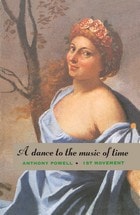
A Dance to the Music of Time
First MovementAnthony Powell
University of Chicago Press, 1995
A Dance to the Music of Time is a landmark work of fiction, praised by readers and critics and other novelists throughout the 75 years since the first volume was published. Equal parts funny and heartbreaking, clever and moving, Anthony Powell's universally acclaimed epic encompasses a four-volume panorama of twentieth century London.
Hailed by Time as "brilliant literary comedy as well as a brilliant sketch of the times," A Dance to the Music of Time opens just after World War I and carries through the 1950s, with all the changes of society, characters, and relationships that those shifting eras bring.
Four very different young men on the threshold of manhood dominate this opening volume of A Dance to the Music of Time. The narrator, Jenkins—a budding writer—shares a room with Templer, already a passionate womanizer, and Stringham, aristocratic and reckless. Widmerpool, as hopelessly awkward as he is intensely ambitious, lurks on the periphery of their world. Amid the fever of the 1920s and the first chill of the 1930s, these four gain their initiations into sex, society, business, and art. A masterpiece of modern fiction, Powell's epic creates a rich portrait of life in England between the wars.
"Reading Powell," says the New York Times, "is like living someone else's life, inextricably entangled with your own." Give this first volume a try, and you'll find characters and scenes and insights that will stay with you for the rest of your life.
Includes these novels:
A Question of Upbringing
A Buyer's Market
The Acceptance World

Architexts of Memory
Literature, Science, and AutobiographyEvelyne Ender
University of Michigan Press, 2005
"An important, cogently argued, subtle and rich study of a topic of great interest."
--Mieke Bal, University of Amsterdam
"A work of literary studies positioned at the intersection of tradition and innovation. Evelyne Ender's book brings fashionable cultural concerns to bear on traditional literary texts-her superb pedagogical skills lure and guide the reader through the most difficult psychoanalytical concepts."
--Nelly Furman, Cornell University
Evelyne Ender is Professor of French Studies, University of Washington. She is the author of Sexing the Mind: Nineteenth-Century Fictions of Hysteria.
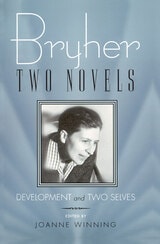
Bryher
Two Novels: Development And Two SelvesUniversity of Wisconsin Press, 2000
Bryher (born Annie Winifred Ellerman) is perhaps best known today as the lifelong partner of the poet H.D. She was, however, a central figure in modernist and avant-garde cultural experimentation in the early twentieth century; a prolific producer of poetry, novels, autobiography, and criticism; and an intimate and patron of such modernist artists as Gertrude Stein, Marianne Moore, and Dorothy Richardson. Bryher’s own path-breaking writing has remained largely neglected, long out of print, and inaccessible to those interested in her oeuvre. Now, for the first time since their original publication in the early 1920s, two of Bryher's pioneering works of fictionalized autobiography, titled Development and Two Selves, are reprinted in one volume for a new audience of readers, scholars, and critics.
Blending poetry, prose, and autobiographical details, Development and Two Selves together constitute a compelling bildungsroman that is among the first ever to follow a young woman's process of coming out. Through the fictionalized character Nancy, the novels trace Bryher’s life through her childhood and young adulthood, giving the reader an account of the development of a unique lesbian, feminist, and modernist consciousness. Development and Two Selves recover significant work by one of the first experimenters of the modernist movement and are a welcome reintroduction of the enigmatic Bryher.
Creating Identity in the Victorian Fictional Autobiography
Heidi L. Pennington
University of Missouri Press, 2018
Despite the subgenre’s radical implications regarding the nature of personal identity, fictional autobiographies were popular in their own time and continue to inspire devotion in readers. This study sheds new light on what makes this subgenre so compelling, up to and including in the present historical moment of precipitous social and technological change. As we continue to grapple with the existential question of what determines “who we really are,” this book explores the risks and rewards of embracing conscious acts of fictional self-production in an unstable world.
Joyce's Book of Memory
The Mnemotechnic of UlyssesJohn S. Rickard
Duke University Press, 1999
Offering a detailed reading of Joyce and his methods of writing, Rickard investigates the uses of memory in Ulysses and analyzes its role in the formation of personal identity. The importance of forgetting and repression, and the deadliness of nostalgia and habit in Joyce’s paralyzed Dublin are also revealed. Noting the power of spontaneous, involuntary recollection, Rickard locates Joyce’s mnemotechnic within its historical and philosophical contexts. As he examines how Joyce responded to competing intellectual paradigms, Rickard explores Ulysses’ connection to medieval, modern, and (what would become) postmodern worldviews, as well as its display of tensions between notions of subjective and universal memory. Finally, Joyce’s Book of Memory illustrates how Joyce distilled subjectivity, history, and cultural identity into a text that offers a panoramic view of the modern period.
This book will interest students and scholars of Joyce, as well as others engaged in the study of modern and postmodern literature.