Results by title

12 books match the query 'Automobile industry workers'
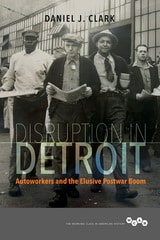
cover of Disruption in Detroit: Autoworkers and the Elusive Postwar Boom

Disruption in Detroit

Autoworkers and the Elusive Postwar Boom

Daniel J. Clark

University of Illinois Press, 2018
It is a bedrock American belief: the 1950s were a golden age of prosperity for autoworkers. Flush with high wages and enjoying the benefits of generous union contracts, these workers became the backbone of a thriving blue-collar middle class. It is also a myth. Daniel J. Clark began by interviewing dozens of former autoworkers in the Detroit area and found a different story--one of economic insecurity caused by frequent layoffs, unrealized contract provisions, and indispensable second jobs. Disruption in Detroit is a vivid portrait of workers and an industry that experienced anything but stable prosperity. As Clark reveals, the myths--whether of rising incomes or hard-nosed union bargaining success--came later. In the 1950s, ordinary autoworkers, union leaders, and auto company executives recognized that although jobs in their industry paid high wages, they were far from steady and often impossible to find.
[more]
cover of Labor's Time: Shorter Hours, The Uaw, And The

Labor's Time

Shorter Hours, The Uaw, And The

Jonathan Cutler

Temple University Press, 2004

The movement for a shorter workweek that once defined the labor movement in the United States was largely displaced by the new corporatist structure of organized labor in the post-New Deal era. Labor's Time examines the changes that occurred within organized labor and traces their influence on the decline of the shorter hours movement. Focusing on the internal union politics of the influential United Automobile Workers and Local 600, its chapter at Henry Ford's massive River Rouge factory, Jonathan Cutler demonstrates how an all-but-forgotten interracial movement for a shorter workweek during the 1950s and 1960s became a casualty of an increasingly top-heavy union bureaucracy that lost touch with the desires, fears, and aspirations of rank and file workers and dug its own grave in the process. Jonathan Cutler examines the political context in which the shorter hours movement emerged within Local 600 in the 1940s, then chronicles the attempts by Walter Reuther, the head of the UAW, to suppress it. Cutler also reviews the role the Communist Party played in the controversy. Finally, he documents the UAW response to rank and file pressure for a shorter workweek, and how the local's own organizational flaws allowed Reuther and the national union to wrest control from the dissidents. Fresh and boldly written, Labor's Time recreates a moment when unions—as a movement, not as an amalgam of leaders—could have transformed the landscape of work in the United States.
[more]
cover of Life in the Shadows of the Crystal Palace, 1910–1927: Ford Workers in the Model T Era

Life in the Shadows of the Crystal Palace, 1910–1927

Ford Workers in the Model T Era

Clarence Hooker

University of Wisconsin Press, 1997
This book shows how Ford's first large automotive plant—the Crystal Palace—transformed the sleepy village of Highland Park, Michigan, into an industrial boomtown that later became an urban ghetto, and the first American city whose life and well-being depended entirely upon the employment and production policies of the automotive industry.
[more]
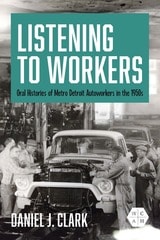
cover of Listening to Workers: Oral Histories of Metro Detroit Autoworkers in the 1950s

Listening to Workers

Oral Histories of Metro Detroit Autoworkers in the 1950s

Daniel J. Clark

University of Illinois Press, 2024

Historians and readers alike often overlook the everyday experiences of workers. Drawing on years of interviews and archival research, Daniel J. Clark presents the rich, interesting, and sometimes confounding lives of men and women who worked in Detroit-area automotive plants in the 1950s.

In their own words, the interviewees frankly discuss personal matters like divorce and poverty alongside recollections of childhood and first jobs, marriage and working women, church and hobbies, and support systems and workplace dangers. Their frequent struggles with unstable jobs and economic insecurity upend notions of the 1950s as a golden age of prosperity while stories of domestic violence and infidelity open a door to intimate aspects of their lives. Taken together, the narratives offer seldom-seen accounts of autoworkers as complex and multidimensional human beings.

Compelling and surprising, Listening to Workers foregoes the union-focused strain of labor history to provide ground-level snapshots of a blue-collar world.
[more]
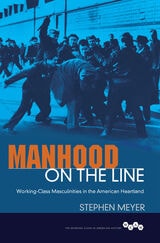
cover of Manhood on the Line: Working-Class Masculinities in the American Heartland

Manhood on the Line

Working-Class Masculinities in the American Heartland

Stephen Meyer

University of Illinois Press, 2016
Stephen Meyer charts the complex vagaries of men reinventing manhood in twentieth century America. Their ideas of masculinity destroyed by principles of mass production, workers created a white-dominated culture that defended its turf against other racial groups and revived a crude, hypersexualized treatment of women that went far beyond the shop floor. At the same time, they recast unionization battles as manly struggles against a system killing their very selves. Drawing on a wealth of archival material, Meyer recreates a social milieu in stunning detail--the mean labor and stolen pleasures, the battles on the street and in the soul, and a masculinity that expressed itself in violence and sexism but also as a wellspring of the fortitude necessary to maintain one's dignity while doing hard work in hard world.
[more]
cover of Reassembling the UAW: Insurgency, Contention, and the Struggle for Unionism in the American South

Reassembling the UAW

Insurgency, Contention, and the Struggle for Unionism in the American South

Abe Walker

Temple University Press, 2026

When Volkswagen’s Chattanooga Assembly Plant opened in 2012, the United Auto Workers were excited by the golden opportunity to organize in the anti-union South, where their efforts had been routinely thwarted. However, it took ten years and several attempts before the UAW was successful in unionizing the plant. Reassembling the UAW explains why.

Abe Walker chronicles the organizing campaign from its origin in 2014 to the union’s breakthrough victory in 2024, illustrating what went wrong—and what went right—along the way. Walker provides a systematic analysis of the strategic challenges and tactical shifts, showing the patterns that persisted across three election cycles while highlighting their differences, from global-level alliances to local labor issues.

Reassembling the UAW also demonstrates how rebel rank-and-file workers ousted the old-guard leadership and transformed the UAW into a militant union to achieve results. Ultimately, Walker offers valuable lessons for organizational strategy, the power of collective action, and the future of the labor movement.
[more]
cover of Story Of Reo Joe: Work, Kin, And Community

Story Of Reo Joe

Work, Kin, And Community

Lisa M. Fine

Temple University Press, 2004

The Reo Motor Car Company operated in Lansing, Michigan, for seventy years, and encouraged its thousands of workers to think of themselves as part of a factory family. Reo workers, most typically white, rural, native-born Protestant men, were dubbed Reo Joes. These ordinary fellows had ordinary aspirations: job security, decent working conditions, and sufficient pay to support a family. They treasured leisure time for family activities (many sponsored by the company), hunting, and their fraternal organizations. Even after joining a union, Reo Joes remained loyal to the company and proud of the community built around it. Lisa M. Fine tells the Reo story from the workers' perspective on the vast social, economic, and political changes that took place in the first three quarters of the twentieth century. Lisa Fine explores their understanding of the city where they lived, the industry that employed them, and the ideas about work, manhood, race, and family that shaped their identities. The Story of Reo Joe is, then, a book about historical memory; it challenges us to reconsider what we think we know about corporate welfare, unionization, de-industrialization, and working-class leisure.
[more]
cover of The Assembly Line

The Assembly Line

Robert Linhart

University of Massachusetts Press, 1981
Firsthand accounts of the numbing experience of industrial work by Robert Linhart, one of the militant leftist intellectuals of 1968 France. Translated by Margaret Crosland.
[more]
cover of The End of the Line: Lost Jobs, New Lives in Postindustrial America

The End of the Line

Lost Jobs, New Lives in Postindustrial America

Kathryn Marie Dudley

University of Chicago Press, 1994

The End of the Line tells the story of the 1988 closing of the Chrysler assembly plant in Kenosha, Wisconsin. Kathryn Marie Dudley uses interviews with residents to chart the often confusing process of change that deindustrialization forced on every corner of the community. This honest, moving portrait of one town's radical shift from a manufacturing to a postindustrial economy will redefine the way Americans think about our families, communities, and future.

"An excellent study not only of the cultural disruptions caused by the shutdown of Chrysler's operations in Kenosha, Wisconsin, but also of the ideology of progress that abetted the shutdown."—Stephen Amberg, Industrial and Labor Relations Review

"With the eye of an anthropologist, [Dudley] examines the tensions between the 'culture of hands' and the 'culture of mind.' Her account is especially instructive because, by many measures, Kenosha has successfully recovered, yet for many the pain still remains."—Booklist

"Exceptional. . . . Should be widely read."—Douglas Harper, Contemporary Sociology

"Make[s] clear what a tenuous concept economic security is, especially when the rules for achieving security are in flux."—Barbara Presley Noble, New York Times
[more]
cover of The Ford Century in Minnesota

The Ford Century in Minnesota

Brian McMahon

University of Minnesota Press, 2016

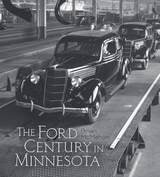
In 1903, before the Ford Motor Company was even incorporated, Stephen Tenvoorde signed a contract to sell “Fordmobiles” at his bicycle shop in St. Cloud, Minnesota. Four generations later, the Tenvoorde family still operates what is now the oldest Ford dealership in the world. Brian McMahon chronicles how the fortunes of the company and the state became intertwined during that century.  

Ford assembled Model T cars in the world’s tallest automobile plant in Minneapolis and a three-story structure in St. Paul—both still standing. These factories quickly became functionally obsolete after the development of the moveable assembly line. The hunt for a new site to build a modern, single-story plant stirred intense rivalry between Minneapolis and St. Paul. Henry Ford took a rare personal interest in the search and selected a 125-acre parcel in St. Paul overlooking the recently built High Dam on the Mississippi River, which allowed for navigation and hydroelectric power. The Twin Cities Assembly Plant would go on to manufacture millions of cars, trucks, tractors, and military vehicles until its closure in 2011. 

Henry Ford’s large-scale experiments with every aspect of the industrial economy sent ripples and shockwaves through the lives of Minnesotans—management and assembly line workers, dealers and customers, families and communities. First-person accounts of more than forty retired auto workers share what it was like to work at Ford—from the early years of the Minneapolis plant to the final hours of the Twin Cities Assembly Plant in St. Paul. McMahon documents the company’s transformation—through the Depression, the rise of the United Auto Workers Union, World War II, women joining the workforce, competition from imported cars, globalization, outsourcing, and the closing of the plant. 

This publication was made possible in part by the people of Minnesota through a grant funded by an appropriation to the Minnesota Historical Society from the Minnesota Arts and Cultural Heritage Fund. Any views, findings, opinions, conclusions or recommendations expressed in this publication are those of the authors and do not necessarily represent those of the State of Minnesota, the Minnesota Historical Society, or the Minnesota Historic Resources Advisory Committee. 

[more]
cover of Walter Reuther: THE MOST DANGEROUS MAN IN DETROIT

Walter Reuther

THE MOST DANGEROUS MAN IN DETROIT

Nelson Lichtenstein

University of Illinois Press, 1995

Supported by The Walter and May Reuther Memorial Fund
Previously published by Basic Books as The Most Dangerous Man in Detroit: Walter Reuther and the Fate of American Labor
 
[more]
cover of When Good Jobs Go Bad: Globalization, De-unionization, and Declining Job Quality in the North American Auto Industry

When Good Jobs Go Bad

Globalization, De-unionization, and Declining Job Quality in the North American Auto Industry

Rothstein, Jeffrey S

Rutgers University Press, 2016

From Chinese factories making cheap toys for export, to sweatshops in Bangladesh where name-brand garments are sewn—studies on the impact of globalization on workers have tended to focus on the worst jobs and the worst conditions. But in When Good Jobs Go Bad, Jeffrey Rothstein looks at the impact of globalization on a major industry—the North American auto industry—to reveal that globalization has had a deleterious effect on even the most valued of blue-collar jobs.
 
Rothstein argues that the consolidation of the Mexican and U.S.-Canadian auto industries, the expanding number of foreign automakers in North America, and the spread of lean production have all undermined organized labor and harmed workers. Focusing on three General Motors plants assembling SUVs—an older plant in Janesville, Wisconsin; a newer and more viable plant in Arlington, Texas; and a “greenfield site” (a brand-new, state-of-the-art facility) in Silao, Mexico—When Good Jobs Go Bad shows how global competition has made nonstop, monotonous, standardized routines crucial for the survival of a plant, and it explains why workers and their local unions struggle to resist. For instance, in the United States, General Motors forced workers to accept intensified labor by threatening to close plants, which led local unions to adopt “keep the plant open” as their main goal. At its new factory in Silao, GM had hand-picked the union—one opposed to strikes and committed to labor-management cooperation—before it hired the first worker. 
 
Rothstein’s engaging comparative analysis, which incorporates the viewpoints of workers, union officials, and management, sheds new light on labor’s loss of bargaining power in recent decades, and highlights the negative impact of globalization on all jobs, both good and bad, from the sweatshop to the assembly line.
 
[more]