Results by title
12 books match the query 'Automobile travel'
Along the Texas Forts Trail
B. W. Aston
University of North Texas Press, 1997
Arizona Friend Trips
Stories from the RoadLisa Schnebly Heidinger and Julie Morrison
University of Arizona Press, 2025
Southwest Books of the Year Pick
In Arizona Friend Trips, Lisa Schnebly Heidinger and Julie Morrison invite readers to explore the state’s most cherished places through a blend of poetry, prose, and photography. From the iconic landmarks to hidden gems, each chapter of this captivating travelogue provides a rich tapestry of historical insight, personal anecdotes, and emotional reflections, painting a vivid portrait of Arizona’s diverse landscapes and vibrant culture. Be part of this unique journey as Lisa and Julie embark on an unforgettable adventure, filled with laughter, nostalgia, and a deep appreciation for the beauty of the Grand Canyon State.
Arizona Friend Trips is a celebration of friendship, discovery, and the enduring spirit of exploration. As Lisa and Julie share their favorite trips and formative experiences, readers are treated to an intimate glimpse into their lives, making this book a joyous and uplifting read for travelers and armchair explorers alike. Whether you're planning your own Arizona adventure or simply yearning to wander from the comfort of home, Arizona Friend Trips promises to inspire, delight, and leave you longing for the open road.
Backroads, New Jersey
Driving at the Speed of LifeDi Ionno, Mark
Rutgers University Press, 2002
Mark Di Ionno is a Jersey guy through and through. He’s lived in fifteen different towns in six different New Jersey counties. He’s been a journalist for the state’s top newspapers, currently the Star-Ledger, where his first job was to go out and write about things that were “interesting.” Who better to take readers on a personal tour of the backroads of New Jersey?
In Backroads, New Jersey, Di Ionno leads readers off the congested interstates with their commonplace scenery to the seldom-explored secondary roads, where the real life of the state can be found. These inter-county or 500 series roads are a 6,788-mile network of mostly one-lane highways. Marked by blue-and-yellow five-sided shields bearing county names, they make up more than 20 percent of New Jersey’s public roads. They are never the fastest or most direct way to get anywhere, but when you break out of the towns and hit the country, they are a pleasure to drive.
Travel with Di Ionno as he takes readers to see the state’s amazing beauty¾from the dizzying cliffs of the Palisades, to the blunted peaks of the Highlands and Kittatinny Ridges, to the rolling hills of Morris, Hunterdon, and Somerset counties, to the topsoil-wealthy agricultural belts of Monmouth and the southern counties, to the flat, sandy beaches of the 127-mile Jersey Shore. Travel with him as he shows us the homes of New Jersey’s culturally diverse population, whose men and women work at everything from farms to pharmacies, from banks to auto assembly lines. And travel with him as he recounts the history made along the back country roads in towns like Rocky Hill, where George Washington wrote his farewell orders. Di Ionno calls New Jersey “a place of infinite natural beauty, a place of intricate human patterns. A place where you can see a lot in a little time. This is, simply put, the overriding theme of this book. New Jersey is a restless state for restless people. A state for wanderers to explore.” Backroads, New Jersey is a rare chance to see it all through the eyes of a well-traveled Jerseyan. Happy wandering!
Colorado Byways
Thomas P. Huber
University Press of Colorado, 1997
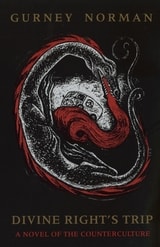
Divine Right's Trip
A Novel of the CountercultureGurney Norman
Ohio University Press, 1990
This first Gnomon Press edition was published in 1990.
Divine Right’s Trip is a countercultural classic that captures the spirit of the 1960s and early 1970s. The novel follows Divine Right (D. R.) Davenport, a restless young man on a journey of self-discovery, as he embarks on a cross-country road trip in his beloved but unreliable old Volkswagen bus, Urge. Accompanied at times by his free-spirited girlfriend, Estelle, D. R. embarks on an odyssey that takes him through communes, small towns, and encounters with eccentric characters, each offering insights into D. R.’s own struggles with identity, freedom, and belonging.
Originally published as a serial in the Last Whole Earth Catalog in 1971, Divine Right’s Trip is both a road novel and a coming-of-age story, reflecting the era’s tensions between individualism and community, rebellion and responsibility. Gurney Norman’s writing is infused with humor, sharp social observation, and a deep appreciation for the landscapes and people of Appalachia, where D. R. ultimately finds himself confronting his roots.
A defining work of Appalachian literature and the countercultural movement, Divine Right’sTrip remains a thought-provoking exploration of personal growth, societal change, and the search for meaning in an ever-shifting world.
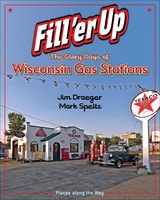
Fill 'er Up
The Glory Days of Wisconsin Gas StationsJim Draeger
Wisconsin Historical Society Press, 2008
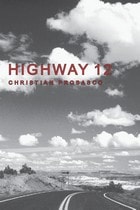
Highway 12
Christian Probasco
Utah State University Press, 2005
Highway 12 is undoubtedly one of not only America's but the world's most scenic highways. From its intersection on the west with Highway 89 south of Panguitch, Utah, it runs up through Red Canyon onto the Paunsagunt Plateau and across Bryce Canyon National Park. It then drops into the Paria River Valley, passes through several tiny villages, crosses some extraordinary (for anywhere but this region) badlands, and descends the Escalante River into Potato Valley. While a driver may justifiably feel she has seen some scenery by that point, the highway is just getting started, for in the next stretch, it crosses a labyrinth of multicolored sandstone humps and corridors, climaxed by a narrow hogback with steep slickrock drops to each side, all within Grand Staircase-Escalante National Monument. Reaching the oasis of Boulder within this desert of rock, the road then climbs across the flank of the Aquarius Plateau, providing spectacular vistas and terminating at the gateway to Capitol Reef National Park. Along the way side roads and trails access the vast wilderness of the Paria and Escalante Rivers and the high plateaus they drain. Congress acknowledged the unequaled splendor of Highway 12 by designating it one of a handful of All-American Roads.
To travel with Christian Probasco this road and its spurs, which lead deep into some of the wildest, most broken-up and stunning landscapes anywhere, can put a unique twist on an already singular experience. He knows the region as well as anyone and brings an original, edgy, youthful view to it. His opinions and his language may challenge you. His approaches to and perspectives on the land may sometimes surprise you. His understanding of the area's history and its people will likely teach you a thing or two.
Killer on the Road
Violence and the American InterstateBy Ginger Strand
University of Texas Press, 2012
Starting in the 1950s, Americans eagerly built the planet’s largest public work: the 42,795-mile National System of Interstate and Defense Highways. Before the concrete was dry on the new roads, however, a specter began haunting them—the highway killer. He went by many names: the “Hitcher,” the “Freeway Killer,” the “Killer on the Road,” the “I-5 Strangler,” and the “Beltway Sniper.” Some of these criminals were imagined, but many were real. The nation’s murder rate shot up as its expressways were built. America became more violent and more mobile at the same time.
Killer on the Road tells the entwined stories of America’s highways and its highway killers. There’s the hot-rodding juvenile delinquent who led the National Guard on a multistate manhunt; the wannabe highway patrolman who murdered hitchhiking coeds; the record promoter who preyed on “ghetto kids” in a city reshaped by freeways; the nondescript married man who stalked the interstates seeking women with car trouble; and the trucker who delivered death with his cargo. Thudding away behind these grisly crime sprees is the story of the interstates—how they were sold, how they were built, how they reshaped the nation, and how we came to equate them with violence.
Through the stories of highway killers, we see how the “killer on the road,” like the train robber, the gangster, and the mobster, entered the cast of American outlaws, and how the freeway—conceived as a road to utopia—came to be feared as a highway to hell.
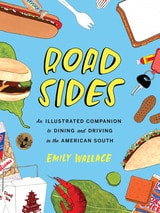
Road Sides
An Illustrated Companion to Dining and Driving in the American SouthBy Emily Wallace
University of Texas Press, 2019
An illustrated glovebox essential, Road Sides explores the fundamentals of a well-fed road trip through the American South, from A to Z. There are detours and destinations, accompanied by detailed histories and more than one hundred original illustrations that document how we get where we’re going and what to eat and do along the way.
Learn the backstory of food-shaped buildings, including the folks behind Hills of Snow, a giant snow cone stand in Smithfield, North Carolina, that resembles the icy treats it sells. Find out how kudzu was used to support a burgeoning highway system, and get to know Edith Edwards—the self-proclaimed Kudzu Queen—who turns the obnoxious vine into delicious teas and jellies. Discover the roots of kitschy roadside attractions, and have lunch with the state-employed mermaids of Weeki Wachee Springs in Florida.
Road Sides is for everyone—the driver in search of supper or superlatives (the biggest, best, and even worst), the person who cannot resist a local plaque or snack and pulls over for every historical marker and road stand, and the kid who just wants to gawk at a peach-shaped water tower.
Romance Of The Road
Literature Of The American HighwayRonald Primeau
University of Wisconsin Press, 1996
Writers examined include Jack Kerouac, Jim Dodge, Ralph Waldo Emerson, William Least Heat Moon, Robert M. Pirsig, Henry Miller, Joan Didion, Mona Simpson, and Walt Whitman.
The Big Thicket Guidebook
Exploring the Backroads and History of Southeast TexasLorraine G. Bonney
University of North Texas Press, 2011
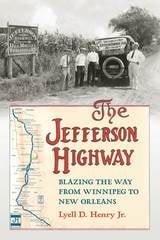
The Jefferson Highway
Blazing the Way from Winnepeg to New OrleansLyell D. Henry Jr.
University of Iowa Press, 2016
The plight of the rapidly rising numbers of early motorists soon spawned a “good roads” movement that included many efforts to build and pave long-distance, colorfully named auto trails across the length and breadth of the nation. Full of a can-do optimism, these early partisans of motoring sought to link together existing roads and then make them fit for automobile driving—blazing, marking, grading, draining, bridging, and paving them. The most famous of these named highways was the Lincoln Highway between New York City and San Francisco. By early 1916, a proposed counterpart coursing north and south from Winnipeg to New Orleans had also been laid out.
Called the Jefferson Highway, it eventually followed several routes through Minnesota, Iowa, Missouri, Kansas, Oklahoma, Texas, Arkansas, and Louisiana. The Jefferson Highway, the first book on this pioneering road, covers its origin, history, and significance, as well as its eventual fading from most memories following the replacement of names by numbers on long-distance highways after 1926. Saluting one of the most important of the early named highways on the occasion of its 100th anniversary, historian Lyell D. Henry Jr. contributes to the growing literature on the earliest days of road-building and long-distance motoring in the United States. For readers who might also want to drive the original route of the Jefferson Highway, three chapters trace that route through Iowa, pointing out many vintage features of the roadside along the way. The perfect book for a summer road trip!