Results by title
6 books match the query 'Aymara Indians'
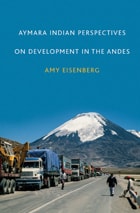
Aymara Indian Perspectives on Development in the Andes
Amy Eisenberg
University of Alabama Press, 2013
Aymara Indians are a geographically isolated, indigenous people living in the Andes Mountains near Chile’s Atacama Desert, one of the most arid regions of the world. As rapid economic growth in the area has begun to divert scarce water to hydroelectric and agricultural projects, the Aymara struggle to maintain their sustainable and traditional systems of water use, agriculture, and pastoralism.
In Aymara Indian Perspectives on Development in the Andes, Amy Eisenberg provides a detailed exploration of the ethnoecological dimensions of the tension between the Aymara, whose economic, spiritual, and social life are inextricably tied to land and water, and three major challenges: the paving of Chile Highway 11, the diversion of the Altiplano waters of the Río Lauca for irrigation and power-generation, and Chilean national park policies regarding Aymara communities, their natural resources, and cultural properties within Parque Nacional Lauca, the International Biosphere Reserve.
Pursuing collaborative research, Eisenberg performed ethnographic interviews with Aymara people in more than sixteen Andean villages, some at altitudes of 4,600 meters. Drawing upon botany, agriculture, natural history, physical and cultural geography, history, archaeology, and social and environmental impact assessment, she presents deep, multifaceted insights from the Aymara’s point of view.
Illustrated with maps and dramatic photographs by John Amato, Aymara Indian Perspectives on Development in the Andes provides an account of indigenous perspectives and concerns related to economic development that will be invaluable to scholars and policy-makers in the fields of natural and cultural resource preservation in and beyond Chile.
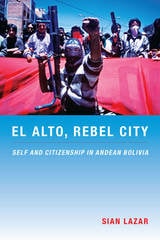
El Alto, Rebel City
Self and Citizenship in Andean BoliviaSian Lazar
Duke University Press, 2007
Drawing on ethnographic fieldwork conducted between 1997 and 2004, Lazar contends that in El Alto, citizenship is a set of practices defined by one’s participation in a range of associations, many of them collectivist in nature. Her argument challenges Western liberal notions of the citizen by suggesting that citizenship is not only individual and national but in many ways communitarian and distinctly local, constituted through different kinds of affiliations. Since in El Alto these affiliations most often emerge through people’s place of residence and their occupational ties, Lazar offers in-depth analyses of neighborhood associations and trade unions. In so doing, she describes how the city’s various collectivities mediate between the state and the individual. Collective organization in El Alto and the concept of citizenship underlying it are worthy of attention; they are the basis of the city’s formidable power to mobilize popular protest.
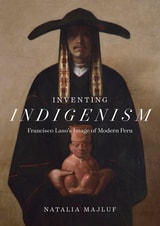
Inventing Indigenism
Francisco Laso's Image of Modern PeruNatalia Majluf
University of Texas Press, 2021
2023 ALAA Book Award, Association for Latin American Art/Arvey Foundation
A fascinating account of the modern reinvention of the image of the Indian in nineteenth-century literature and visual culture, seen through the work of Peruvian painter Francisco Laso.
One of the outstanding painters of the nineteenth century, Francisco Laso (1823–1869) set out to give visual form to modern Peru. His solemn and still paintings of indigenous subjects were part of a larger project, spurred by writers and intellectuals actively crafting a nation in the aftermath of independence from Spain. In this book, at once an innovative account of modern indigenism and the first major monograph on Laso, Natalia Majluf explores the rise of the image of the Indian in literature and visual culture. Reading Laso’s works through a broad range of sources, Majluf traces a decisive break in a long history of representations of indigenous peoples that began with the Spanish conquest. She ties this transformation to the modern concept of culture, which redefined both the artistic field and the notion of indigeneity. As an abstraction produced through indigenist discourse, an icon of authenticity, and a densely racialized cultural construct, the Indian would emerge as a central symbol of modern Andean nationalisms.
Inventing Indigenism brings the work and influence of this extraordinary painter to the forefront as it offers a broad perspective on the dynamics of art and visual culture in nineteenth-century Latin America.
Pathways of Memory and Power
Ethnography and History among an Andean PeopleThomas A. Abercrombie
University of Wisconsin Press, 1998
Making clear the early and deep intermingling of practices and world views among Spaniards and Andeans, Christians and non-Christians, Abercrombie critiques both the romanticist tendency to regard Andean culture as still separate from and resistant to European influences, and the melodramatic view that all indigenous practices have been obliterated by colonial and national elites. He challenges prejudices that, from colonial days to the present, have seen Andean historical knowledge only in mythic narratives or narratives of personal experience. Bringing an ethnographer’s approach to historiography, he shows how complex Andean rituals that hybridize European and indigenous traditions—such as libation dedications and llama sacrifices held on saints’ day festivals—are in fact potent evidence of social memory in the community.
Subverting Colonial Authority
Challenges to Spanish Rule in Eighteenth-Century Southern AndesSergio Serulnikov
Duke University Press, 2003
Drawing on court records, government papers, personal letters, census documents, and other testimonies from Bolivian and Argentine archives, Subverting Colonial Authority addresses issues that illuminate key aspects of indigenous rebellion, European colonialism, and Andean cultural history. Serulnikov analyzes long-term patterns of social conflict rooted in local political cultures and regionally based power relations. He examines the day-to-day operations of the colonial system of justice within the rural villages as well as the sharp ideological and political strife among colonial ruling groups. Highlighting the emergence of radical modes of anticolonial thought and ethnic cooperation, he argues that Andean peasants were able to overcome entrenched tendencies toward internal dissension and fragmentation in the very process of marshaling both law and force to assert their rights and hold colonial authorities accountable. Along the way, Serulnikov shows, they not only widened the scope of their collective identities but also contradicted colonial ideas of indigenous societies as either secluded cultures or pliant objects of European rule.
We Alone Will Rule
Native Andean Politics in the Age of InsurgencySinclair Thomson
University of Wisconsin Press, 2003