Results by title
11 books match the query 'Baby boom generation'
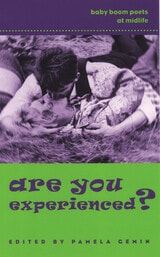
Are You Experienced? Baby Boom Poets At Midlife
Pamela Gemin
University of Iowa Press, 2003
In this timely and reflective anthology, the generation that sought to stay forever young reveals that midlife should mean more than jokes about thinning hair, creaking joints, and thickening waistlines. Midlife's insights—whether they be physical, spiritual, or emotional—are indeed startling, and who better than poets to deliver them?
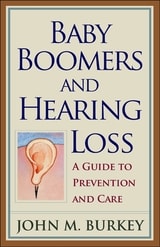
Baby Boomers and Hearing Loss
A Guide to Prevention and CareBurkey, John M
Rutgers University Press, 2006
In Baby Boomers and Hearing Loss, audiologist John Burkey shows readers how they can continue to enjoy youthful living, regardless of whether their hearing abilities are undiminished or severely compromised. In a reassuring and straightforward style, Burkey explains the typical causes of hearing loss, from genetic factors to years of exposure to loud noises, and demystifies the sometimes confusing results of a hearing test. Fortunately, new technologies and advances in medicine have made it easier to detect signs of initial hearing loss and to prevent it from becoming a serious problem.
For those who have already sustained some damage, the author suggests ways to manage daily activities by using a range of techniques, equipment, and medical procedures. His suggestions include minor changes, such as using a vibrating alarm clock rather than one that is sound-based. More dramatic but often highly effective options, including reconstructive surgery, cochlear implants, and bone-anchored hearing aids, are also described.
In his previous award-winning book, Overcoming Hearing Aid Fears: The Road to Better Hearing, Burkey addressed common fears, concerns, and misconceptions that people have about choosing and using hearing aids. In this second indispensable volume, he offers a comprehensive guide on how to cope with and prevent hearing impairment. For a generation that refuses to slow down or quietly accept limitations, this book is essential reading.

Boomer Girls
Poems by Women from the Baby Boom GenerationPamela Gemin
University of Iowa Press, 1999
Where were you between Betty Crocker and Gloria Steinem? With that question in mind poets Pamela Gemin and Paula Sergi began collecting the poems in Boomer Girls, an anthology of coming-of-age poems written by women born between 1945 and 1964, give or take a few years on either side. The answers to that question fill this volume with the energy, passion, heartbreak, and giddiness of women's lives from childhood to adolescence to middle age.
The poems in Boomer Girls are by unknown, emerging, and established writers, women who participated in the second wave of feminism. From Sandra Cisneros' "My Wicked Wicked Ways" to Barbara Crooker's "Nearing Menopause, I Run into Elvis at Shoprite," from Wendy Mnookin's "Polio Summer" to Kyoko Mori's "Barbie Says Math Is Hard," these poems call for us to celebrate (in the words of poet Diane Seuss-Brakeman) "glances, romances, beauty and guilt, regret, remorse, rebates and rejuvenations."
Boomer Girls share a common culture, bound by their generation's political history, by pop icons like Barbie—that pedestaled Boomer Girl who's just turned forty—and by the music that's never stopped playing: Janis Joplin, Marvin Gaye, Jimi Hendrix, the Ronettes, Van Morrison, Patsy Cline, John Lennon. The Boomer poets in this feisty anthology speak with diverse voices and embody a wide range of experiences, yet their generation's universal images—the hula hoops, TV shows, finned automobiles, and other household gods of their youth—unite them in ways both hilarious and tender.
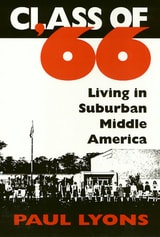
Class Of '66
Living in Suburban Middle AmericaPaul Lyons
Temple University Press, 1994
Paul Lyons interviewed 47 members of the class of 1966, recording recollections of their school days, politics, work, family life, community, and expectations for future careers and family. Each chapter is complemented by personal profiles of individual "Coasters." Removed from both the urban experience and that of the elite suburbs, these teenagers disprove popular cultural assumptions that all baby boomers, with few exceptions, went to Woodstock, protested against the Vietnam War, engaged in drug experimentation, or joined the hippie counter-culture. Instead, Lyons' study explores how their then relative ambivalence to political and cultural rebellion did not preclude many "Coasters" from indirectly incorporating over the years certain core Sixties values on issues of race, gender, mobility, and patriotism.
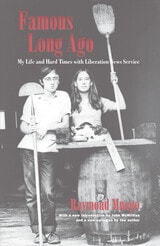
Famous Long Ago
My Life and Hard Times with Liberation News ServiceRaymond Mungo
University of Massachusetts Press, 2012
Originally published in 1970, Raymond Mungo's picaresque account of his adventures with Liberation News Service in the wild years of 1967 and 1968 has been variously described as youthful, passionate, lyrical, demented, and an iconic symbol of the sixties counterculture. A review in The Nation described it as “hip Huck Finn.”
A college editor at the height of the Vietnam War, Mungo found himself smack in the middle of a mad swirl of activism and dissent, vigorously protesting everything from the draft to abortion laws to the university itself. Then he connected with Marshall Bloom to cofound LNS in Washington, D.C., as a news service catering to the burgeoning underground press. One thing led to another, until LNS, like so many other radical organizations, eventually disintegrated into violently warring factions. Mungo's memoir tracks its development and destruction with wicked humor and literary panache.
In an introduction to this new edition, John McMillian discusses the enduring appeal of Famous Long Ago and situates it within its broader historical context, while the author provides his own retrospective take in a new afterword.
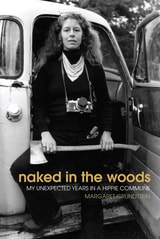
Naked in the Woods
My Unexpected Years in a Hippie CommuneMargaret Grundstein
Oregon State University Press, 2015
Naked in the Woods chronicles Grundstein’s shift from reluctant hippie to committed utopian—sacrificing phones, electricity, and running water to live on 160 acres of remote forest with nothing but a drafty cabin and each other. Grundstein, (whose husband left, seduced by “freer love”) faced tough choices. Could she make it as a single woman in man’s country? Did she still want to? How committed was she to her new life? Although she reveled in the shared transcendence of communal life deep in the natural world, disillusionment slowly eroded the dream. Brotherhood frayed when food became scarce. Rifts formed over land ownership. Dogma and reality clashed.
Many people, baby boomers and millennials alike, have romantic notions about the 1960s and 70s. Grundstein’s vivid account offers an unflinching, authentic portrait of this iconic and often misreported time in American history. Accompanied by a collection of distinctive photographs she took at the time, Naked in the Woods draws readers into a period of convulsive social change and raises timeless questions: how far must we venture to find the meaning we seek, and is it ever far out enough to escape our ingrained human nature?

New Left, New Right, and the Legacy of the Sixties
Paul Lyons
Temple University Press, 1996
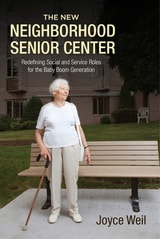
The New Neighborhood Senior Center
Redefining Social and Service Roles for the Baby Boom GenerationWeil, Joyce
Rutgers University Press, 2014
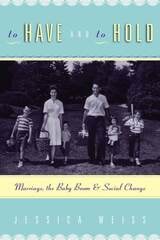
To Have and to Hold
Marriage, the Baby Boom, and Social ChangeJessica Weiss
University of Chicago Press, 2000
Jessica Weiss delves beneath these mythic images and paints a far more complex picture that reveals strong continuities between the baby boomers and their parents. Drawing on interviews with American couples from the 1950s to the 1980s, Weiss creates a dynamic portrait of family and social change in the postwar era. She pairs these firsthand accounts with a deft analysis of movies, television shows, magazines, and advice books from each decade, providing an unprecedented and intimate look at ordinary marriages in a time of sweeping cultural change.
Weiss shows how young couples in the 1950s attempted to combine egalitarian hopes with traditional gender roles. Middle-class women encouraged their husbands to become involved fathers. Midlife wives and mothers reshaped the labor force and the home by returning to work in the 1960s. And couples strove for fulfilling marriages as they dealt with the pressures of childrearing in the midst of the sexual and divorce revolutions of the 1960s and 1970s. By the 1980s, they were far more welcoming to the ideas of the women's movement than has often been assumed. More than simply changing with the times, the parents of the baby boom contributed to changing times themselves.
Weiss's excellent use of family interviews that span three decades, her imaginative examination of popular culture, and her incisive conclusions make her book an invaluable contribution not only to our understanding of the past but also to our understanding of men's and women's roles in today's family.
"Weiss has written an enlightening book that examines the dynamics of American families past and present. . . . Since Weiss is a historian, she provides analyses of her arguments that are factual rather than emotive, and her use of family interviews further contributes to a strong presentation. Overall, this is a unique works because its multidisciplinary approach informs but never preaches on the emotionally charged topic of the American family.—Sheila Devaney, Library Journal
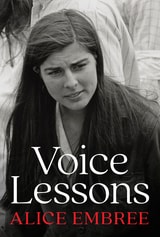
Voice Lessons
By Alice Embree
University of Texas Press, 2021
Voice Lessons explores the rich personal and political terrain of Alice Embree, a 1960s activist and convert to the women’s liberation movement of the 1970s, bringing a woman’s perspective to a transformational time in US history. This riveting memoir traces the author’s roots in segregated Austin and her participation in efforts to integrate the University of Texas. It follows her antiwar activism from a vigil in front of President Lyndon Johnson’s ranch in 1965 to a massive protest after the shootings at Kent State in 1970. Embree’s activism brought her and the Students for a Democratic Society into conflict with Frank Erwin, the powerful chairman of the UT Board of Regents, and inspired a campus free speech movement. She recounts her experiences living in New York during the tumultuous years of 1968 and 1969, including the Columbia University strike and the Woodstock music festival. She also tells about protesting at the Chicago Democratic Convention, her interactions with Yippies and poets, and her travels to Chile, Cuba, and Mexico. Embree highlights the radical roots of the women’s liberation movement in Austin and the audacious women’s community that challenged gender roles, fought for reproductive justice, and inspired a lifetime of activism.
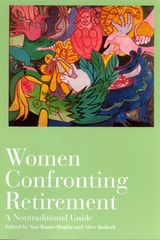
Women Confronting Retirement
A Nontraditional GuideEdited by Nan Bauer-Maglin and Alice Radosh
Rutgers University Press, 2003
Women Confronting Retirement showcases the voices of thirty-eight women from a wide range of professions, ages, and life situations as they confront the need to redefine who they are when they leave the workplace behind them. The women of the Baby Boom generation were the first to enter the professional world in large numbers, and the first to encounter the hazards of retirement. The contributors urge us to reach for new approaches to this major stage of life, to find new self-images, to balance meaningful work and creative play, and to work for the new public policies that support enhanced opportunities for retirement. Many of these women were involved in the key activist movements of the sixties and seventies, and their work often has been an extension of their social commitment. Defining themselves through their careers, they have challenged traditional models at every stage of their lives and are now being challenged by their own negative stereotypes about retirement.
The stories in this book compellingly chronicle the fears and hopes of women who have only begun to think about retirement, those who are in the process of retiring, some who have been retired for many years, and a few who have decided that retirement is not for them. They address issues such as identity, aging, creativity, family, and community. Unlike traditional “how-to” books, Women Confronting Retirement makes clear how individual the choices are, how there are no right and wrong answers to the many questions this uncharted stage of life poses for women of the Baby Boom generation, and those who follow. These women help us to explore the next steps with the same courage and questioning attitudes that they have brought to every aspect of their lives before they reached retirement age.