Results by title
3 books match the query 'Bali (Province)'

A Death in Bali
A Jenna Murphy MysteryNancy Tingley
Ohio University Press, 2018
Intrepid young curator-turned-private eye Jenna Murphy—whom readers first met in A Head in Cambodia—goes to the tourist town of Ubud to study early twentieth-century Balinese painting. But her first discovery when she arrives in Indonesia is the speared body of expat artist Flip Hendricks. She soon is working with an old friend, a detective for the Ubud police force, to seek the killer. Jenna suspects the motive for the killing has to do with Flip’s paintings. Detective Wayan Tyo is not so sure.
Is Jenna right, or are there other forces at work in this paradise overrun with tourists? The threats to Jenna’s safety pile up, until she can no longer deny that her life is in danger. Her entanglement with various men only clouds her judgment and complicates the situation.
As she did in the first Jenna Murphy book, in A Death in Bali, Nancy Tingley draws on her extensive experience as a scholar of Asian art to bring the armchair traveler an immersive, inside view of the art world.
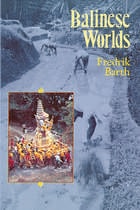
Balinese Worlds
Fredrik Barth
University of Chicago Press, 1993
In this detailed ethnography of the Northern district of Buleleng, Barth rejects mainstream anthropological generalizations of Bali as a cultural system of carefully articulated parts. Instead—drawing on many sources, including the sociology of knowledge, interactional analysis, postmodern thought, and his own exceptionally varied field experience—Barth presents a new model that actually generates variation. Barth's innovative analysis of Balinese life highlights both the constructive and the disorganizing effects of individual action, the constant flux of interpretation, and the powerful interaction of memory and social relationships, and knowledge as a cultural resource.
Balinese Worlds is a unique contribution not only to Balinese studies but also to the theory and methods of the anthropology of complex societies.
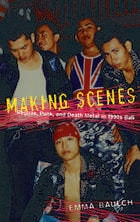
Making Scenes
Reggae, Punk, and Death Metal in 1990s BaliEmma Baulch
Duke University Press, 2007
Making Scenes is an exploration of the subtle politics of identity that took place within and among these scenes throughout the course of the 1990s. Participants in the different scenes often explained their interest in death metal, punk, or reggae in relation to broader ideas about what it meant to be Balinese, which reflected views about Bali’s tourism industry and the cultural dominance of Jakarta, Indonesia’s capital and largest city. Through dance, dress, claims to public spaces, and onstage performances, participants and enthusiasts reworked “Balinese-ness” by synthesizing global media, ideas of national belonging, and local identity politics. Making Scenes chronicles the creation of subcultures at a historical moment when media globalization and the gradual demise of the authoritarian Suharto regime coincided with revitalized, essentialist formulations of the Balinese self.