Results by title

12 books match the query 'Balthasar, Hans Urs von'
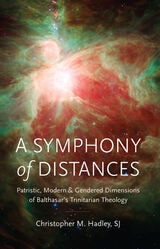
cover of A Symphony of Distances: Patristic, Modern, and Gendered Dimensions of Balthasar's Trinitarian Theology

A Symphony of Distances

Patristic, Modern, and Gendered Dimensions of Balthasar's Trinitarian Theology

Christopher M. Hadley, SJ

Catholic University of America Press, 2022
The two-fold task of A Symphony of Distances is to provide an overview of Hans Urs von Balthasar’s use of distance imagery with regard to personal distinctions in the Holy Trinity and to offer a critical analysis of him as a modern Catholic theologian. A metaphor of “distance” integrates all of Balthasar’s theological thought as a primary cipher for the many symbols through which he reads the Christian theological tradition in a trinitarian and eschatological mode. The book follows a chronological, four-stage development of Balthasar’s trinitarianism through the lens of this distance metaphor as it occurs across representative texts. The critical analysis employs the conceit of a symphony of four musical movements that correspond to four varieties of theological distance. These distances show certain correspondences of God’s creation and redemption of the world—marked by the first two “distances”—with the relations of the divine persons to each other in the economy of salvation and in the eternal Trinity itself—marked by the third and fourth distances. “Listening” to the four movements of Balthasar’s theological distances enables his readers to “hear” the themes of all four movements in the ascending order of richness, complexity, and inclusivity over the long development of his thought. This fundamentally positive approach of A Symphony of Distances allows for a thorough critique of the internal consistency of Balthasar’s applied method, of the controversial use of gendered trinitarian notions in his speculations on divine pathos, and of his adequacy to the tasks of modern theology. The final judgment is that Balthasar’s theology of distance can be accepted, with reservations, as a positive element of his contribution to contemporary trinitarian theology. The book can thus serve as a critical reference for readers who find Balthasar’s notion of trinitarian distance, and indeed his trinitarianism as a whole, to be compelling, confusing, or frustrating.
[more]
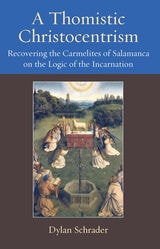
cover of A Thomistic Christocentrism: Recovering the Carmelites of Salamanca on the Logic of the Incarnation

A Thomistic Christocentrism

Recovering the Carmelites of Salamanca on the Logic of the Incarnation

Dylan Schrader

Catholic University of America Press, 2021
Saint Thomas Aquinas famously held the opinion that, in God’s actual plan for the world, the Word would not have become flesh except to redeem us from sin. Conversely, Blessed John Duns Scotus argued that God intended Christ first, such that Christ would have come even if there had been no sin. While Aquinas and Scotus were far from the first to consider this question, they became emblematic of two seemingly irreconcilable approaches. In this book, Father Dylan Schrader recovers the thought of the Salmanticenses, the Discalced Carmelites writing at the University of Salamanca in the seventeenth century. The Salmanticenses argue that Christ is primary in God’s intention precisely as redeemer, so that it is true both that God has made everything else for the sake of Christ and that Christ’s coming is essentially redemptive, connected with sin. In this way, the Salmanticenses offer a Thomistic Christocentrism. This book summarizes the historical background to the Salmanticenses, from the time of Anselm up through the early-modern period. Next, it presents and defends the Salmanticenses’ argument for the primacy of Christ the redeemer. A Thomistic Christocentrism then turns to two key post-conciliar figures, Karl Rahner and Hans Urs von Balthasar. Rahner sees Christ as the culmination of the world’s opening up to God. Balthasar sees Christ as the reconciler of divine and human freedom through his cross, descent, and resurrection. Both Christocentric approaches have good aspirations but suffer from serious flaws. In its final chapters, this book applies the Salamanca theory to Rahner and Balthasar, showing its enduring value for post-conciliar Christocentrism.
[more]
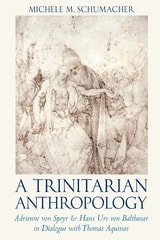
cover of A Trinitarian Anthropology: Adrienne von Speyr & Hans Urs von Balthasar in Dialogue with Thomas Aquinas

A Trinitarian Anthropology

Adrienne von Speyr & Hans Urs von Balthasar in Dialogue with Thomas Aquinas

Michele M. Schumacher

Catholic University of America Press, 2014
In this magisterial work, Michele M. Schumacher seeks to promote dialogue between disciples of the Swiss theologian Hans Urs von Balthasar (d. 1988) and those of the church's common doctor, St. Thomas Aquinas (d. 1274) on a critical theological question. How are analogies and metaphors from the philosophy and theology of the person (anthropology) rightly used to address the mystery of the Trinity? She does so by considering the specific setting of Balthasar's theology: the inseparability of his work from that of the Swiss physician and mystic Adrienne von Speyr (d. 1967).
[more]
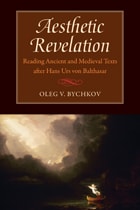
cover of Aesthetic Revelation: Reading Ancient and Medieval Texts after Hans Urs von Balthasar

Aesthetic Revelation

Reading Ancient and Medieval Texts after Hans Urs von Balthasar

Oleg Bychkov

Catholic University of America Press, 2010

Oleg Bychkov's masterly exposition also shows how the texts analyzed have significantly influenced the development of Western theological thought.
[more]
cover of Divine Fruitfulness: A Guide through Balthasar's Theology beyond the Trilogy

Divine Fruitfulness

A Guide through Balthasar's Theology beyond the Trilogy

Aidan Nichols

Catholic University of America Press, 2007
[more]
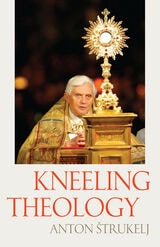
cover of Kneeling Theology

Kneeling Theology

Anton Strukelj

Catholic University of America Press, 2022
Anton Štrukelj, in this English edition of his book Kneeling Theology, which was published in German, Italian, Polish, Russian and Slovenian, based his theme on the concept first developed by Hans Urs von Balthasar. This Swiss intellectual is considered one of the most important theologians of the 20th century. Štrukelj sees as his task, through a synthetic survey of questions, to seek from his subjects a holistic perspective regarding the role of the theologian, without doing a critical analysis of all their work. Kneeling Theology analyzes the process and its consequences that gave rise to the religious and cultural developments of the past and the present. It is his thesis that the essence of theology should flow from holiness. He relies for his evidence on the life and work of Hans Urs von Balthasar (which included the insights of Adrienne von Speyr, physician and mystic), Cardinal Joseph Ratzinger (Pope Benedict XVI), the Slovenian theologian Anton Strle (now servant of God) and Anton Vovk, former Archbishop of Ljubljana, fearless witness of Christ and his Church, also servant of God. Štrukelj's purpose with this book is to point out that Catholic theology is best served, not only by competent research and a thorough knowledge of Church tradition, but by theologians who approach their work prayerfully and on their knees. The rich theological and pastoral heritage that has been bequeathed to us by a small group of special people in this book has come about because of their scholarship and their holiness. They have, each in their own way, demonstrated what it means to do theology on their knees, and they have shared their scholarship and insights with us.
[more]
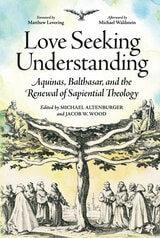
cover of Love Seeking Understanding: Aquinas, Balthasar, and the Renewal of Sapiential Theology

Love Seeking Understanding

Aquinas, Balthasar, and the Renewal of Sapiential Theology

Michael Altenburger

Catholic University of America Press, 2024
As Catholic theology emerged from the crisis of modernity, theologians turned to both patristic and medieval sources to recover lost wisdom from the theological tradition, and adapt it to the challenges of an age that separated reason from faith, the practice of theology from the spiritual life. . In time, Thomas Aquinas and Hans Urs von Balthasar became the patrons of two very different approaches to this challenge. St. Thomas Aquinas offering contemporary theologians an approach rooted in the patristic-medieval Latin synthesis of Augustine and Aristotle that also draws on the East, and von Balthasar offering contemporary theologians a patristic-modern approach rooted in the Eastern theological synthesis of Maximus the Confessor and Erich Przywara, that also draws on the West. Although Aquinas and Balthasar, together with their contemporary followers, sought to unite reason and faith, theology and prayer, contemporary Thomists and Balthasarians have tended to diverge widely from one another, often with a polemical spirit. How should one understand the theological genius of St. Thomas Aquinas and Hans Urs von Balthasar today? How can two of the greatest theologians in the Catholic tradition be brought together in more fruitful and peaceful dialogue? This edited volume comprises contributions from a range of scholars who elucidate the depth and breadth of two of the most prominent figures of the Catholic tradition today. A scholar from each school of thought contributes an essay on a particular theme: Metaphysics, Trinity, Revelation, Christology, Anthropology, Evil, and Eschatology. By presenting the two essays side by side, this volume provides the contemporary reader with an opportunity to better engage both thinkers and understand disagreements and areas for constructive movement forward. The tone of the volume is intentionally irenic, seeking points of constructive dialogue, and opening new pathways to the renewal of sapiential theology through a fruitful synthesis of Thomistic and Balthasarian thought.
[more]
cover of Origen: Spirit and Fire

Origen

Spirit and Fire

Hans Urs von Balthasar

Catholic University of America Press, 1984

[more]
cover of Scattering the Seed: A Guide through Balthasar's Early Writings on Philosophy and the Arts

Scattering the Seed

A Guide through Balthasar's Early Writings on Philosophy and the Arts

Aidan Nichols

Catholic University of America Press, 2006

[more]
cover of The Achievement of Hans Urs von Balthasar

The Achievement of Hans Urs von Balthasar

Matthew Levering

Catholic University of America Press, 2019
In The Achievement of Hans Urs von Balthasar, Matthew Levering has written a book for theologically educated readers who mistrust von Balthasar or who mistrust von Balthasar’s critics. The book shows that von Balthasar’s critics can and should benefit both from the rich and wide-ranging conversations that mark his trilogy and from the critical and constructive engagement with German philosophical modernity offered by the trilogy. In addition, Levering hopes to show that those who mistrust von Balthasar’s critics need to be more Balthasarian in their response to criticisms of the Swiss theologian.
[more]
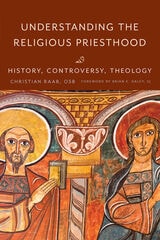
cover of Understanding the Religious Priesthood: History, Controversy, Theology

Understanding the Religious Priesthood

History, Controversy, Theology

Christian, OSB Raab

Catholic University of America Press, 2020
Most contemporary theologies of Holy Orders consider priesthood mainly in its diocesan context and most contemporary theologies of religious life do not consider how ordained ministry functions when it is internal rather than external to religious life. Understanding the Religious Priesthood provides a history and theology of religious priesthood that contributes to our understanding of this vocation’s identity and mission. It uncovers what religious priesthood shares with diocesan priesthood and non-ordained religious life and what makes it different from both those other vocations. Christian Raab begins by tracing the history of religious priesthood from its origins in the early Church to the eve of the Second Vatican Council. He demonstrates that religious priests often faced questions about how to reconcile their two callings, but that they also provided answers in their theologies and spiritualities of priesthood and religious life. Meanwhile, they made key contributions to the Church’s life and mission. Raab then investigates the teachings of the Second Vatican Council on priesthood and religious life. Observing that the Council presented priesthood according to a diocesan typology and presented religious life without sacerdotal associations, he argues that the lack of imagery of religious priesthood contributed to a post-conciliar vocational identity crisis among religious priests. He then seeks to remedy this lacuna by appealing to the biblical images for religious priesthood Hans Urs von Balthasar offered in his theology of vocations. Raab argues that Balthasar’s imagery is a promising way forward for understanding the identity and mission of religious priesthood. In a final part, Raab provides a substantial theological articulation of religious priesthood which illuminates its liturgical signification, ecclesial mediation and mission, and ministerial identity. Here he draws not only from Balthasar but also from Pope John Paul II, Yves Congar, Jean-Marie Tillard, Brian Daley, and Guy Mansini to construct his profile.
[more]
cover of Von Balthasar & the Option for the Poor: Theodramatics in the Light of Liberation Theology

Von Balthasar & the Option for the Poor

Theodramatics in the Light of Liberation Theology

Todd Walatka

Catholic University of America Press, 2017

Hans Urs von Balthasar’s vast corpus of theological, philosophical, literary, and pastoral writings remains one of the most impressive achievements in 20th century thought. In light of liberation theology and now the papacy of Francis, however, a theological affirmation of the option for the poor remains dangerously weak in Balthasar’s corpus. Von Balthasar and the Option for the Poor offers a sympathetic reforming of Balthasar’s account of the drama of salvation – what he calls “theodramatics” – in response to this weakness.
[more]