Results by title

2 books match the query 'Bamako'
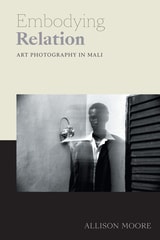
cover of Embodying Relation: Art Photography in Mali

Embodying Relation

Art Photography in Mali

Allison Moore

Duke University Press, 2020
In Embodying Relation Allison Moore examines the tensions between the local and the global in the art photography movement in Bamako, Mali, which blossomed in the 1990s after Malian photographers Seydou Keïta and Malick Sidibé became internationally famous and the Bamako Photography Biennale was founded. Moore traces the trajectory of Malian photography from the 1880s—when photography first arrived as an apparatus of French colonialism—to the first African studio practitioners of the 1930s and the establishment in 1994 of the Bamako Biennale, Africa's most important continent-wide photographic exhibition. In her detailed discussion of Bamakois artistic aesthetics and institutions, Moore examines the post-fame careers of Keïta and Sidibé, the biennale's structure, the rise of women photographers, cultural preservation through photography, and how Mali's shift to democracy in the early 1990s enabled Bamako's art scene to flourish. Moore shows how Malian photographers' focus on cultural exchange, affective connections with different publics, and merging of traditional cultural precepts with modern notions of art embody Caribbean philosopher and poet Édouard Glissant's notion of “relation” in ways that spark new artistic forms, practices, and communities.
[more]
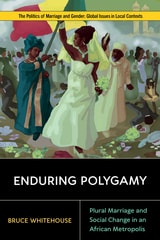
cover of Enduring Polygamy: Plural Marriage and Social Change in an African Metropolis

Enduring Polygamy

Plural Marriage and Social Change in an African Metropolis

Bruce Whitehouse

Rutgers University Press, 2023

Why hasn’t polygamous marriage died out in African cities, as experts once expected it would? Enduring Polygamy considers this question in one of Africa’s fastest-growing cities: Bamako, the capital of Mali, where one in four wives is in a polygamous marriage. Using polygamy as a lens through which to survey sweeping changes in urban life, it offers ethnographic and demographic insights into the customs, gender norms and hierarchies, kinship structures, and laws affecting marriage, and situates polygamy within structures of inequality that shape marital options, especially for young Malian women. Through an approach of cultural relativism, the book offers an open-minded but unflinching perspective on a contested form of marriage. Without shying away from questions of patriarchy and women’s oppression, it presents polygamy from the everyday vantage points of Bamako residents themselves, allowing readers to make informed judgments about it and to appreciate the full spectrum of human cultural diversity.

[more]