Results by title
2 books match the query 'Bamboo'
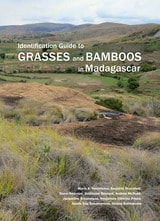
Identification Guide to Grasses and Bamboos in Madagascar
Maria Vorontsova
Royal Botanic Gardens, Kew, 2018
The family containing grasses and bamboos, Poaceae, includes an estimated 12,000 species. Grasses and bamboos have always been a central pillar of people’s lives, providing rice, maize, sugarcane, and bread wheat for humans and livestock. Despite their importance, Madagascar’s grasses are still poorly known. This guide provides a practical means of identifying these beautiful and interesting plants at the generic level, featuring 144 grasses described with life size color photographs.
[more]
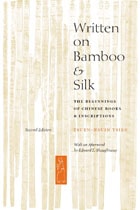
Written on Bamboo and Silk
The Beginnings of Chinese Books and Inscriptions, Second EditionTsuen-Hsuin Tsien
University of Chicago Press, 2004
Paleography, which often overlaps with archaeology, deciphers ancient inscriptions and modes of writing to reveal the knowledge and workings of earlier societies. In this now-classic paleographic study of China, Tsuen-Hsuin Tsien traces the development of Chinese writing from the earliest inscriptions to the advent of printing, with specific attention to the tools and media used. This edition includes material that treats the many major documents and ancient Chinese artifacts uncovered over the forty years since the book’s first publication, as well as an afterword by Edward L. Shaughnessy.
Written on Bamboo and Silk has long been considered a landmark in its field. Critical in this regard is the excavation of numerous sites throughout China, where hundreds of thousands of documents written on bamboo and silk—as well as other media—were found, including some of the earliest copies of historical, medical, astronomical, military, and religious texts that are now essential to the study of early Chinese literature, history, and philosophy. Discoveries such as these have made the amount of material evidence on the origins and evolution of communication throughout Chinese history exceedingly broad and rich, and yet Tsien succeeds in tackling it all and building on the earlier classic work that changed[more]