Results by title
3 books match the query 'Banks, William'
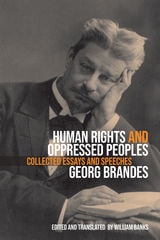
Human Rights and Oppressed Peoples
Collected Essays and SpeechesGeorg Brandes
University of Wisconsin Press, 2020
Georg Brandes was known as the "Father of the Modern Breakthrough" for his influence on Scandinavian writers in the late nineteenth century. A prominent writer, thinker, and speaker, he often examined intellectual topics beyond the literary criticism he was best known for. In this collection, William Banks has translated a number of Brandes's pieces that engage in the concerns of oppressed peoples. By collecting, annotating, and contextualizing these works, Banks reintroduces Brandes as a major progenitor of thinking about the rights of national minorities and the colonized.
Human Rights and Oppressed Peoples includes thirty-five essays and published speeches from the early twenty-first century on subjects as diverse as the Boxer Rebellion, displaced peoples from World War I, Finland's Jewish population, and imperialism. This collection will interest interdisciplinary scholars of human rights as well as those who study Scandinavian intellectual and literary history.
Human Rights and Oppressed Peoples includes thirty-five essays and published speeches from the early twenty-first century on subjects as diverse as the Boxer Rebellion, displaced peoples from World War I, Finland's Jewish population, and imperialism. This collection will interest interdisciplinary scholars of human rights as well as those who study Scandinavian intellectual and literary history.
[more]
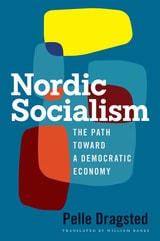
Nordic Socialism
The Path Toward a Democratic EconomyPelle Dragsted, Translated by William Banks
University of Wisconsin Press, 2025
In recent years, the Nordic countries have been the envy of the world for their economic success, institutional stability, and consistently high levels of social happiness. But are they socialist? Several prominent members of the American right think so. They may find a surprising ally in Pelle Dragsted, a member of the Danish parliament and the leader of the socialist political party Enhedslisten (Red-Green Alliance); contrary to most Nordic leaders, Dragsted not only accepts but embraces the charge of socialism.
In Dragsted’s analysis, Denmark and the rest of the Nordic countries are already socialist, but only in part. The dangers come (and here many conservative Americans will disagree) from the unhealthy encroachment of capitalism. His provocative argument is that capitalism and socialism are not in fact mutually exclusive, and already Nordic economies are hybrids, a mix of decommodified, democratically governed sectors and undemocratic, privately controlled enterprises. The relevant question is the degree to which one dominates the other. Currently, undemocratic forces are ascendant, but it need not be so. Dragsted offers both his diagnosis and his proposed solution, a comprehensive plan for a gradual (re)democratization of the economy and a move to fully and firmly embrace, and redefine, “Nordic socialism.”
In Dragsted’s analysis, Denmark and the rest of the Nordic countries are already socialist, but only in part. The dangers come (and here many conservative Americans will disagree) from the unhealthy encroachment of capitalism. His provocative argument is that capitalism and socialism are not in fact mutually exclusive, and already Nordic economies are hybrids, a mix of decommodified, democratically governed sectors and undemocratic, privately controlled enterprises. The relevant question is the degree to which one dominates the other. Currently, undemocratic forces are ascendant, but it need not be so. Dragsted offers both his diagnosis and his proposed solution, a comprehensive plan for a gradual (re)democratization of the economy and a move to fully and firmly embrace, and redefine, “Nordic socialism.”
[more]

The Great Debate
Nietzsche, Culture, and the Scandinavian Welfare SocietyGeorg Brandes and Harald Høffding
University of Wisconsin Press, 2024
In 1889, Danish literary critic Georg Brandes published “Aristocratic Radicalism: An Essay on Friedrich Nietzsche,” which transformed the as-yet-unknown German-Swiss philosopher into a European, and ultimately global, phenomenon. The article sparked a furious public debate between Brandes and a fellow Dane, philosopher Harald Høffding, who swiftly issued a rebuttal, “Democratic Radicalism: An Objection.” What began as a scholarly disagreement over Nietzsche’s philosophy rapidly spiraled into a sprawling contest of competing visions of society’s future, one radically aristocratic and the other radically democratic.
Marking the moment at which the uniquely Nordic concept of social democratic welfare was first contested in the public sphere, this debate provides insights into not only Nietzschean philosophy and its immediate reception but also the foundational concept of modern Scandinavian social, cultural, and political organization. This volume presents, for the first time in any language other than Danish, the debate in its entirety: three essays by Brandes and three by Høffding. A critical introduction by editor and translator William Banks explores the exchange in its context and convincingly argues that the principles contested by the two Danish luminaries still very much resonate in Western society today.
Marking the moment at which the uniquely Nordic concept of social democratic welfare was first contested in the public sphere, this debate provides insights into not only Nietzschean philosophy and its immediate reception but also the foundational concept of modern Scandinavian social, cultural, and political organization. This volume presents, for the first time in any language other than Danish, the debate in its entirety: three essays by Brandes and three by Høffding. A critical introduction by editor and translator William Banks explores the exchange in its context and convincingly argues that the principles contested by the two Danish luminaries still very much resonate in Western society today.
[more]