Results by title
30 books match the query 'Banks & Banking'
A History of the Federal Reserve, Volume 1
1913-1951Allan H. Meltzer
University of Chicago Press, 2002
To understand why the Federal Reserve acted as it did at key points in its history, Meltzer draws on meeting minutes, correspondence, and other internal documents (many made public only during the 1970s) to trace the reasoning behind its policy decisions. He explains, for instance, why the Federal Reserve remained passive throughout most of the economic decline that led to the Great Depression, and how the Board's actions helped to produce the deep recession of 1937 and 1938. He also highlights the impact on the institution of individuals such as Benjamin Strong, governor of the Federal Reserve Bank of New York in the 1920s, who played a key role in the adoption of a more active monetary policy by the Federal Reserve. Meltzer also examines the influence the Federal Reserve has had on international affairs, from attempts to build a new international financial system in the 1920s to the Bretton Woods Agreement of 1944 that established the International Monetary Fund and the World Bank, and the failure of the London Economic Conference of 1933.
Written by one of the world's leading economists, this magisterial biography of the Federal Reserve and the people who helped shape it will interest economists, central bankers, historians, political scientists, policymakers, and anyone seeking a deep understanding of the institution that controls America's purse strings.
"It was 'an unprecedented orgy of extravagance, a mania for speculation, overextended business in nearly all lines and in every section of the country.' An Alan Greenspan rumination about the irrational exuberance of the late 1990s? Try the 1920 annual report of the board of governors of the Federal Reserve. . . . To understand why the Fed acted as it did—at these critical moments and many others—would require years of study, poring over letters, the minutes of meetings and internal Fed documents. Such a task would naturally deter most scholars of economic history but not, thank goodness, Allan Meltzer."—Wall Street Journal
"A seminal work that anyone interested in the inner workings of the U. S. central bank should read. A work that scholars will mine for years to come."—John M. Berry, Washington Post
"An exceptionally clear story about why, as the ideas that actually informed policy evolved, things sometimes went well and sometimes went badly. . . . One can only hope that we do not have to wait too long for the second installment."—David Laidler, Journal of Economic Literature
"A thorough narrative history of a high order. Meltzer's analysis is persuasive and acute. His work will stand for a generation as the benchmark history of the world's most powerful economic institution. It is an impressive, even awe-inspiring achievement."—Sir Howard Davies, Times Higher Education Supplement

After the Berlin Wall
A History of the EBRD, Volume 1Andrew Kilpatrick
Central European University Press, 2020
After the Berlin Wall tells the inside story of an international financial institution, the European Bank for Reconstruction and Development (EBRD), created in the aftermath of communism to help the countries of central and eastern Europe transition towards open market-oriented democratic economies.
The first volume of a history in two parts, After the Berlin Wall charts the EBRD’s life from a fledgling high-risk start-up investing in former socialist countries from 1991 to become an established member of the international financial community, which (as of April 2020) operates in almost 40 countries across three continents.
This volume describes the multilateral negotiations that created this cosmopolitan institution with a ‘European character’ and the emergence of the EBRD’s unique business model: a focus on the private sector and a mission to deliver development impact with sustainable financial returns. The author recounts the challenges that ‘transition’ countries faced in moving from a defunct to a functioning economic system and maps the EBRD’s response to critical events, from the dissolution of the Soviet Union, to the safe confinement of the Chernobyl disaster site, the debt default in Russia and the onset of the global financial crisis in 2008.
Balance of Power
Central Banks and the Fate of DemocraciesÉric Monnet
University of Chicago Press, 2024
Two decades of financial crises have dramatically expanded central banks’ powers. In 2008, and then again in 2020, unelected banking officials found themselves suddenly responsible for the public welfare—not just because it was necessary but based on an idea that their independence from political systems would insulate them from the whims of populism. Now, as international crises continue and the scope of monetary interventions grows in response, these bankers have become increasingly powerful.
In Balance of Power, economist and historian Éric Monnet charts the rise of central banks as the nominally independent—but unavoidably political—superpowers of modern societies. This trajectory, Monnet argues, is neither inevitable nor unstoppable. By embracing the political natures of today’s central banks, we can construct systems of accountability for how they interact with states and societies. Monnet shows that this effort will do more than guard against unjust power; it will put the banks to work for greater, more democratic ends.
With existential challenges looming and the work of the Federal Reserve and European Central Bank more important than ever, Balance of Power offers a trenchant case for what this century’s central banks can—and must—become.
Banking Reform in Central Europe and the Former Soviet Union
Jacek Rostowski
Central European University Press, 1995
From Berlin to the Bering Strait, the business of banking has sprung to life. This analysis considers the impact of banking reform on macroeconomic stabilization and the suitability of universal banks, the role of banking regulation and the advantages of 'narrow banks' during transition, the cleaning up of bad debts, and the reform of the payments system.
The book assesses the lessons which can be drawn from reforms in Central Europe for the later reformers in the former Soviet Union and the Balkans. It considers the impact of banking reform on macroeconomic stabilization and the suitability of German-type universal banks; the role of banking regulation and the advantages of 'narrow banks' during transition; the cleaning-up of bad debts; bank privatization and reform of the payments system. Five chapters follow which review the experience of some of the 'second-wave' countries: Estonia, Georgia, Romania, Russia and Ukraine.
Behind the Development Banks
Washington Politics, World Poverty, and the Wealth of NationsSarah Babb
University of Chicago Press, 2009
The World Bank and other multilateral development banks (MDBs) carry out their mission to alleviate poverty and promote economic growth based on the advice of professional economists. But as Sarah Babb argues in Behind the Development Banks, these organizations have also been indelibly shaped by Washington politics—particularly by the legislative branch and its power of the purse.
Tracing American influence on MDBs over three decades, this volume assesses increased congressional activism and the perpetual “selling” of banks to Congress by the executive branch. Babb contends that congressional reluctance to fund the MDBs has enhanced the influence of the United States on them by making credible America’s threat to abandon the banks if its policy preferences are not followed. At a time when the United States’ role in world affairs is being closely scrutinized, Behind the Development Banks will be necessary reading for anyone interested in how American politics helps determine the fate of developing countries.
Better Bankers, Better Banks
Promoting Good Business through Contractual CommitmentClaire A. Hill and Richard W. Painter
University of Chicago Press, 2015
In Better Bankers, Better Banks, Claire A. Hill and Richard W. Painter look back at the history of banking and show how the current culture of bad behavior—dramatized by the corrupt, cocaine-snorting bankers of The Wolf of Wall Street—came to be. In the early 1980s, banks went from partnerships whose partners had personal liability to corporations whose managers had no such liability and could take risks with other people’s money. A major reason bankers remain resistant to change, Hill and Painter argue, is that while banks have been faced with large fines, penalties, and legal fees—which have exceeded one hundred billion dollars since the onset of the crisis—the banks (which really means the banks’shareholders) have paid them, not the bankers themselves. The problem also extends well beyond the pursuit of profit to the issue of how success is defined within the banking industry, where highly paid bankers clamor for status and clients may regard as inevitable bankers who prioritize their own self-interest. While many solutions have been proposed, Hill and Painter show that a successful transformation of banker behavior must begin with the bankers themselves. Bankers must be personally liable from their own assets for some portion of the bank’s losses from excessive risk-taking and illegal behavior. This would instill a culture that discourages such behavior and in turn influence the sorts of behavior society celebrates or condemns.
Despite many sensible proposals seeking to reign in excessive risk-taking, the continuing trajectory of scandals suggests that we’re far from ready to avert the next crisis. Better Bankers, Better Banks is a refreshing call for bankers to return to the idea that theirs is a noble profession.
Beyond Debt
Islamic Experiments in Global FinanceDaromir Rudnyckyj
University of Chicago Press, 2018
Beyond Debt describes efforts to create a transnational economy free of debt. Based on ethnographic fieldwork in Malaysia, Daromir Rudnyckyj illustrates how the state, led by the central bank, seeks to make the country’s capital Kuala Lumpur “the New York of the Muslim world”—the central node of global financial activity conducted in accordance with Islam. Rudnyckyj shows how Islamic financial experts have undertaken ambitious experiments to create more stable economies and stronger social solidarities by facilitating risk- and profit-sharing, enhanced entrepreneurial skills, and more collaborative economic action. Building on scholarship that reveals the impact of financial devices on human activity, he illustrates how Islamic finance is deployed to fashion subjects who are at once more pious Muslims and more ambitious entrepreneurs. In so doing, Rudnyckyj shows how experts seek to create a new “geoeconomics”—a global Islamic alternative to the conventional financial network centered on New York, London, and Tokyo. A groundbreaking analysis of a timely subject, Beyond Debt tells the captivating story of efforts to re-center international finance in an emergent Islamic global city and, ultimately, to challenge the very foundations of conventional finance.
Curbing Bailouts
Bank Crises and Democratic Accountability in Comparative PerspectiveGuillermo Rosas
University of Michigan Press, 2009
"Rosas's compelling theory and wide-ranging empirical evidence yield a persuasive but surprising conclusion in light of the financial meltdown of 2008–9. In the event of banking crises, not only do elected governments treat taxpayers better and force bankers and their creditors to pay more for their mistakes, but bankers in democracies are more prudent as a consequence . . . essential reading for all interested in the political economy of crisis and in the future of banking regulation."
---Philip Keefer, Lead Economist, Development Research Group, The World Bank
"Rosas convincingly demonstrates how democratic accountability affects the incidence and resolution of banking crises. Combining formal models, case studies, and cutting-edge quantitative methods, Rosas's book represents a model for political economy research."
---William Bernhard, Professor, Department of Political Science, University of Illinois
"When the financial crises of the 1990s hit Asia, Russia, and Latin America, the U.S. scolded them about the moral hazard problems of bailing out the banks. Now, the shoe is on the other foot, with the U.S. struggling to manage an imploding financial sector. Rosas's study of bank bailouts could not be more timely, providing us with both a framework for thinking about the issue and some sobering history of how things go both right and badly wrong. Democratic accountability proves the crucial factor in making sure bailouts are fair, a point that is as relevant for U.S. policy as for an understanding of the emerging markets."
---Stephan Haggard, Krause Professor, Graduate School of International Relations and Pacific Studies, University of California, San Diego
Banking crises threaten the stability and growth of economies around the world. In response, politicians restore banks to solvency by redistributing losses from bank shareholders and depositors to taxpayers, and the burden the citizenry must bear varies from case to case. Whereas some governments stay close to the prescriptions espoused by Sir Walter Bagehot in the nineteenth century that limit the costs shouldered by taxpayers, others engage in generous bank bailouts at great cost to society. What factors determine a government's response?
In this comparative analysis of late-twentieth-century banking crises, Guillermo Rosas identifies political regime type as the determining factor. During a crisis, powerful financial players demand protection of their assets. Rosas maintains that in authoritarian regimes, government officials have little to shield them from such demands and little incentive for rebuffing them, while in democratic regimes, elected officials must weigh these demands against the interests of the voters---that is, the taxpayers. As a result, compared with authoritarian regimes, democratic regimes show a lower propensity toward dramatic, costly bailouts.
Guillermo Rosas is Assistant Professor in the Department of Political Science and Fellow at the Center in Political Economy at Washington University in St. Louis.

Cybersecurity in Banking
Shriram K. Vasudevan
The Institution of Engineering and Technology, 2026
Expectations and the Structure of Share Prices
John G. Cragg and Burton G. Malkiel
University of Chicago Press, 1982
John G. Cragg and Burton G. Malkiel collected detailed forecasts of professional investors concerning the growth of 175 companies and use this information to examine the impact of such forecasts on the market evaluations of the companies and to test and extend traditional models of how stock market values are determined.
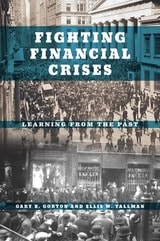
Fighting Financial Crises
Learning from the PastGary B. Gorton and Ellis W. Tallman
University of Chicago Press, 2018
Yet these pre-Fed banking panics, as Gary B. Gorton and Ellis W. Tallman show, bear striking similarities to our recent financial crisis. Fighting Financial Crises thus turns to the past to better understand our uncertain present, investigating how panics during the National Banking Era played out and how they were eventually quelled and prevented. The authors then consider the Fed’s and the SEC’s reactions to the recent crisis, building an informative new perspective on how the modern economy works.
Financial Deregulation and Integration in East Asia
Edited by Takatoshi Ito and Anne O. Krueger
University of Chicago Press, 1996
In these thirteen essays, American and Asian scholars analyze the effects of financial deregulation and integration on East Asian markets. Topics covered include the roles of the United States and Japan in trading with Asian countries, macroeconomic policy implications of export-led growth in Korea and Taiwan, the effects of foreign direct investment in China, and the impact of financial liberalization in Japan, Korea, and Singapore.
Demonstrating the complexity of financial deregulation and the challenges it poses for policy makers, this volume provides an excellent picture of the overall status of East Asian financial markets for scholars in international finance and Asian economic development.
Fiscal Policy after the Financial Crisis
Edited by Alberto Alesina and Francesco Giavazzi
University of Chicago Press, 2013
Fiscal Policy after the Financial Crisis focuses on the effects of fiscal stimuli and increased government spending, with contributions that consider the measurement of the multiplier effect and its size. In the face of uncertainty over the sustainability of recent economic policies, further contributions to this volume discuss the merits of alternate means of debt reduction through decreased government spending or increased taxes. A final section examines how the short-term political forces driving fiscal policy might be balanced with aspects of the long-term planning governing monetary policy.
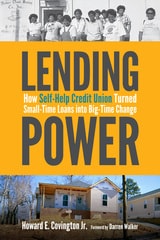
Lending Power
How Self-Help Credit Union Turned Small-Time Loans into Big-Time ChangeHoward E. Covington Jr.
Duke University Press, 2017
In Lending Power journalist and historian Howard E. Covington Jr. narrates the compelling story of Self-Help's founders and coworkers as they built a progressive and community-oriented financial institution. First established to assist workers displaced by closed furniture and textile mills, Self-Help created a credit union that expanded into providing home loans for those on the margins of the financial market, especially people of color and single mothers.
Using its own lending record, Self-Help convinced commercial banks to follow suit, extending its influence well beyond North Carolina. In 1999 its efforts led to the first state law against predatory lending. A decade later, as the Great Recession ravaged the nation's economy, its legislative victories helped influence the Dodd-Frank Wall Street Reform and Consumer Protection Act and the formation of the Consumer Financial Protection Bureau. Self-Help also created a federally chartered credit union to expand to California and later to Illinois and Florida, where it assisted ailing community-based credit unions and financial institutions.
Throughout its history, Self-Help has never wavered from its mission to use Dr. Martin Luther King Jr.'s vision of justice to extend economic opportunity to the nation's unbanked and underserved citizens. With nearly two billion dollars in assets, Self-Help also shows that such a model for nonprofits can be financially successful while serving the greater good. At a time when calls for economic justice are growing ever louder, Lending Power shows how hard-working and dedicated people can help improve their communities.
Linkages of Financial Groups in the European Union
Financial Conglomeration Developments in the Old and New Member StatesIngrid Ulst
Central European University Press, 2005
Money, Power, and the People
The American Struggle to Make Banking DemocraticChristopher W. Shaw
University of Chicago Press, 2019
Yet the situation was vastly different a century ago, as Christopher W. Shaw shows. This book upends the conventional thinking that financial policy in the early twentieth century was set primarily by the needs and demands of bankers. Shaw shows that banking and politics were directly shaped by the literal and symbolic investments of the grassroots. This engagement remade financial institutions and the national economy, through populist pressure and the establishment of federal regulatory programs and agencies like the Farm Credit System and the Federal Deposit Insurance Corporation. Shaw reveals the surprising groundswell behind seemingly arcane legislation, as well as the power of the people to demand serious political repercussions for the banks that caused the Great Depression. One result of this sustained interest and pressure was legislation and regulation that brought on a long period of relative financial stability, with a reduced frequency of economic booms and busts. Ironically, this stability led to the decline of the very banking politics that brought it about.
Giving voice to a broad swath of American figures, including workers, farmers, politicians, and bankers alike, Money, Power, and the People recasts our understanding of what might be possible in balancing the needs of the people with those of their financial institutions.
Panic in Paradise
Florida's Banking Crash of 1926Raymond B. Vickers
University of Alabama Press, 1994
Panic in Paradise is a comprehensive study of bank loan failures during the Florida land boom of the mid-1920s, during the years preceding the stock market crash of 1929. Florida and Georgia experienced a banking panic in 1926 when, in a ten-day period in July, after uncontrollable depositor runs, 117 banks closed in the two states. Uninsured depositors lost millions, and several suicides followed the financial havoc. This volume makes use of banking records that were legally sealed for almost 70 years and provides a shocking story of professional corruption and conspiracy.
"An extraordinary and unusual book that makes an important contribution to our understanding of banking history and the general economic history oof the 1920s. The banking collapse in the Southeast is virtually unknown, even to specialists in banking and financial history. No one who is interested in the banking history of the United States will want to miss this book." -- Eugene N. White, Rutgers University
"An exhaustively researched pioneering study; brilliant investigative reporting." -- Jack Blicksilver, Georgia State University
Prudential Supervision
What Works and What Doesn'tEdited by Frederic S. Mishkin
University of Chicago Press, 2001
The contributors to this thoughtful volume examine the current state of prudential supervision, focusing on fundamental issues and key pragmatic concerns. Why is prudential supervision so important? What kinds of excess must it guard against? What particular forms does it take? Which of these are the most effective deterrents against mismanagement and system overload in today's rapidly shifting financial climate? The contributors foresee a continued movement beyond simple regulatory rules in banking and toward a more active evaluation and supervision of a bank's risk management practices.
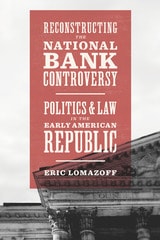
Reconstructing the National Bank Controversy
Politics and Law in the Early American RepublicEric Lomazoff
University of Chicago Press, 2018
With Reconstructing the National Bank Controversy, Eric Lomazoff offers a far more robust account of the constitutional politics of national banking between 1791 and 1832. During that time, three forces—changes within the Bank itself, growing tension over federal power within the Republican coalition, and the endurance of monetary turmoil beyond the War of 1812 —drove the development of our first major debate over the scope of federal power at least as much as the formal dimensions of the Constitution or the absence of a shared legal definition for the word “necessary.” These three forces—sometimes alone, sometimes in combination—repeatedly reshaped the terms on which the Bank’s constitutionality was contested. Lomazoff documents how these three dimensions of the polity changed over time and traces the manner in which they periodically led federal officials to adjust their claims about the Bank’s constitutionality. This includes the emergence of the Coinage Clause—which gives Congress power to “coin money, regulate the value thereof”—as a novel justification for the institution. He concludes the book by explaining why a more robust account of the national bank controversy can help us understand the constitutional basis for modern American monetary politics.
Tax Haven Ireland
Brian O’ Boyle
Pluto Press, 2021
Tax Haven Ireland uncovers the central players in this process and exposes the coverups employed by the Irish state, with the help of accountants, lawyers, and financial services companies. From the lucrative internet porn industry to corruption in the property market, this issue distorts the economy across the state and in the wider international system, and its history runs deep, going back the country’s origins as a British colonial outpost.
Today, in the wake of Brexit and in the shadow of yet another economic crash, what can be done to prevent such dangerous behaviour and reorganize our economies to invest in the people? Can Ireland – and all of us – build an alternative economy based on fairness and democratic values?

The Bank War
Andrew Jackson, Nicholas Biddle, and the Fight for American FinancePaul Kahan
Westholme Publishing, 2022
Late one night in July 1832,Martin Van Buren rushed to the White House where he found an ailing President Andrew Jackson weakened but resolute. Thundering against his political antagonists, Jackson bellowed: “The Bank, Mr. Van Buren, is trying to kill me, but I shall kill it!”With those famous words, Jackson formally declared “war” against the Second Bank of the United States and its president Nicholas Biddle. The Bank of the United States, which held the majority of Federal monies, had been established as a means of centralizing and stabilizing American currency and the economy, particularly during the country’s vulnerable early years. Jackson and his allies viewed the bank as both elitist and a threat to states’ rights. Throughout his first term, Jackson had attacked the bank viciously but failed to take action against the institution. Congress’ decision to recharter the bank forced Jackson to either make good on his rhetoric and veto the recharter or sign the recharter bill and be condemned as a hypocrite.
In The Bank War: Andrew Jackson, Nicholas Biddle, and the Fight for American Finance, historian Paul Kahan explores one of the most important and dramatic events in American political and economic history, from the idea of centralized banking and the First Bank of the United States to Jackson’s triumph, the era of “free banking,” and the creation of the Federal Reserve System. Relying on a range of primary and secondary source material, the book also shows how the Bank War was a manifestation of the debates that were sparked at the Constitutional Convention—the role of the executive branch and the role of the federal government in American society—debates that endure to this day as philosophical differences that often divide the United States.
The Best Way to Rob a Bank is to Own One
How Corporate Executives and Politicians Looted the S&L IndustryBy William K. Black
University of Texas Press, 2013
In this expert insider’s account of the savings and loan debacle of the 1980s, William Black lays bare the strategies that corrupt CEOs and CFOs—in collusion with those who have regulatory oversight of their industries—use to defraud companies for their personal gain. Recounting the investigations he conducted as Director of Litigation for the Federal Home Loan Bank Board, Black fully reveals how Charles Keating and hundreds of other S&L owners took advantage of a weak regulatory environment to perpetrate accounting fraud on a massive scale. In the new afterword, he also authoritatively links the S&L crash to the business failures of 2008 and beyond, showing how CEOs then and now are using the same tactics to defeat regulatory restraints and commit the same types of destructive fraud.
Black uses the latest advances in criminology and economics to develop a theory of why “control fraud”—looting a company for personal profit—tends to occur in waves that make financial markets deeply inefficient. He also explains how to prevent such waves. Throughout the book, Black drives home the larger point that control fraud is a major, ongoing threat in business that requires active, independent regulators to contain it. His book is a wake-up call for everyone who believes that market forces alone will keep companies and their owners honest.
The Fama Portfolio
Selected Papers of Eugene F. FamaEugene F. Fama
University of Chicago Press, 2017
Published soon after the fiftieth anniversary of Fama’s appointment to the University of Chicago and his receipt of the Nobel Prize in Economics, The Fama Portfolio offers an authoritative compilation of Fama’s central papers. Many are classics, including his now-famous essay on efficient capital markets. Others, though less famous, are even better statements of the central ideas. Fama’s research considers key questions in finance, both as an academic field and an industry: How is information reflected in asset prices? What is the nature of risk that scares people away from larger returns? Does lots of buying and selling by active managers produce value for their clients? The Fama Portfolio provides for the first time a comprehensive collection of his work and includes introductions and commentary by the book’s editors, John H. Cochrane and Tobias Moskowitz, as well as by Fama’s colleagues, themselves top scholars and successful practitioners in finance. These essays emphasize how the ideas presented in Fama’s papers have influenced later thinking in financial economics, often for decades.
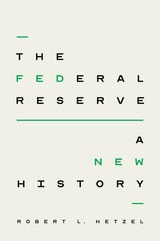
The Federal Reserve
A New HistoryRobert L. Hetzel
University of Chicago Press, 2022
In The Federal Reserve: A New History, Robert L. Hetzel draws on more than forty years of experience as an economist in the central bank to trace the influences of the Fed on the American economy. Comparing periods in which the Fed stabilized the economy to those when it did the opposite, Hetzel tells the story of a century-long pursuit of monetary rules capable of providing for economic stability.
Recast through this lens and enriched with archival materials, Hetzel’s sweeping history offers a new understanding of the bank’s watershed moments since 1913. This includes critical accounts of the Great Depression, the Great Inflation, and the Great Recession—including how these disastrous events could have been avoided.
A critical volume for a critical moment in financial history, The Federal Reserve is an expert, sweeping account that promises to recast our understanding of the central bank in its second century.
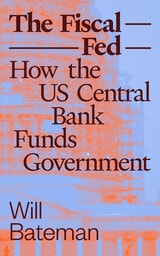
The Fiscal Fed
How the US Central Bank Funds GovernmentWill Bateman
University of Chicago Press, 2026
A revelatory history of how the Federal Reserve finances American power.
Central banks, we are told, are economic superpowers that must remain independent of modern democratic governments. The US Federal Reserve’s presumed insulation from politics affords it autonomy and credibility to control inflation and promote economic stability—or so the story goes.
In The Fiscal Fed, Will Bateman offers a deeply sourced, empirical history that shows the Fed’s primary function is actually, and has always been, fiscal—sustaining the market for Treasury borrowing that makes up the difference between federal spending and federal revenue. Bateman combs Fed meeting transcripts, staff notes, financial accounts, and legal documents to trace loans and public-debt purchases since the central bank’s founding. The result is a milestone work that reveals how, for most of the Fed’s history, its transactions were aimed at government financing—either by providing cheap credit to close budget gaps or by manipulating yields on government debt. The Fed’s support for government finance is a feature, not a bug, of American economic institutions.
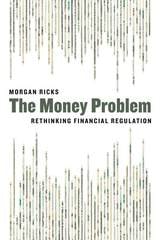
The Money Problem
Rethinking Financial RegulationMorgan Ricks
University of Chicago Press, 2016
In The Money Problem, Morgan Ricks addresses all of these questions and more, offering a practical yet elegant blueprint for a modernized system of money and banking—one that, crucially, can be accomplished through incremental changes to the United States’ current system. He brings a critical, missing dimension to the ongoing debates over financial stability policy, arguing that the issue is primarily one of monetary system design. The Money Problem offers a way to mitigate the risk of catastrophic panic in the future, and it will expand the financial reform conversation in the United States and abroad.

The Political Economy of Development
The World Bank, Neoliberalism and Development ResearchEdited by Kate Bayliss, Ben Fine, and Elisa Van Waeyenberge
Pluto Press, 2011
Any student, academic or practitioner wanting to succeed in development studies, radical or mainstream, must understand the World Bank's role and the evolution of its thinking and activities. The Political Economy of Development provides tools for gaining this understanding and applies them across a range of topics.
The research, practice and scholarship of development are always set against the backdrop of the World Bank, whose formidable presence shapes both development practice and thinking. This book brings together academics that specialise in different subject areas of development and reviews their findings in the context of the World Bank as knowledge bank, policy-maker and financial institution. The volume offers a compelling contribution to our understanding of development studies and of development itself.
The Political Economy of Development is an invaluable critical resource for students, policy-makers and activists in development studies.
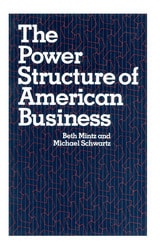
The Power Structure of American Business
Beth A. Mintz and Michael Schwartz
University of Chicago Press, 1985
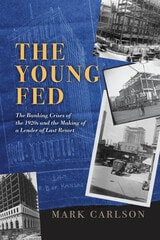
The Young Fed
The Banking Crises of the 1920s and the Making of a Lender of Last ResortMark Carlson
University of Chicago Press, 2025
A new history of crisis responses in the central bank’s formative years.
The long-standing description of the Federal Reserve as a “lender of last resort” refers to the central bank’s emergency liquidity provision for financial entities in periods of crisis. As Mark Carlson shows, this function was foundational to how the Fed was designed but has, at times, proven challenging to implement. The Young Fed examines the origins of the Federal Reserve’s emergency liquidity provision which, along with the setting of monetary policy, has become a critical responsibility.
Focusing on the Fed’s response to the financial crises of the 1920s, Carlson documents the formative deliberations of central bank policymakers regarding how to assist banks experiencing distress; the lessons that were learned; and how those lessons shaped subsequent policies. Carlson depicts an early Fed that experimented with a variety of approaches to crises, ranging from bold spectacles featuring cash-filled armored cars to behind-the-scenes interventions to prevent inducing panics or bank runs. The Young Fed weaves previously unpublished material from the Fed archives into a watershed work in American economic history: a deeply sourced account of how the world’s most important central bank became a lender of last resort.

Transforming Markets
A Development Bank for the 21st Century. A History of the EBRD, Volume 2Andrew Kilpatrick
Central European University Press, 2021