Results by title
23 books match the query 'Banks and banking'
After the Flood
How the Great Recession Changed Economic ThoughtEdited by Edward L. Glaeser, Tano Santos, and E. Glen Weyl
University of Chicago Press, 2017
A momentous collection of the best recent scholarship, After the Flood illustrates both the scope of the crises’ impact on our understanding of global financial markets and the innovative processes whereby scholars have adapted their research to gain a greater understanding of them. Among the contributors are José Scheinkman and Lars Peter Hansen, who bring up to date decades of collaborative research on the mechanisms that tie financial markets to the broader economy; Patrick Bolton, who argues that limiting bankers’ pay may be more effective than limiting the activities they can undertake; Edward Glaeser and Bruce Sacerdote, who study the social dynamics of markets; and E. Glen Weyl, who argues that economists are influenced by the incentives their consulting opportunities create.
BANKSTERS BOSSES SMART MONEY
SOCIAL HISTORY OF GREAT TOLEDO BANK CRASTIMOTHY MESSER-KRUSE
The Ohio State University Press, 2004
Bankers and Empire
How Wall Street Colonized the CaribbeanPeter James Hudson
University of Chicago Press, 2017
Banking Reform in Central Europe and the Former Soviet Union
Jacek Rostowski
Central European University Press, 1995
From Berlin to the Bering Strait, the business of banking has sprung to life. This analysis considers the impact of banking reform on macroeconomic stabilization and the suitability of universal banks, the role of banking regulation and the advantages of 'narrow banks' during transition, the cleaning up of bad debts, and the reform of the payments system.
The book assesses the lessons which can be drawn from reforms in Central Europe for the later reformers in the former Soviet Union and the Balkans. It considers the impact of banking reform on macroeconomic stabilization and the suitability of German-type universal banks; the role of banking regulation and the advantages of 'narrow banks' during transition; the cleaning-up of bad debts; bank privatization and reform of the payments system. Five chapters follow which review the experience of some of the 'second-wave' countries: Estonia, Georgia, Romania, Russia and Ukraine.

Banking for a Better World
Nanno Kleiterp in Conversation with Marijn WiersmaNanno Kleiterp
Amsterdam University Press, 2017
Banking on Slavery
Financing Southern Expansion in the Antebellum United StatesSharon Ann Murphy
University of Chicago Press, 2023
It’s now widely understood that the fullest expression of nineteenth-century American capitalism was found in the structures of chattel slavery. It’s also understood that almost every other institution and aspect of life then was at least entangled with—and often profited from—slavery’s perpetuation. Yet as Sharon Ann Murphy shows in her powerful and unprecedented book, the centrality of enslaved labor to banking in the antebellum United States is far greater than previously thought.
Banking on Slavery sheds light on precisely how the financial relationships between banks and slaveholders worked across the nineteenth-century South. Murphy argues that the rapid spread of slavery in the South during the 1820s and ’30s depended significantly upon southern banks’ willingness to financialize enslaved lives, with the use of enslaved individuals as loan collateral proving central to these financial relationships. She makes clear how southern banks were ready—and, in some cases, even eager—to alter time-honored banking practices to meet the needs of slaveholders. In the end, many of these banks sacrificed themselves in their efforts to stabilize the slave economy. Murphy also details how banks and slaveholders transformed enslaved lives from physical bodies into abstract capital assets. Her book provides an essential examination of how our nation’s financial history is more intimately intertwined with the dehumanizing institution of slavery than scholars have previously thought.
Better Bankers, Better Banks
Promoting Good Business through Contractual CommitmentClaire A. Hill and Richard W. Painter
University of Chicago Press, 2015
In Better Bankers, Better Banks, Claire A. Hill and Richard W. Painter look back at the history of banking and show how the current culture of bad behavior—dramatized by the corrupt, cocaine-snorting bankers of The Wolf of Wall Street—came to be. In the early 1980s, banks went from partnerships whose partners had personal liability to corporations whose managers had no such liability and could take risks with other people’s money. A major reason bankers remain resistant to change, Hill and Painter argue, is that while banks have been faced with large fines, penalties, and legal fees—which have exceeded one hundred billion dollars since the onset of the crisis—the banks (which really means the banks’shareholders) have paid them, not the bankers themselves. The problem also extends well beyond the pursuit of profit to the issue of how success is defined within the banking industry, where highly paid bankers clamor for status and clients may regard as inevitable bankers who prioritize their own self-interest. While many solutions have been proposed, Hill and Painter show that a successful transformation of banker behavior must begin with the bankers themselves. Bankers must be personally liable from their own assets for some portion of the bank’s losses from excessive risk-taking and illegal behavior. This would instill a culture that discourages such behavior and in turn influence the sorts of behavior society celebrates or condemns.
Despite many sensible proposals seeking to reign in excessive risk-taking, the continuing trajectory of scandals suggests that we’re far from ready to avert the next crisis. Better Bankers, Better Banks is a refreshing call for bankers to return to the idea that theirs is a noble profession.
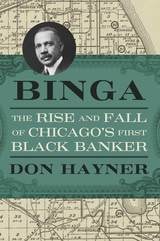
Binga
The Rise and Fall of Chicago's First Black BankerDon Hayner
Northwestern University Press, 2020
Binga is the definitive full-length biography of Jesse Binga, the first black banker in Chicago. Born into a large family in Detroit, Binga arrived in Chicago in 1892 in his late twenties with virtually nothing. Through his wits and resourcefulness, he rose to wealth and influence as a real estate broker, and in 1908 he founded the Binga Bank, the first black-owned bank in the city. But his achievements were followed by an equally notable downfall. Binga recounts this gripping story about race, history, politics, and finance.
The Black Belt, where Binga’s bank was located, was a segregated neighborhood on Chicago’s South Side—a burgeoning city within a city—and its growth can be traced through the arc of Binga’s career. He preached and embodied an American gospel of self-help and accrued wealth while expanding housing options and business opportunities for blacks. Devout Roman Catholics, he and his wife Eudora supported church activities and various cultural and artistic organizations; their annual Christmas party was the Black Belt’s social event of the year. But Binga’s success came at the price of a vicious backlash. After he moved his family into a white neighborhood in 1917, their house was bombed multiple times, his offices were attacked twice, and he became a lightning rod for the worst race riots in Chicago history, which took place in 1919. Binga persevered, but, starting with the stock market crash of October 1929, a string of reversals cost him his bank, his property, and his fortune.
A quintessentially Chicago story, Binga tells the history of racial change in one of the most segregated cities in America and how an extraordinary man stood as a symbol of hope in a community isolated by racial animosity.

Dispossession
Plundering German Jewry, 1933-1953Christoph Kreutzmüller and Jonathan R. Zatlin, Editors
University of Michigan Press, 2020

Fiery Dragons
Banks, Moneylenders and Microfinance in BurmaSean Turnell
National University of Singapore Press, 2009
Finance Capitalism Unveiled
Banks and the German Political EconomyRichard Deeg
University of Michigan Press, 1999
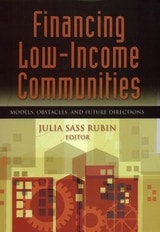
Financing Low Income Communities
Julia Sass Rubin
Russell Sage Foundation, 2007

From Central Planning to the Market
Transformation of the Czech Economy 1989 – 2004Libor Zidek
Central European University Press, 2018
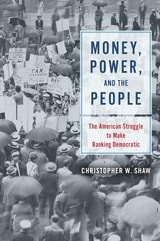
Money, Power, and the People
The American Struggle to Make Banking DemocraticChristopher W. Shaw
University of Chicago Press, 2019
Yet the situation was vastly different a century ago, as Christopher W. Shaw shows. This book upends the conventional thinking that financial policy in the early twentieth century was set primarily by the needs and demands of bankers. Shaw shows that banking and politics were directly shaped by the literal and symbolic investments of the grassroots. This engagement remade financial institutions and the national economy, through populist pressure and the establishment of federal regulatory programs and agencies like the Farm Credit System and the Federal Deposit Insurance Corporation. Shaw reveals the surprising groundswell behind seemingly arcane legislation, as well as the power of the people to demand serious political repercussions for the banks that caused the Great Depression. One result of this sustained interest and pressure was legislation and regulation that brought on a long period of relative financial stability, with a reduced frequency of economic booms and busts. Ironically, this stability led to the decline of the very banking politics that brought it about.
Giving voice to a broad swath of American figures, including workers, farmers, politicians, and bankers alike, Money, Power, and the People recasts our understanding of what might be possible in balancing the needs of the people with those of their financial institutions.

No Way to Run an Economy
Why the System Failed and How to Put It RightGraham Turner
Pluto Press, 2009
In The Credit Crunch, Graham Turner predicted that banks would be nationalised and interest rates would be reduced too slowly to halt the crisis. His predictions were correct. His new book, No Way to Run an Economy, is the essential guide to the turbulent times ahead.
Turner recommended radical measures, such as quantitative easing, in early 2008 but argues that action has been taken too late and been too timid to make a real difference. He dissects the policy mistakes of the last 12 months including Obama's doomed market-led response to the crisis and the obsession of central banks with the red herring of inflation.
There is no doubt the economy is still in serious trouble, but Turner shows that learning from the mistakes made so far can prevent a situation worse than that of the 1930s crisis.
Panic in Paradise
Florida's Banking Crash of 1926Raymond B. Vickers
University of Alabama Press, 1994
Panic in Paradise is a comprehensive study of bank loan failures during the Florida land boom of the mid-1920s, during the years preceding the stock market crash of 1929. Florida and Georgia experienced a banking panic in 1926 when, in a ten-day period in July, after uncontrollable depositor runs, 117 banks closed in the two states. Uninsured depositors lost millions, and several suicides followed the financial havoc. This volume makes use of banking records that were legally sealed for almost 70 years and provides a shocking story of professional corruption and conspiracy.
"An extraordinary and unusual book that makes an important contribution to our understanding of banking history and the general economic history oof the 1920s. The banking collapse in the Southeast is virtually unknown, even to specialists in banking and financial history. No one who is interested in the banking history of the United States will want to miss this book." -- Eugene N. White, Rutgers University
"An exhaustively researched pioneering study; brilliant investigative reporting." -- Jack Blicksilver, Georgia State University
Prudential Supervision
What Works and What Doesn'tEdited by Frederic S. Mishkin
University of Chicago Press, 2001
The contributors to this thoughtful volume examine the current state of prudential supervision, focusing on fundamental issues and key pragmatic concerns. Why is prudential supervision so important? What kinds of excess must it guard against? What particular forms does it take? Which of these are the most effective deterrents against mismanagement and system overload in today's rapidly shifting financial climate? The contributors foresee a continued movement beyond simple regulatory rules in banking and toward a more active evaluation and supervision of a bank's risk management practices.
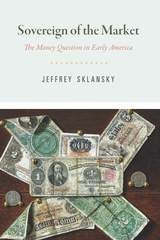
Sovereign of the Market
The Money Question in Early AmericaJeffrey Sklansky
University of Chicago Press, 2017
Jeffrey Sklansky’s wide-ranging study comprises three chronological parts devoted to major episodes in the career of the money question. First, the fight over the innovation of paper money in colonial New England. Second, the battle over the development of commercial banking in the new United States. And third, the struggle over the national banking system and the international gold standard in the late nineteenth century. Each section explores a broader problem of power that framed each conflict in successive phases of capitalist development: circulation, representation, and association. The three parts also encompass intellectual biographies of opposing reformers for each period, shedding new light on the connections between economic thought and other aspects of early American culture. The result is a fascinating, insightful, and deeply considered contribution to the history of capitalism.
Stories of Capitalism
Inside the Role of Financial AnalystsStefan Leins
University of Chicago Press, 2018
Building on recent developments in the social studies of finance, Stories of Capitalism provides the first ethnography of financial analysis. Drawing on two years of fieldwork in a Swiss bank, Stefan Leins argues that financial analysts construct stories of possible economic futures, presenting them as coherent and grounded in expert research and analysis. In so doing, they establish a role for themselves—not necessarily by laying bare empirically verifiable trends but rather by presenting the market as something that makes sense and is worth investing in. Stories of Capitalism is a nuanced look at how banks continue to boost investment—even in unstable markets—and a rare insider’s look into the often opaque financial practices that shape the global economy.
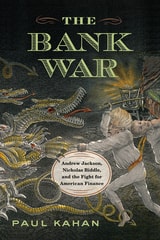
The Bank War
Andrew Jackson, Nicholas Biddle, and the Fight for American FinancePaul Kahan
Westholme Publishing, 2022
Late one night in July 1832,Martin Van Buren rushed to the White House where he found an ailing President Andrew Jackson weakened but resolute. Thundering against his political antagonists, Jackson bellowed: “The Bank, Mr. Van Buren, is trying to kill me, but I shall kill it!”With those famous words, Jackson formally declared “war” against the Second Bank of the United States and its president Nicholas Biddle. The Bank of the United States, which held the majority of Federal monies, had been established as a means of centralizing and stabilizing American currency and the economy, particularly during the country’s vulnerable early years. Jackson and his allies viewed the bank as both elitist and a threat to states’ rights. Throughout his first term, Jackson had attacked the bank viciously but failed to take action against the institution. Congress’ decision to recharter the bank forced Jackson to either make good on his rhetoric and veto the recharter or sign the recharter bill and be condemned as a hypocrite.
In The Bank War: Andrew Jackson, Nicholas Biddle, and the Fight for American Finance, historian Paul Kahan explores one of the most important and dramatic events in American political and economic history, from the idea of centralized banking and the First Bank of the United States to Jackson’s triumph, the era of “free banking,” and the creation of the Federal Reserve System. Relying on a range of primary and secondary source material, the book also shows how the Bank War was a manifestation of the debates that were sparked at the Constitutional Convention—the role of the executive branch and the role of the federal government in American society—debates that endure to this day as philosophical differences that often divide the United States.
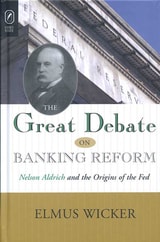
The GREAT DEBATE ON BANKING REFORM
Nelson Aldrich and the Origins of the FedElmus Wicker
The Ohio State University Press, 2005
The Money Problem
Rethinking Financial RegulationMorgan Ricks
University of Chicago Press, 2016
In The Money Problem, Morgan Ricks addresses all of these questions and more, offering a practical yet elegant blueprint for a modernized system of money and banking—one that, crucially, can be accomplished through incremental changes to the United States’ current system. He brings a critical, missing dimension to the ongoing debates over financial stability policy, arguing that the issue is primarily one of monetary system design. The Money Problem offers a way to mitigate the risk of catastrophic panic in the future, and it will expand the financial reform conversation in the United States and abroad.
The Young Fed
The Banking Crises of the 1920s and the Making of a Lender of Last ResortMark Carlson
University of Chicago Press, 2025
A new history of crisis responses in the central bank’s formative years.
The long-standing description of the Federal Reserve as a “lender of last resort” refers to the central bank’s emergency liquidity provision for financial entities in periods of crisis. As Mark Carlson shows, this function was foundational to how the Fed was designed but has, at times, proven challenging to implement. The Young Fed examines the origins of the Federal Reserve’s emergency liquidity provision which, along with the setting of monetary policy, has become a critical responsibility.
Focusing on the Fed’s response to the financial crises of the 1920s, Carlson documents the formative deliberations of central bank policymakers regarding how to assist banks experiencing distress; the lessons that were learned; and how those lessons shaped subsequent policies. Carlson depicts an early Fed that experimented with a variety of approaches to crises, ranging from bold spectacles featuring cash-filled armored cars to behind-the-scenes interventions to prevent inducing panics or bank runs. The Young Fed weaves previously unpublished material from the Fed archives into a watershed work in American economic history: a deeply sourced account of how the world’s most important central bank became a lender of last resort.