Results by title
2 books match the query 'Barash, Jeffrey Andrew'

Collective Memory and the Historical Past
Jeffrey Andrew Barash
University of Chicago Press, 2016
There is one critical way we honor great tragedies: by never forgetting. Collective remembrance is as old as human society itself, serving as an important source of social cohesion, yet as Jeffrey Andrew Barash shows in this book, it has served novel roles in a modern era otherwise characterized by discontinuity and dislocation. Drawing on recent theoretical explorations of collective memory, he elaborates an important new philosophical basis for it, one that unveils profound limitations to its scope in relation to the historical past.
Crucial to Barash’s analysis is a look at the radical transformations that symbolic configurations of collective memory have undergone with the rise of new technologies of mass communication. He provocatively demonstrates how such technologies’ capacity to simulate direct experience—especially via the image—actually makes more palpable collective memory’s limitations and the opacity of the historical past, which always lies beyond the reach of living memory. Thwarting skepticism, however, he eventually looks to literature—specifically writers such as Walter Scott, Marcel Proust, and W. G. Sebald—to uncover subtle nuances of temporality that might offer inconspicuous emblems of a past historical reality.
Crucial to Barash’s analysis is a look at the radical transformations that symbolic configurations of collective memory have undergone with the rise of new technologies of mass communication. He provocatively demonstrates how such technologies’ capacity to simulate direct experience—especially via the image—actually makes more palpable collective memory’s limitations and the opacity of the historical past, which always lies beyond the reach of living memory. Thwarting skepticism, however, he eventually looks to literature—specifically writers such as Walter Scott, Marcel Proust, and W. G. Sebald—to uncover subtle nuances of temporality that might offer inconspicuous emblems of a past historical reality.
[more]
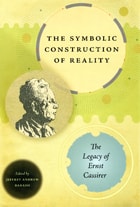
The Symbolic Construction of Reality
The Legacy of Ernst CassirerEdited by Jeffrey Andrew Barash
University of Chicago Press, 2008
In 1933 eminent philosopher Ernst Cassirer (1874–1945) fled Nazi Germany for the United States. His fame in Europe having already been established through a public debate with Martin Heidegger in 1929, Cassirer would go on to become a noteworthy influence on American culture. His most important early writings focused on the symbol and symbolic interaction, exploring how human cultures—from early myth-based ones to our own modern, scientifically oriented time—have used symbols to mediate the basic forms of experience. Following this work, Cassirer extended his insights to encompass a broad spectrum of philosophical themes: from investigations into Western epistemological and scientific traditions to aesthetics and the philosophy of history to anthropology and political philosophy. Reflecting this diversity in Cassirer’s own work, The Symbolic Construction of Reality collects eleven essays by a wide range of contributors from different fields. Each essay analyzes a different aspect of his legacy, reassessing its significance for our contemporary world and bringing much-needed attention to this seminal thinker.
[more]