Results by title
2 books match the query 'Barrancabermeja'
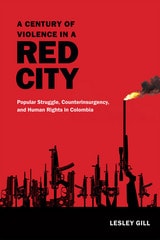
A Century of Violence in a Red City
Popular Struggle, Counterinsurgency, and Human Rights in ColombiaLesley Gill
Duke University Press, 2016
In A Century of Violence in a Red City Lesley Gill provides insights into broad trends of global capitalist development, class disenfranchisement and dispossession, and the decline of progressive politics. Gill traces the rise and fall of the strong labor unions, neighborhood organizations, and working class of Barrancabermeja, Colombia, from their origins in the 1920s to their effective activism for agrarian reforms, labor rights, and social programs in the 1960s and 1970s. Like much of Colombia, Barrancabermeja came to be dominated by alliances of right-wing politicians, drug traffickers, foreign corporations, and paramilitary groups. These alliances reshaped the geography of power and gave rise to a pernicious form of armed neoliberalism. Their violent incursion into Barrancabermeja's civil society beginning in the 1980s decimated the city's social networks, destabilized life for its residents, and destroyed its working-class organizations. As a result, community leaders are now left clinging to the toothless discourse of human rights, which cannot effectively challenge the status quo. In this stark book, Gill captures the grim reality and precarious future of Barrancabermeja and other places ravaged by neoliberalism and violence.
[more]
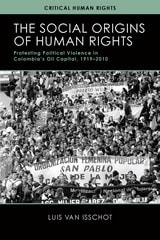
The Social Origins of Human Rights
Protesting Political Violence in Colombia’s Oil Capital, 1919–2010Luis van Isschot
University of Wisconsin Press, 2015
Human rights activism is often associated with international organizations that try to affect the behavior of abusive states around the globe. In Barrancabermeja, Colombia, argues Luis van Isschot in The Social Origin of Human Rights, the struggle for rights has emerged more organically and locally, out of a long history of civil and social organizing. He offers deep insight into the lives of home-grown activists in a conflict zone, against the backdrop of major historical changes that shaped Latin America in the twentieth century.
Built by Standard Oil in 1919, and home to the largest petroleum refinery in the country, Barrancabermeja has long been a critical battleground in Colombia’s armed conflict. One of the most militarized urban areas on earth, the city has been a regional base for the Colombian armed forces as well as for leftist guerrillas and a national paramilitary movement. In the midst of a dirty war in which the majority of victims were civilians, urban and rural social movements from Barrancabermeja and the surrounding area came together to establish a human rights movement. These frontline activists called upon the Colombian state to protect basic human rights and denounced the deeper socioeconomic inequalities they saw as sources of conflict. Through close study of the complex dynamics at work in Barrancabermeja, van Isschot shows how the efforts we describe as “human rights” activism derive in large part from these lived experiences of authoritarianism, war, poverty, and social exclusion. Through its social and historical approach, his analysis both complements and challenges the work of scholars who look at rights issues primarily through a legal lens.
Built by Standard Oil in 1919, and home to the largest petroleum refinery in the country, Barrancabermeja has long been a critical battleground in Colombia’s armed conflict. One of the most militarized urban areas on earth, the city has been a regional base for the Colombian armed forces as well as for leftist guerrillas and a national paramilitary movement. In the midst of a dirty war in which the majority of victims were civilians, urban and rural social movements from Barrancabermeja and the surrounding area came together to establish a human rights movement. These frontline activists called upon the Colombian state to protect basic human rights and denounced the deeper socioeconomic inequalities they saw as sources of conflict. Through close study of the complex dynamics at work in Barrancabermeja, van Isschot shows how the efforts we describe as “human rights” activism derive in large part from these lived experiences of authoritarianism, war, poverty, and social exclusion. Through its social and historical approach, his analysis both complements and challenges the work of scholars who look at rights issues primarily through a legal lens.
[more]