Results by title
8 books match the query 'Barriers'
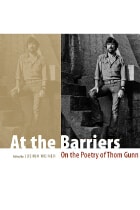
At the Barriers
On the Poetry of Thom GunnEdited by Joshua Weiner
University of Chicago Press, 2009
Maverick gay poetic icon Thom Gunn (1929–2004) and his body of work have long dared the British and American poetry establishments either to claim or disavow him. To critics in the UK and US alike, Gunn demonstrated that formal poetry could successfully include new speech rhythms and open forms and that experimental styles could still maintain technical and intellectual rigor. Along the way, Gunn’s verse captured the social upheavals of the 1960s, the existential possibilities of the late twentieth century, and the tumult of post-Stonewall gay culture.
The first book-length study of this major poet, At the Barriers surveys Gunn’s career from his youth in 1930s Britain to his final years in California, from his earliest publications to his later unpublished notebooks, bringing together some of the most important poet-critics from both sides of the Atlantic to assess his oeuvre. This landmark volume traces how Gunn, in both his life and his writings, pushed at boundaries of different kinds, be they geographic, sexual, or poetic. At the Barriers will solidify Gunn’s rightful place in the pantheon of Anglo-American letters.
Barriers and Belonging
Personal Narratives of DisabilityMichelle Jarman
Temple University Press, 2017
What is the direct impact that disability studies has on the lives of disabled people today? The editors and contributors to this essential anthology, Barriers and Belonging, provide thirty-seven personal narratives thatexplore what it means to be disabled and why the field of disability studies matters.
The editors frame the volume by introducing foundational themes of disability studies. They provide a context of how institutions—including the family, schools, government, and disability peer organizations—shape and transform ideas about disability. They explore how disability informs personal identity, interpersonal and community relationships, and political commitments. In addition, there are heartfelt reflections on living with mobility disabilities, blindness, deafness, pain, autism, psychological disabilities, and other issues. Other essays articulate activist and pride orientations toward disability, demonstrating the importance of reframing traditional narratives of sorrow and medicalization.
The critical, self-reflective essays in Barriers and Belonging provide unique insights into the range and complexity of disability experience.
Barriers to Reentry?
The Labor Market for Released Prisoners in Post-Industrial AmericaShawn D. Bushway
Russell Sage Foundation, 2007
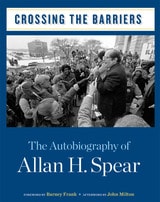
Crossing the Barriers
The Autobiography of Allan H. SpearAllan H. Spear
University of Minnesota Press, 2010
Spear's memoirs are fascinating and moving: in early chapters on his childhood and college years, he writes with great introspection about his growing self-awareness of being gay. Later he writes about his development as an intellectual, particularly as a white man fighting to win legitimacy for the study of African-American history and culture. During his time at the University of Minnesota, Spear became deeply involved with the Minnesota Democratic-Farmer-Labor Party (DFL) and the antiwar movement. At the same time, Spear became increasingly active in the emerging gay rights movement and began the process of coming out to his friends and colleagues.
After a failed run for the Minnesota House in 1968, Spear was elected to the Minnesota Senate in 1972 and served as Senate president from 1993-2000. In 1993, he was instrumental in the passage of the Minnesota Human Rights Act, which protected LGBT people from discrimination in housing, education, and employment-an achievement he considered one of the finest of his career. A skilled parliamentarian, he remained a progressive leader in the legislature until his retirement in 2000.
Spear passed away on October 11, 2008, leaving his memoir slightly incomplete. A stirring afterword by John Milton completes the story of Spear's life, chronicling the recognition of his accomplishments as a politician and activist during his final years.

Inequalities of Love
College-Educated Black Women and the Barriers to Romance and FamilyAveril Y. Clarke
Duke University Press, 2011
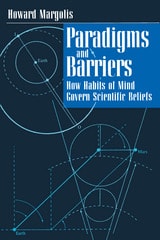
Paradigms and Barriers
How Habits of Mind Govern Scientific BeliefsHoward Margolis
University of Chicago Press, 1993
innovative interpretation of Thomas S. Kuhn's landmark idea
of "paradigm shifts," applying insights from cognitive
psychology to the history and philosophy of science.
Building upon the arguments in his acclaimed Patterns,
Thinking, and Cognition, Margolis suggests that the
breaking down of particular habits of mind—of critical
"barriers"—is key to understanding the processes through
which one model or concept is supplanted by another.
Margolis focuses on those revolutionary paradigm shifts—
such as the switch from a Ptolemaic to a Copernican
worldview—where challenges to entrenched habits of mind
are marked by incomprehension or indifference to a new
paradigm. Margolis argues that the critical problem for a
revolutionary shift in thinking lies in the robustness of the
habits of mind that reject the new ideas, relative to the
habits of mind that accept the new ideas.
Margolis applies his theory to famous cases in the history of
science, offering detailed explanations for the transition
from Ptolemaic to cosmological astronomy, the emergence of
probability, the overthrow of phlogiston, and the emergence
of the central role of experiment in the seventeenth century.
He in turn uses these historical examples to address larger
issues, especially the nature of belief formation and
contemporary debates about the nature of science and the
evolution of scientific ideas.
Howard Margolis is a professor in the Harris Graduate School
of Public Policy Studies and in the College at the University
of Chicago. He is the author of Selfishness, Altruism,
and Rationality and Patterns, Thinking, and
Cognition, both published by the University of Chicago
Press.
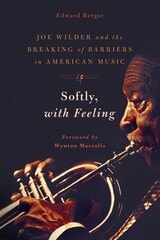
Softly, With Feeling
Joe Wilder and the Breaking of Barriers in American MusicEdward Berger
Temple University Press, 2014
"Joe Wilder set the table. His struggles made it easier for me and many others."--From the Foreword by Wynton Marsalis
Trumpeter Joe Wilder is distinguished for his achievements in both the jazz and classical worlds. He was a founding member of the Symphony of the New World, where he played first trumpet, and he performed as lead trumpet and soloist with Lionel Hampton, Jimmy Lunceford, Dizzy Gillespie, and Count Basie. Yet Wilder is also known as a pioneer who broke down racial barriers, the first African American to hold a principal chair in a Broadway show orchestra, and one of the first African Americans to join a network studio orchestra.
In Softly, with Feeling, Edward Berger tells Wilder's remarkable story-from his growing up in working-class Philadelphia to becoming one of the first 1,000 black Marines during World War II-with tremendous feeling and extensive reminiscences by Wilder and his colleagues, including renowned Philadelphia-area musicians Jimmy Heath and Buddy DeFranco. Berger also places Wilder's experiences within a broader context of American musical and social history.
Wilder's modesty and ability to perform in many musical genres may have prevented him from achieving popular recognition, but in Softly, with Feeling, his legacy and contributions to music and culture are assured.
Walled
Barriers, Migration, and Resistance in the U.S.-Mexico BorderlandsEdited by Andréanne Bissonnette and Élisabeth Vallet
University of Arizona Press, 2025
From the bustling San Diego–Tijuana region to the borderlands of Brownsville-Matamoros, the U.S.-Mexico border is marked by extensive stretches of walls. Over the past thirty years, these walls have evolved from purely physical barriers into multifaceted systems encompassing administrative, legal, legislative, and biometric components. This volume invites readers to reflect on the transformations of the border since the construction of the initial fourteen miles of wall, and the subsequent addition of 1,940 miles. It provides a comprehensive exploration of the border’s evolution, and its profound and lasting impacts.
Bringing together recognized scholars in border studies, Walled delves into the varied manifestations and lived experiences associated with U.S.-Mexico border walls. The introduction by Andréanne Bissonnette and Élisabeth Vallet offers a thorough review of the border walls’ thirty-year history, placing it within a global context. Contributions offer diverse perspectives of the border experience, from state policies and migrant experiences to the daily lives of border residents. Topics such as militarization, migration, artistic resistance, and humanitarian aid are carefully examined. This volume is an essential resource for policymakers, activists, scholars, and anyone seeking to understand the intricate realities of border communities and the far-reaching consequences of border policies.
Contributors
Susana Báez-Ayala
Andréanne Bissonnette
Mathilde Bourgeon
Silvia M. Chávez-Baray
Irasema Coronado
Thalia D’Aragon-Giguère
Erin Hoekstra
Anthony Jimenez
T. Mark Montoya
Eva M. Moya
Scott Nicol
Héctor Antonio Padilla Delgado
Lisa Sun-Hee Park
Tony Payan
Patricia Ravelo-Blancas
David A. Shirk
Allyson Teague
Élisabeth Vallet