Results by title
4 books match the query 'Basic Concepts'
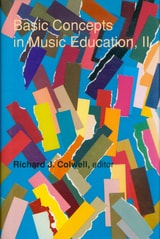
Basic Concepts in Music Education, II
Richard J. Cowell
University Press of Colorado, 1991
A continuation on the first edition, Basic Concepts in Music Education, II features revisions and updates by the living authors as well as contributions by new authors who delineate concepts of music education that are particularly important to the nineties and beyond. These topics include growth processes, learning theory, functional music, messages for teachers, the range of musical experience, technology, and evaluation.
Chapters from the most noted authorities in music education promise to provide definitive guidance in Basic Concepts, II that Basic Concepts, I has provided for the past quarter century. Among the contributors are Charles Fowler, Harry S. Broudy, Foster McMury, Wayne Bowman, Marilyn Zimmerman, Bennett Reimer, Clifton Burmeister, Richard Colwell, Robert Ehle, and Allen P. Britton. Like its predecessor, Basic Concepts, II offers rich and stimulating discussions on the most pertinent issues facing music education today - discussions that are vital to professionals and enlightening to the general reader.

Electrical Steels
Fundamentals and basic concepts, Volume 1Anthony Moses
The Institution of Engineering and Technology, 2019
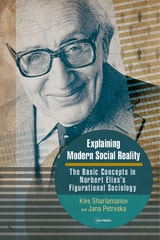
Explaining Modern Social Reality
The Basic Concepts in Norbert Elias’s Figurational SociologyKire Sharlamanov
Central European University Press, 2026
At the center of the discussion is Elias’s landmark work, The Civilizing Process, with particular attention to class structures, changing patterns of behavior, and the development of the modern state. The book also explores figurational sociology, one of Elias’s most influential contributions to social theory.
An innovative and original thinker, Elias challenged established concepts and introduced new analytical tools, including the influential notion of habitus. The chapters examine his theory of knowledge, his reflections on violence and de-civilization, his analyses of nations and nationalism, and his work on emotions and shame. The book further traces Elias’s dialogue with major thinkers such as Edmund Husserl, Karl Mannheim, Max Weber, Sigmund Freud, and Talcott Parsons, showing how he reinterpreted their ideas in distinctive ways. The book concludes with an overview of the most important critiques of Elias’s work and its continuing relevance today.
Phenomenology of the Alien
Basic ConceptsTranslated from the German by Alexander Kozin and Tanja Stähler
Northwestern University Press, 2011
With impressive erudition Waldenfels weaves in xenological themes from classical philosophy, contemporary phenomenology, literature, linguistics, sociology, and anthropology to address the boundaries of experience that unite and separate human beings, their collectives, their perceptions, and aspirations. While the debate has long raged in German-speaking circles, Waldenfels’s work is largely unavailable to the English-speaking audience, with the only other translation being The Order in the Twilight (1996). Phenomenology of the Alien is a superb introduction to both xenological phenomenology, and the the question of the alien as it has been unfolding in contemporary thought.