Results by title

15 books match the query 'Basilica di San Pietro in Vaticano)'
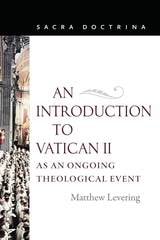
cover of An Introduction to Vatican II as an Ongoing Theological Event

An Introduction to Vatican II as an Ongoing Theological Event

Matthew Levering

Catholic University of America Press, 2017

Contemporary scholars often refer to “the event of Vatican II,” but what kind of an event was it? In this first book of the new CUA Press series Sacra Doctrina, Matthew Levering leads his readers to see the Council as a “theological event”—a period of confirming and continuing God’s self-revelation in Christ into a new historical era for the Church.

This is an introduction to Vatican II with a detailed summary of each of its four central documents—the dogmatic constitutions—followed by explanations of how to interpret them. In contrast to other introductions, which pay little attention to the theological soil in which the documents of Vatican II germinated, Levering o­ffers a reading of each conciliar Constitution in light of a key theological author from the era: René Latourelle, SJ for Dei Verbum (persons and propositions); Louis Bouyer, CO for Sacrosanctum Concilium (active participation); Yves Congar, OP for Lumen Gentium (true and false reform); and Henri de Lubac, SJ for Gaudium et Spes (nature and grace).

This theological event is “ongoing,” Levering demonstrates, by tracing in each chapter the theological debates that have stretched from the close of the council till the present, and the difficulties the Church continues to encounter in encouraging an ever deeper participation in Jesus Christ on the part of all believers. In this light, the book’s final chapter compares the historicist (Massimo Faggioli) and Christological (Robert Imbelli) interpretations of Vatican II, arguing that historicism can undermine the Council’s fundamental desire for a reform and renewal rooted in Christ. The conclusion addresses the concerns about secularization and loss of faith raised after the Council by Henri de Lubac, Joseph Ratzinger, and Yves Congar, arguing that contemporary Vatican II scholarship needs to take these concerns more seriously.
[more]
cover of Apostolic Religious Life in America Today: A Response to the Crisis

Apostolic Religious Life in America Today

A Response to the Crisis

Richard Gribble

Catholic University of America Press, 2011
Divided into two parts, this volume first presents an analysis of the problem and secondly a solution to place apostolic religious life on a positive trajectory in the 21st century.
[more]
cover of Catechesis for the New Evangelization: Vatican II, John Paul II, and the Unity of Revelation and Experience

Catechesis for the New Evangelization

Vatican II, John Paul II, and the Unity of Revelation and Experience

Brian Pedraza

Catholic University of America Press, 2020
Popes Francis, Benedict XVI, and John Paul II have called the present a time of New Evangelization for the Church and have stressed the importance of catechesis for this mission. John Paul II claimed that this renewal of the Church’s mission is grounded in the teachings of the Second Vatican Council. Nevertheless, approaches to catechesis in the conciliar and postconciliar era have varied greatly, as evidenced by the shifts in catechetical practice effected by the modern catechetical movement. Just as the dominant forms of theology changed from neo-scholastic to anthropological approaches so, too, did catechesis move from catechism-based approaches to more anthropological models based upon human experience. In light of this context, Catechesis for the New Evangelization examines the theological foundations of catechesis in the Church’s understanding of divine revelation and its reception by the human person, especially as found in the conciliar constitutions, Dei Verbum and Gaudium et Spes. After drawing norms on divine revelation from these documents, it traces the history of the modern catechetical movement in order to compare this history with the conciliar norms, highlighting the renewal’s strengths and weaknesses. These steps prepare the way for the main part of the book: an examination of the anthropology of Karol Wojtyła/Pope John Paul II. Ultimately, his anthropology provides an understanding of the person that can unite divine revelation and human experience in a way that takes what is best from the modern catechetical movement, while developing the ministry in a way that can be fruitful for the New Evangelization. Pedraza’s book is not only an incisive look at modern catechetical history and theory. It also touches upon some of the most important theological topics of the past century, including the neo-scholastic crisis, the proper interpretation of the Council, the relationship of nature and grace, and the modern understanding of the imago dei, with the research and competency appropriate for scholarly interest and the accessibility needed for educated practitioners in catechesis.
[more]
cover of Dogma and Ecumenism: Vatican II and Karl Barth's 'Ad Limina Apostolorum'

Dogma and Ecumenism

Vatican II and Karl Barth's 'Ad Limina Apostolorum'

Matthew Levering

Catholic University of America Press, 2020
The conversation of this book is structured around five major documents from the Second Vatican Council, each of which Barth commented upon in his short but penetrating response to the Council, published as Ad Limina Apostolorum. In the two opening essays, Thomas Joseph White reflects upon the contribution that this book seeks to make to contemporary ecumenism rooted in awareness of the value of dogmatic theology; and Matthew Levering explores the way in which Barth’s Ad Limina Apostolorum flows from his preconciliar dialogues with Catholic representatives of the nouvelle théologie and remain relevant to the issues facing Catholic theology today. The next two essays turn to Dei Verbum, the Dogmatic Constitution on Divine Revelation; here Katherine Sonderegger (Protestant) reflects on scripture and Lewis Ayres (Catholic) reflects on tradition. The next two essays address the Dogmatic Constitution on the Church, Lumen Gentium, which touches upon central differences of Catholic and Protestant self-understanding. Christoph Schwöbel (Protestant) analyzes visible ecclesial identity as conceived in a Protestant context, while Thomas Joseph White (Catholic) engages Barth’s Reformed criticisms of the Catholic notion of the Church. The next two essays take up Nostra Aetate: Bruce Lindley McCormack (Protestant) asks whether it is true to say that Muslims worship the same God as Christians, and Bruce D. Marshall (Catholic) explores the implications of the Council’s reflections on the Jewish people. The next two essays take up the Pastoral Constitution on the Church in the Modern World, Gaudium et Spes: John Bowlin (Protestant) makes use of the thought of Aquinas to consider the promise and perils of the document, while Francesca Aran Murphy (Catholic) engages critically with George Lindbeck’s analysis of the document. The next two essays explore Unitatis Redintegratio: Hans Boersma (Protestant) asks whether the ecumenical intention of the document is impaired by its insistence that the unity of the Church is already present in the Catholic Church, and Reinhard Hütter (Catholic) systematically addresses Barth’s questions regarding the document. The noted ecumenist and Catholic theologian Richard Schenk brings the volume to a close by reflecting on “true and false ecumenism” in the post-conciliar period.
[more]
cover of Ecclesial Exegesis: A Synthesis of Ancient and Modern Approaches to Scripture

Ecclesial Exegesis

A Synthesis of Ancient and Modern Approaches to Scripture

Gregory Vall

Catholic University of America Press, 2022
There is broad support today for the idea that biblical scholarship ought to be informed by the faith of the Church and serve the life of the Church. In a word, it should be ecclesial. There is far less agreement, however, when one asks how this goal is to be achieved and what ecclesial exegesis ought to look like. In 1988, Joseph Ratzinger put forth his “Method C” proposal, calling for the development of a new exegetical and hermeneutical synthesis. This would be neither a retreat to the patristic-medieval approach (Method A) nor the continued hegemony of the historical-critical approach (Method B). The latter must be purified of its positivism through a transformational encounter with the former, so that the gifts of both might be released for the life of the Church. Such a synthesis, Ratzinger claimed, would require the philosophical, theological, exegetical, and hermeneutical work of “at least a whole generation” of scholars. Gregory Vall has devoted over thirty years to the development of ecclesial exegesis, and the present volume represents the mature fruit of his labor. Over against those who treat Dei Verbum as Vatican II’s endorsement of the historical-critical method, he demonstrates that the dogmatic constitution actually points to something very much like Ratzinger’s Method C. Employing a dialogic movement between the inductive-exegetical and the deductive-dogmatic, Vall offers nine studies that bring to the surface issues such as the relationship between Old Testament and New Testament, literal sense and spiritual sense, and Scripture and Tradition. While Vall brings theological knowledge and hermeneutical skill to the quest for Method C, he also provides a great deal of valuable exegesis of both testaments. Ecclesial Exegesis is not simply another book of theory. It demonstrates how Method C can be done.
[more]
cover of Investigating Vatican II: Its Theologians, Ecumenical Turn, and Biblical Commitment

Investigating Vatican II

Its Theologians, Ecumenical Turn, and Biblical Commitment

Jared Wicks

Catholic University of America Press, 2018
Investigating Vatican II is a collection of Fr. Jared Wicks’ recent articles on Vatican II, and presents the Second Vatican Council as an event to which theologians contributed in major ways and from which Catholic theology can gain enormous insigh
[more]
cover of Liturgical Hermeneutics of Sacred Scripture

Liturgical Hermeneutics of Sacred Scripture

Marco Benini

Catholic University of America Press, 2023
The purpose of this book is to explore what a liturgical approach to the Bible looks like and what hermeneutical implications this might have: How does the liturgy celebrate, understand, and communicate Scripture? The starting point is Pope Benedict's affirmation that “a faith-filled understanding of sacred Scripture must always refer back to the liturgy” (Verbum Domini 52). The first part of the book (based on SC 24) provides significant examples to demonstrate: The liturgical order of readings intertextually combines Old Testament and New Testament readings using manifold hermeneutical principles, specifically how the psalms show the wide range of interpretations the liturgy employs. Prayers are biblically inspired and help to appropriate Scripture personally. The hymns convey Scripture in a poetic way. Signs and actions such as foot-washing or the Ephphetha rite enact Scripture. The study considers the Mass, the sacraments and the Liturgy of the Hours. In the second part, Benini systematically focuses on the various dimensions of liturgical hermeneutics of the Bible, which emerge from the first part. The study reflects the approaches the liturgy offers to Scripture and its liturgical reception. It explores theological aspects such as the unity of the two Testaments in Christ’s paschal mystery or the anamnesis as a central category in both Scripture and liturgy. The liturgy does not understand Scripture primarily as a document of the past, but celebrates it as a current and living “Word of the Lord,” as a medium of encounter with God: Scripture is sacramental. Liturgical Hermeneutics of Sacred Scripture seeks to contribute not only to the comparison of the Roman, Ambrosian, and Byzantine Rite regarding the Word of God, but most of all to the overall “liturgical approach” to Scripture. As such, it promotes an interdisciplinary dialogue of liturgical and biblical studies.
[more]
cover of Mystery of the Church, People of God

Mystery of the Church, People of God

Rose Beal

Catholic University of America Press, 2014
Congar coined the term "total ecclesiology" in his ground-breaking outline for a theology of the laity, A Way towards a Theology of the Laity. In Mystery of the Church, People of God, Rose M. Beal argues that "total ecclesiology" is the necessary and appropriate lens for a comprehensive interpretation of Congar's ecclesiological project prior to the Second Vatican Council (1962-1965). Beal works from Congar's published works from 1931 to 1954, as well as from unpublished texts from the same time period, to integrate and propose a comprehensive interpretation of his ecclesiological purposes and methods.
[more]
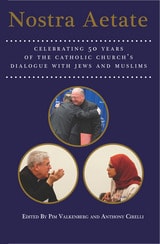
cover of Nostra Aetate

Nostra Aetate

Pim Valkenberg

Catholic University of America Press, 2016
The contents of this book originated in a conference at the Catholic University of America in May 2015. The essays and lectures contained within focus on the relationships of the Catholic Church with the other "Abrahamic" faiths, primarily Islam and Judaism. There is some discussion of the Asian religions as well. This volume, in structure, loosely follows the document Nostra Aetate itself. The first part of the book gives a broad view of the document and its importance. The following parts concentrates on the relationships between the Catholic Church and the Asian, Muslim and Jewish religions. The concluding section of the book surveys the reception Nostra Aetate received in various ecclesial and academic contexts.
[more]
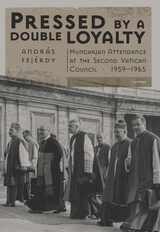
cover of Pressed by a Double Loyalty: Hungarian Attendance at the Second Vatican Council, 1959-1965

Pressed by a Double Loyalty

Hungarian Attendance at the Second Vatican Council, 1959-1965

András Fejérdy

Central European University Press, 2017
The Second Vatican Council is the single most influential event in the 20th century history of the Catholic Church. The book analyzes the relationship between the Council and the "Ostpolitik" of the Vatican through the history of the Hungarian presence at Vatican II. Pope John XXIII, elected in 1958, was a catalyst. The pope thought that his most urgent task was to renew contacts with the Church behind the iron curtain. Hungarian participation at the Council was also made possible by the new, pragmatic model in Hungarian church politics. After the crushing of the 1956 Revolution, churches in Hungary thought that the regime would last and were willing to compromise. Vatican II – in the perspective of Hungary – was not primarily an ecclesial event, but it remained closely joined to the negotiations between the Holy See and the Kádár regime: during the Council Hungary became the experimental laboratory of the Vatican's new eastern policy. Was it a Vatican decision or a Soviet instruction? Fejérdy suggests that it was a decision of the Holy See.
[more]
cover of Priests: A Calling in Crisis

Priests

A Calling in Crisis

Andrew M. Greeley

University of Chicago Press, 2004

For several years now, the Roman Catholic Church and the institution of the priesthood itself have been at the center of a firestorm of controversy. While many of the criticisms lodged against the recent actions of the Church—and a small number of its priests—are justified, the majority of these criticisms are not. Hyperbolic and misleading coverage of recent scandals has created a public image of American priests that bears little relation to reality, and Andrew Greeley's Priests skewers this image with a systematic inside look at American priests today.

No stranger to controversy himself, Greeley here challenges those analysts and the media who parrot them in placing the blame for recent Church scandals on the mandate of celibacy or a clerical culture that supports homosexuality. Drawing upon reliable national survey samples of priests, Greeley demolishes current stereotypes about the percentage of homosexual priests, the level of personal and professional happiness among priests, the role of celibacy in their lives, and many other issues. His findings are more than surprising: they reveal, among other things, that priests report higher levels of personal and professional satisfaction than doctors, lawyers, or faculty members; that they would overwhelmingly choose to become priests again; and that younger priests are far more conservative than their older brethren.

While the picture Greeley paints should radically reorient the public perception of priests, he does not hesitate to criticize the Church's significant shortcomings. Most priests, for example, do not think the sexual abuse problems are serious, and they do not think that poor preaching or liturgy is a problem, though the laity give them very low marks on their ministerial skills. Priests do not listen to the laity, bishops do not listen to priests, and the Vatican does not listen to any of them. With Greeley's statistical evidence and provocative recommendations for change—including a national "Priest Corps" that would offer young men a limited term of service in the Church—Priests offers a new vision for American Catholics, one based on real problems and solutions rather than on images of a depraved, immature, and frustrated priesthood.
[more]
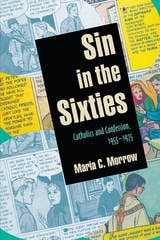
cover of Sin in the Sixties

Sin in the Sixties

Maria C. Morrow

Catholic University of America Press, 2016
Confession reached its peak attendance in the early 1950s, but by the end of the Second Vatican Council, the popularity of the sacrament plummeted. While this decline is often noted by historians, theologians, priests, and laity alike - all eager to provide possible explanations - little attention has been paid to another dramatic shift. Coincident with the decreasing popularity of the sacrament of penance in the United States were changes to non-sacramental penitential practices, including Lenten fasting, Ember Days, and the year-round Friday meat abstinence. American Catholics - sometimes derisively called Fisheaters - had assiduously observed Friday abstinence, regardless of ethnicity or geographic location.
[more]
cover of The Consensus of the Church and Papal Infallibility: A Study in the Background of Vatican I

The Consensus of the Church and Papal Infallibility

A Study in the Background of Vatican I

Richard F. Costigan, S.J.

Catholic University of America Press, 2005
After a concise introduction that defines the two schools of theology, Richard Costigan examines the thought of nine major theologians on the subject: Bossuet, Tournely, Orsi, Ballerini, Bailly, Bergier, La Luzerne, Muzzarelli, and Perrone.
[more]
cover of The Diaconate Revisited: Questions and Developments Since Vatican II

The Diaconate Revisited

Questions and Developments Since Vatican II

Marc B. Caron

Catholic University of America Press, 2026
The sacrament of Holy Orders is the only one of the seven sacraments which exists in three ranks arranged hierarchically, that is, bishops, presbyters, and deacons. Deacons are distinct from both bishops and presbyters, yet united with them in one sacrament. Since the Second Vatican Council, various magisterial documents have limited the priestly dimension of holy orders to bishops and presbyters alone. If deacons do not share in the hierarchical priesthood at all, how are they then related to bishops and to presbyters? In the end, is the diaconate even part of the sacrament of holy orders? This book attempts to show how a ministerial dimension to the character received in ordination to each of the three ranks unites the episcopate, the presbyterate, and the diaconate in a single sacrament. According to the theology of the sacrament of holy orders found in Lumen gentium, the bishop receives the fullness of the sacrament, meaning both its sacerdotal and diaconal or ministerial dimensions. The presbyter then receives a lesser portion than the bishop of both sacerdotal and ministerial dimensions of the sacrament. Finally, the deacon receives an even lesser share than that of the presbyter of the ministerial dimension of holy orders alone. This approach makes clear that the bishop is the greatest servant of the Church as well as its high priest. It challenges presbyters to be of greater service to the Body of Christ than even deacons. The baptismal call to holiness of all the faithful can also be described as having both priestly and ministerial or diaconal dimensions as well. With this understanding, it now becomes clearer how the laity can perform certain functions by delegation which the Church normally entrusts to deacons by ordination. Finally, the unity of the diaconate with the two priestly ranks must inform the current discussions taking place about any possible ordination of women to the sacrament of holy orders in the diaconal rank.
[more]
cover of Vatican II Behind the Iron Curtain

Vatican II Behind the Iron Curtain

Piotr H. Kosicki

Catholic University of America Press, 2016

The goal of this volume is to begin writing Central and Eastern Europe back into the story of the Second Vatican Council, its origins, and its consequences. This volume assembles - for the first time in any language - a broad overview of the place of four different Communist-run countries - Czechoslovakia, Hungary, Poland, and Yugoslavia - in the story of the Council. Framing these is an account of how the Cold War impacted the Council and its reception. The book engages with both English-language scholarship and the national historiographies of the countries that it examines, offering a global lens on the present state of research (covering all relevant languages) and seeking to propel that research forward. All of the chapters draw on both non-English secondary literature and original primary sources - some published, some archival.
[more]