Results by title
5 books match the query 'Baskin, Leonard'
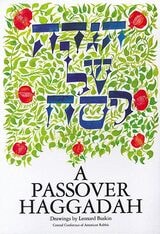
A Passover Haggadah
Rabbi Herbert Bronstein
Central Conference of American Rabbis, 0
This classic Haggadah has sold over 1 million copies since its introduction. Illustrated with twenty-three original full-color watercolors by Leonard Baskin and written in contemporary, gender-inclusive language, it contains a complete Passover home service, an extensive song section, and supplemental readings and meditations from which participants can choose during the course of the Seder. All optional selections are printed in color.
A Passover Haggadah - Russian-Hebrew Edition
Rabbi Herbert Bronstein
Central Conference of American Rabbis, 1982
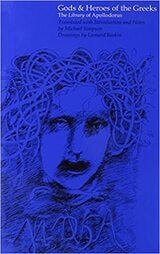
Gods and Heroes of the Greeks
The "Library" of ApollodorusMichael Simpson
University of Massachusetts Press, 1976
The immortal characters of Greek mythology enact their dramas, conflicts, and passions in the Library of Apollodorus. Probably composed in the first century A.D., it is the only Greek handbook of mythology to survive antiquity, and is a major source of our knowledge of Greek myths.
Beginning with the birth of the gods and ending with the death of Odysseus, the Library traces the destinies of such great mythic figures as Prometheus, Oedipus, Heracles, Daedalus, and the heroes of the Trojan War. Sir James G. Frazer called the Library “an accurate record of what the Greeks in general believed about the origin an early history of the world and their race.”
Michael Simpson’s new translation captures the fine simplicity and straightforwardness of the original. Leonard Baskin’s drawings throw a unique contemporary light on this ancient world.

Haneirot Halalu
These Lights Are HolyElyse D. Frishman
Central Conference of American Rabbis, 1989

The Symposium of Plato
Suzy Q. Groden
University of Massachusetts Press, 1970
This new translation of Plato’s dialogue on love avoids the cumbersome locutions of Victorian versions and presents Plato’s ancient drinking party in a vigorous contemporary idiom. The character of Socrates emerges with unexpected wit and humor, adding new dimensions to his familiar irony. A poet and philosopher have collaborated to give an English version that is fresh and clear, and accurately renders the ideas of the speakers.
A detailed internal analysis of the structure of the dialogue is given in the introduction. The afterword presents an historical interpretation of the two ways of love, eros and agapé, an a reinterpretation of eros in Plato.