Results by title
5 books match the query 'Basque Country'

Globalization and Nationalism
The Cases of Georgia and the Basque CountryNatalie Sabanadze
Central European University Press, 2010
This book argues for an original, unorthodox conception about the relationship between globalization and contemporary nationalism. While the prevailing view holds that nationalism and globalization are forces of clashing opposition, Sabanadze establishes that these tend to become allied forces. It acknowledges that nationalism does react against the rising globalization and represents a form of resistance against globalizing influences, but the Basque and Georgian cases prove that globalization and nationalism can be complementary rather than contradictory tendencies.
Nationalists have often served as promoters of globalization, seeking out globalizing influences and engaging with global actors out of their very nationalist interests. In the case of both Georgia and the Basque Country, there is little evidence suggesting the existence of strong, politically organized nationalist opposition to globalization.
Globalization and Nationalism discusses why, on a broader scale, different forms of nationalism develop differing attitudes towards globalization and engage in different relationships.
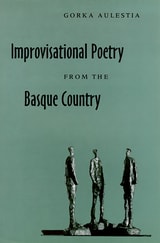
Improvisational Poetry from the Basque Country
Gorka Aulestia
University of Nevada Press, 1995
Foreword by William A. Douglass Translated by Lisa Corcostegui and Linda White.Improvisational Poetry from the Basque Country introduces the Basque bertsolari to the English-speaking world and provides an understanding of an interesting cultural phenomenon—the artist in Basque society who is capable of improvising verse on any subject spontaneously and setting it to music. The tradition is at least several centuries old and runs the gamut from amateurish efforts to periodic national championship competitions. These competitions draw thousands of listeners and pack theaters while many other thousands tune their radios to the broadcasts of the performances. Aulestia takes a scholarly and in-depth look at the art of the bertsolari. In a fascinating text, the author examines the history of a tradition that is truly unique and completely Basque. He introduces and analyzes the performing styles of great bertsolariak, including Xabier Amuriza and Jon Azpillaga. From the bertsolari’s roots in the old Basque Country to the social phenomenon it is today, Aulestia’s look at the improvisational oral literature of the Basques is an essential addition to their written history.
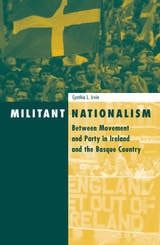
Militant Nationalism
Between Movement and Party in Ireland and the Basque CountryCynthia Irvin
University of Minnesota Press, 1999
A comparative analysis of two militant nationalist groups.
Why do some militant nationalists turn to electoral politics while others resist-and even seek to destroy-that arena? Cynthia L. Irvin examines two cases of electoral interventions by nationalist organizations engaged in violent political competition: in Northern Ireland and in the Basque provinces of Spain. Based on her findings, she offers insights into the circumstances that lead such groups to abandon violence in favor of institutional political struggle.
Using fieldwork done in Northern Ireland and the Basque Country, Irvin develops a model linking the internal dynamics of Sinn Fein and Herri Batasuna (the electoral arm of the militant Basque separatists) to changes in their external environments. In this unusual comparative analysis, she draws on interviews with more than 100 Sinn Fein and Herri Batasuna activists and on a unique survey of 140 Herri Batasuna activists. This approach moves Irvin’s work beyond previous analyses, which have relied on either descriptive and historical accounts or formal models of insurgent violence. This detailed account has broad implications for the study of social movements and ethnic identity, providing a valuable new perspective into the strategic interactions and often conflict-ridden relationship between social movements and political parties. ISBN 0-8166-3114-X Cloth £00.00 $49.95xxISBN 0-8166-3115-8 Paper £00.00 $19.95x304 Pages 26 Tables 5 7/8 x 9 MaySocial Movements, Protest, and Contention Series, volume 9Translation inquiries: University of Minnesota Press
Negotiating With ETA
Obstacles To Peace In The Basque Country, 1975-1988Robert P. Clark
University of Nevada Press, 1990
Since the late 1960s, the Basque insurgent organization ETA (Euzkadi ta Askatasuna, or Basque Homeland and Freedom) has been engaged in a violent struggle against the Spanish state in an effort to gain the independence of the Basque Country. ETA violence has led to the death of hundreds of people, making the organization the most violent insurgent group in Europe. Between 1975 and 1988, nearly thirty attempts to negotiate an end to violence, with a few limited exceptions, all ended in failure. This important book examines why the efforts to negotiate have failed and makes suggestions on how to improve the chances for successful discussion in the future. Although Clark does not disprove the conventional wisdom that negotiation with terrorists is a bad idea, he does begin from the opposing point of view that there may be some positive values to be realized from such negotiation.Negotiating with ETA describes the various factions that are interested in the outcome of such negotiations and the Spanish antiterrorist policy throughout the period under examination. The book also recounts the early attempts to negotiate, the first attempt at "social reintegration," various attempts by the Basque Government to get negotiations started, negotiation efforts under the Spanish socialist government of Felipe González, and the lengthy negotiations that took place in Algeria. A wide range of scholars and specialists will find this book valuable, including those interested in contemporary Spanish politics, ethnic nationalism, Basque affairs, the problem of terrorism, and conflict resolution.
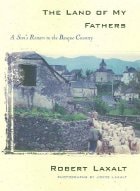
The Land of My Fathers
A Son's Return to the Basque CountryRobert Laxalt
University of Nevada Press, 2024
In 1960, renowned Nevada writer Robert Laxalt moved himself and his family to a small Basque village in the French Pyrenees. The son of Basque emigrants, Laxalt wanted to learn as much as he could about the ancient and mysterious people from which he was descended and about the country from which his parents came. Thanks to his Basque surname and a wide network of family connections, Laxalt was able to penetrate the traditional reserve of the Basques in a way that outsiders rarely can. In the process, he gained rare insight into the nature of the Basques and the isolated, beautiful mountain world where they have lived for uncounted centuries. Based on Laxalt’s personal journals of this and a later sojourn in 1965, The Land of My Fathers is a moving record of a people and their homeland. Through Laxalt’s perceptive eyes and his wife Joyce’s photographs, we observe the Basques’ market days and festivals, join their dove hunts and harvests, share their humor and history, their deep sense of nationalism, their abiding pride in their culture and their homes, and discover the profound sources of the Basques’ strength and their endurance as a people. Photography by Joyce Laxalt.