Results by title
4 books match the query 'Bates, David'

People, Texts and Artefacts
Cultural Transmission in the Medieval Norman WorldsEdited by David Bates, Edoardo D'Angelo, and Elisabeth Houts
University of London Press, 2018
This volume is based on two international conferences held in 2013 and 2014 at Ariano Irpino, and at Emmanuel College, Cambridge. It contains essays by leading scholars in the field. Like the conferences, the volume seeks to enhance interdisciplinary and international dialogue between those who work on the Normans and their conquests in northern and southern Europe in an original way. It has as its central theme issues related to cultural transfer, treated as being of a pan-European kind across the societies that the Normans conquered and as occurring within the distinct societies of the northern and southern conquests. These issues are also shown to be an aspect of the interaction between the Normans and the peoples they subjugated, among whom many then settled.
[more]
The Creighton Century, 1907-2007
Edited by David Bates, Jennifer Wallis, and Jane Winters
University of London Press, 2009
[more]
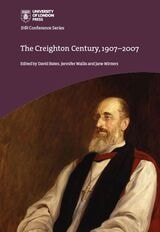
The Creighton Century, 1907–2007
Edited by David Bates, Jennifer Wallis, and Jane Winters
University of London Press, 2020
An edited collection of classic lectures from acclaimed historians.
The Creighton Century, 1907–2007 offers a selection of ten classic lectures on history from the first hundred years of the University of London’s prestigious Creighton Lecture series.
This volume offers a chance to revisit some of the great lectures of our time, including previously unpublished lectures by R. H. Tawney, Lucy Sutherland, Donald Coleman, Eric Hobsbawm, and Keith Thomas, published here with commentaries by Virginia Berridge, Justin Champion, Julian Hoppit, and Jinty Nelson, among others. This volume provides a fascinating insight into the development of the discipline of history over the twentieth and early twenty-first century, with lectures on the meaning of truth and modern mythologies, revealing some significant changes in approach and emphasis as well as some surprising continuities.
[more]
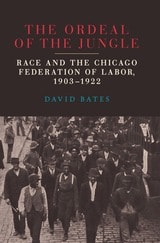
The Ordeal of the Jungle
Race and the Chicago Federation of Labor, 1903–1922David Bates
Southern Illinois University Press, 2019
Between 1910 and 1920, the Chicago Federation of Labor (CFL) inaugurated a massive organizing drive in the city’s meatpacking and steel industries. Although the CFL sought legitimately progressive goals, worked earnestly to organize an interracial union, and made major inroads among both black and white workers, their efforts resulted in a bitter defeat. David Bates provides a clear picture of how even the most progressive of intentions can be ground to a halt.
By organizing workers into neighborhood locals, which connected workplace struggles to ethnic and religious identities, the CFL facilitated a surge in the organization’s membership, particularly among African American workers, and afforded the federation the opportunity to aggressively confront employers. The CFL’s innovative structure, however, was ultimately its demise. Linking union locals to neighborhoods proved to be a form of de facto segregation. Over time union structures, rank-and-file conflicts, and employer resistance combined to turn the union’s hopeful calls for solidarity into animosity and estrangement. Tensions were exacerbated by violent shop floor confrontations and exploded in the bloody 1919 Chicago Race Riot. By the early 1920s, the CFL had collapsed.
The Ordeal of the Jungle explores the choices of a variety of people while showing a complex, overarching interplay of black and white workers and their employers. In addition to analyzing union structures and on-the-ground relations between workers, Bates synthesizes and challenges previous scholarship on interracial organizing to explain the failure of progressive unionism in Chicago.
[more]