Results by title
6 books match the query 'Baucom, Ian'

Afterlives of Romanticism, Volume 102
Ian Baucom and Jennifer Kennedy
Duke University Press, 0
Atlantic Genealogies, Volume 100
Ian Baucom
Duke University Press, 0
Climate Change and the Production of Knowledge
Ian Baucom and Matthew Omelsky, special issue editors
Duke University Press, 2017
Contributors. Ian Baucom, Rosi Braidotti, David Buckland, Matthew Burtner, Noel Castree, Dipesh Chakrabarty, Tom Cohen, Claire Colebrook, Olivia Gray, Willis Jenkins, Catherine Malabou, Matthew Omelsky, Michael Segal, Bently Spang, Gary Tomlinson, Astrid Ulloa, Lucy Wood
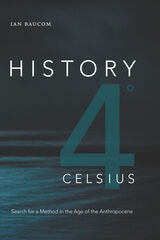
History 4° Celsius
Search for a Method in the Age of the AnthropoceneIan Baucom
Duke University Press, 2020
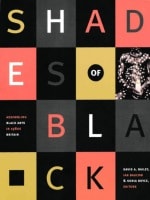
Shades of Black
Assembling Black Arts in 1980s BritainDavid A. Bailey, Ian Baucom, and Sonia Boyce, eds.
Duke University Press, 2005
In thirteen original essays, the contributors examine the movement in relation to artistic practice, public funding, and the transnational art market and consider its legacy for today’s artists and activists. The volume includes a unique catalog of images, an extensive list of suggested readings, and a descriptive timeline situating the movement vis-à-vis relevant artworks and films, exhibitions, cultural criticism, and political events from 1960 to 2000. A dynamic living archive of conversations, texts, and images, Shades of Black will be an essential resource.
Contributors. Stanley Abe, Jawad Al-Nawab, Rasheed Araeen, David A. Bailey, Adelaide Bannerman, Ian Baucom, Dawoud Bey, Sonia Boyce, Allan deSouza, Jean Fisher, Stuart Hall, Lubaina Himid, Naseem Khan, susan pui san lok, Kobena Mercer, Yong Soon Min, Keith Piper, Zineb Sedira, Gilane Tawadros, Leon Wainwright, Judith Wilson
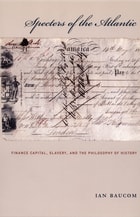
Specters of the Atlantic
Finance Capital, Slavery, and the Philosophy of HistoryIan Baucom
Duke University Press, 2005
Baucom contends that the massacre and the trials that followed it bring to light an Atlantic cycle of capital accumulation based on speculative finance, an economic cycle that has not yet run its course. The extraordinarily abstract nature of today’s finance capital is the late-eighteenth-century system intensified. Yet, as Baucom highlights, since the late 1700s, this rapacious speculative culture has had detractors. He traces the emergence and development of a counter-discourse he calls melancholy realism through abolitionist and human-rights texts, British romantic poetry, Scottish moral philosophy, and the work of late-twentieth-century literary theorists. In revealing how the Zong tragedy resonates within contemporary financial systems and human-rights discourses, Baucom puts forth a deeply compelling, utterly original theory of history: one that insists that an eighteenth-century atrocity is not past but present within the future we now inhabit.